Choosing among hospital bed manufacturers is not a decision to make lightly. A single batch of substandard beds can trigger patient-safety incidents, delay facility accreditation, and cost your organization far more than the initial purchase price. Whether you are a distributor evaluating OEM partners, a procurement officer sourcing for a new hospital wing, or a clinic owner upgrading aging equipment, understanding who the major players are—and what separates them—will save you months of trial and error.
This guide profiles eight hospital bed manufacturers that have earned long-term trust across global healthcare markets. For each company you will find a VERDICT summary, an At a Glance fact box, and a Wins vs. Trade-offs breakdown covering founding history, production scale, product focus, certifications, and best-fit scenarios. We cover manufacturers spanning four continents—from the United States and Europe to Japan and China—so you can compare approaches to quality, pricing, and partnership models side by side.
How to Identify Reliable Hospital Bed Manufacturers
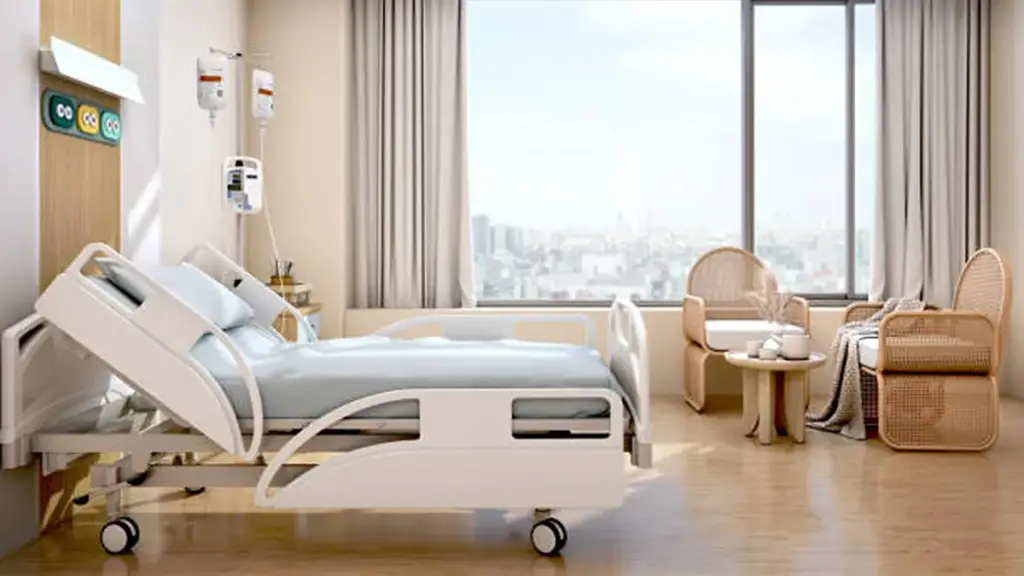
Before reviewing individual companies, it helps to establish the evaluation criteria that separate genuine manufacturers from trading intermediaries posing as factories. Reliable hospital bed manufacturers consistently demonstrate the following traits across five dimensions.
Regulatory compliance is non-negotiable. A credible manufacturer holds ISO 13485 certification for its quality management system and carries product-level approvals for the markets it serves—CE marking for Europe, FDA registration for the United States, or equivalent national registrations. Always ask for certificate numbers and verify them directly with the issuing body rather than accepting PDF copies at face value.
Manufacturing transparency separates factories from traders. Look for evidence of in-house production: factory audit reports, production-line photos or video tours, welding and coating process documentation, and raw-material traceability records. A company that cannot show you its facility is almost certainly a trading intermediary, no matter how polished its website looks.
Scale and delivery consistency matter. Monthly production capacity, lead times for standard and custom orders, and the ability to handle mixed-container shipments all signal operational maturity. Manufacturers with automated production lines—robotic welding, laser cutting, powder coating—deliver more consistent quality at higher volumes than workshops relying on manual processes.
After-sales infrastructure reveals long-term commitment. Warranty length, spare-parts availability, technical documentation quality, and average response time to service requests indicate whether the manufacturer views the relationship as a one-time transaction or a multi-year partnership.
Market track record builds confidence. Years in operation, number of countries served, references from existing distributors, and active participation in international medical trade shows all contribute to verifiable credibility. For a deeper framework on supplier vetting specifically in China, see our guide on how to choose a reliable hospital bed manufacturer in China.
8 Fabricantes confiables de camas de hospital que debe conocer
The following eight companies represent a cross-section of the global hospital bed industry—from multinational corporations with billion-dollar revenues to specialized factories offering direct OEM partnerships. Use the quick-comparison table below to jump to any manufacturer, then read the full profile for detailed Wins and Trade-offs.
Quick Comparison Overview
| Manufacturer | Location | Core Focus | Verdict |
|---|---|---|---|
| Baxter (Hillrom) | Illinois, USA | Smart connected beds, acute & ICU | Dominant US acute-care supplier with integrated patient monitoring. |
| Stryker | Michigan, USA | Med-surg & ICU beds, EMS stretchers | Med-tech leader known for wireless fall-prevention bed systems. |
| Arjo | Malmö, Sweden | Cuidados a largo plazo, patient mobility | Swedish specialist in aged-care beds and pressure-injury prevention. |
| LINET Group | Czech Republic | Premium ICU & acute-care beds | Europe’s #1 advanced care bed maker; 1.2M installed units. |
| Paramount Bed | Tokyo, Japan | Hospital & home-care beds | Japan’s top manufacturer with 70%+ domestic hospital share. |
| Gendron | Ohio, USA | Camas bariátricas, patient lifts | US bariatric specialist; 150+ years of domestic manufacturing. |
| Medline | Illinois, USA | Distribution + long-term care beds | Largest US private med-surg distributor; 335,000+ SKUs. |
| Médico DINGLI | Hebei, Porcelana | OEM/ODM hospital & home-care beds | Factory-direct OEM partner with 200,000-unit monthly capacity. |
1. Baxter (Hillrom)
Hillrom has defined hospital beds for nearly a century; Baxter International completed its $12.4B acquisition in late 2021 to form one of the world’s largest med-tech groups. The Patient Support Systems division continues the Hillrom legacy with Centrella, Progressa, and Accella smart beds that stream EarlySense non-contact sensor data (heart rate, respiration, bed-exit) directly into hospital information systems.
At a Glance:
- Location: Deerfield, Illinois, USA
- Founded / Scale: Hillrom 1929; 60,000+ employees; 100+ países
- Core Products: Centrella Smart+, Progressa+ ICU, Accella, bariatric beds
Why We Picked Them:
| The Wins | Trade-offs |
|---|---|
|
|
2. Stryker
Stryker was founded in 1941 by Dr. Homer Stryker and today reports ~$20.5B in annual net sales with ~53,000 employees worldwide (NYSE: SYK). Its ProCuity med-surg series pioneered wireless bed-exit alarm integration; the InTouch ICU line emphasizes caregiver ergonomics and mobility protocols. Stryker manufactures in the USA, Ireland, and Mexico.
At a Glance:
- Location: Portage, Michigan, USA
- Founded / Scale: 1941; ~53,000 employees; $20.5B revenue (2023)
- Core Products: ProCuity med-surg beds, InTouch ICU, EMS stretchers, Mako robotics
Why We Picked Them:
| The Wins | Trade-offs |
|---|---|
|
|
3. Arjo
Arjo was founded in 1957 by Arne Johansson in Sweden and spun off from Getinge Group in 2017; today it lists on Nasdaq Stockholm with 6,000+ employees and revenue around €700M. Its Atlantic, Optima, Enterprise, and Citadel bed lines pair with patient lifts, hygiene systems, and DVT-prevention devices to form an integrated long-term-care environment rather than a standalone bed sale.
At a Glance:
- Location: Malmö, Sweden
- Founded / Scale: 1957; 6,000+ employees; ~€700M revenue
- Core Products: Atlantic, Optima, Enterprise (universal), Citadel (bariátrico), Evenda (long-term)
Why We Picked Them:
| The Wins | Trade-offs |
|---|---|
|
|
4. LINET Group
LINET Group reports €367M revenue (FY2024/25), produces 130,000 bed frames annually, and counts 1.2 million installations across 120+ países. The group operates two brands—LINET for acute and intensive care, wissner-bosserhoff for long-term and home care—with production in the Czech Republic and Germany plus a new Indonesian plant opened in 2025. Multicare X ICU and SafeSense remote monitoring sit at the premium end; multiple Red Dot and iF Design Awards underline the engineering focus.
At a Glance:
- Location: Želevçice, Czech Republic (+ Germany, Indonesia)
- Founded / Scale: wissner-bosserhoff 1952; €367M revenue; 130k beds/year
- Core Products: Multicare X ICU, Eleganza acute, Image 3 low-height, wissner-bosserhoff care beds
Why We Picked Them:
| The Wins | Trade-offs |
|---|---|
|
|
5. Paramount Bed
Paramount Bed was founded in Tokyo in 1947 and today produces ~300,000 beds annually across six factories, reporting roughly $700M revenue. It holds 70%+ of Japan’s hospital bed market and 60%+ of the home-care segment. International operations span Indonesia (since 1995), Porcelana, Thailand, India, Brazil, Mexico, and Vietnam. Frames, colchones, motores, and controls are made in-house under the “as human, for human” design motto.
At a Glance:
- Location: Tokyo, Japan
- Founded / Scale: 1947; ~300,000 beds/year; 6 factories; TSE-listed
- Core Products: ICU beds, electric hospital beds, manual beds, psychiatric beds, home-care beds
Why We Picked Them:
| The Wins | Trade-offs |
|---|---|
|
|
6. Gendron
Gendron traces its manufacturing history to 1871, making it one of the oldest medical-device companies in the United States. All products—medical beds, bariatric beds, patient lifts, camillas, mobility seating, and transport equipment—are designed, engineered, and built at the Bryan, Ohio facility. Standard 350–500 lb hospital beds cannot safely accommodate the growing bariatric patient population; Gendron’s 700–1,000 lb-rated equipment fills that structural and liability gap for acute, long-term, rehab, and home-care providers across the US and Canada.
At a Glance:
- Location: Bryan, Ohio, USA
- Founded / Scale: 1871; privately held; 100% US manufacturing
- Core Products: Camas bariátricas (700–1,000 lb SWL), patient lifts, camillas, transport equipment
Why We Picked Them:
| The Wins | Trade-offs |
|---|---|
|
|
7. Medline Industries
Medline is the largest privately held medical-surgical manufacturer and distributor in the United States, and the third-largest medical-device company globally by revenue ($25.5B in 2024, ~43,000 employees). Its December 2025 Nasdaq IPO (ticker: MDLN) valued the company at approximately $54 billion. Beds are one line within a 335,000-SKU catalog that also spans wound care, surgical supplies, incontinence, and DME—positioning Medline as a volume supplier for post-acute and long-term care rather than a smart-bed technology leader.
At a Glance:
- Location: Northfield, Illinois, USA
- Founded / Scale: 1966 (roots to 1910); ~43,000 employees; $25.5B revenue
- Core Products: Long-term care beds, bariatric beds, homecare beds; 335,000+ total SKUs
Why We Picked Them:
| The Wins | Trade-offs |
|---|---|
|
|
8. Médico DINGLI
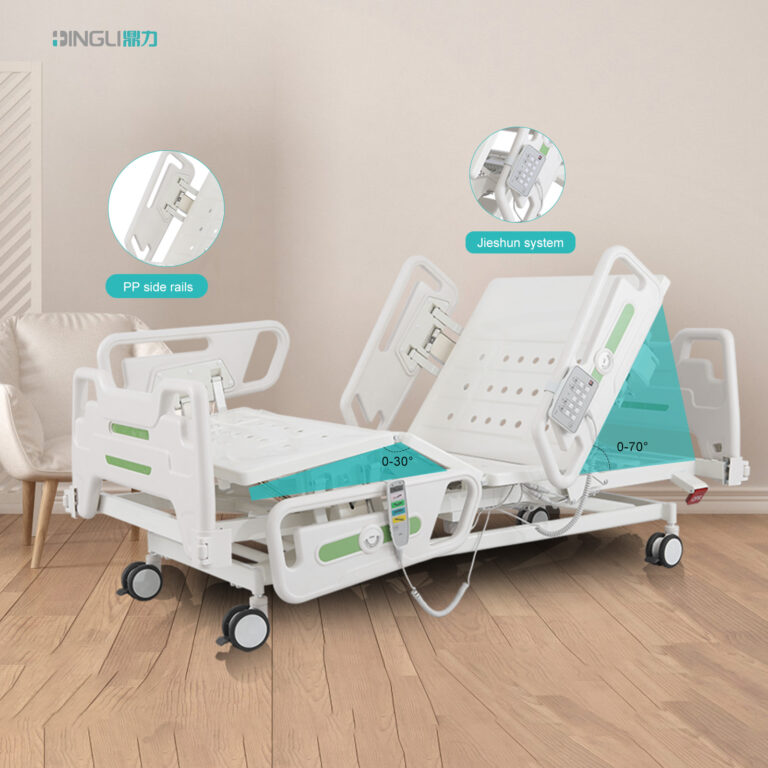
Médico DINGLI has manufactured hospital beds and medical furniture since 1986 from a 15,590 m² industrial park in Hengshui, Hebei, plus an 11,000 m² smart warehouse and global operations center in Guangzhou. Monthly capacity reaches 200,000 units across seven product categories—electric hospital beds, manual hospital beds, home-care beds, sillas de ruedas, anti-bedsore air mattresses, bed accessories, y soportes ortopédicos. Production runs on Kawasaki robotic welding arms achieving 100% gap-free fish-scale welds, ±0.1 mm laser-cutting precision, and 360° automated eco-friendly powder coating under German production standards with 8S management discipline.
DINGLI holds ISO 9001:2015, ISO 13485:2016, CE, FDA, and FSC certifications, plus 30+ authorized patents including 2 PCT international patents. It is recognized as a High-tech Enterprise and Specialized & Sophisticated Enterprise by Chinese government authorities, and maintains a three-year no-complaint after-sales record across its export markets. MOQ starts at 1 unit for sampling, with standard orders shipping in 7–10 days and 40HQ mixed-container support. Explore the full range of electric and manual hospital beds available for OEM and wholesale orders.
At a Glance:
- Location: Hengshui, Hebei, Porcelana + Guangzhou global operations
- Founded / Scale: 1986; 15,590 m² plant; 200,000 units/month
- Core Products: Eléctrico & manual hospital beds, home-care beds, sillas de ruedas, air mattresses, accesorios
Why We Picked Them:
| The Wins | Trade-offs |
|---|---|
|
|
How These Hospital Bed Manufacturers Compare
The table below summarizes key differences across the eight hospital bed manufacturers to help you narrow your shortlist quickly:
| Manufacturer | Founded | HQ Country | Primary Focus | OEM/ODM | Key Certifications |
|---|---|---|---|---|---|
| Baxter (Hillrom) | 1929 | USA | Smart connected beds, acute care | No | FDA, CE, ISO 13485 |
| Stryker | 1941 | USA | Med-surg beds, EMS stretchers | No | FDA, CE, ISO 13485 |
| Arjo | 1957 | Sweden | Cuidados a largo plazo, patient mobility | No | CE, ISO 13485 |
| LINET Group | 1952 | Czech Republic | Premium acute & ICU beds | Limited | CE, ISO 13485, ISO 14001 |
| Paramount Bed | 1947 | Japan | Hospital & home-care beds | No | JIS, CE, FDA, ISO 13485 |
| Gendron | 1871 | USA | Camas bariátricas, patient lifts | Limited | FDA |
| Medline | 1966 | USA | Distribution + DME beds | Private label | FDA, CE |
| Médico DINGLI | 1986 | Porcelana | OEM/ODM hospital & home-care beds | Yes (core model) | ISO 13485, CE, FDA, FSC |
Key takeaway: The first seven manufacturers primarily sell under their own brands through established distribution networks. DINGLI Medical operates on a different model—factory-direct OEM/ODM supply for distributors, white-label partners, and institutional buyers who need customization without brand-premium pricing.
Which Manufacturer Fits Your Project
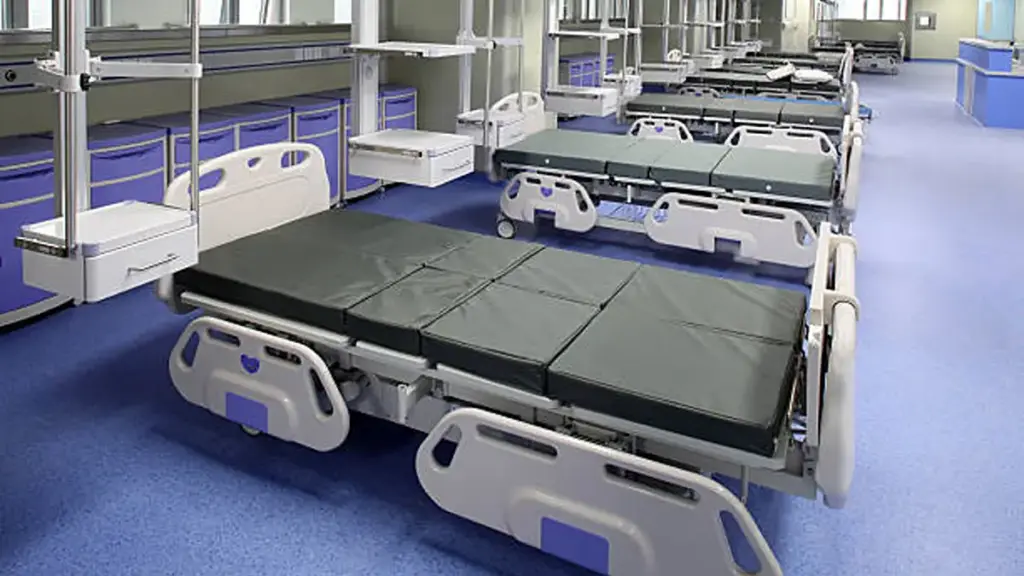
If you are a hospital network in North America or Europe with existing procurement contracts, Baxter/Hillrom and Stryker offer the broadest installed bases, familiar service infrastructure, and integrated digital platforms. Their pricing reflects brand premium, but total cost of ownership can be lower when factoring in bundled service agreements and equipment standardization across departments.
If you operate long-term-care or rehabilitation facilities, Arjo and LINET (wissner-bosserhoff brand) specialize in the ergonomics and pressure-management features that matter most in extended-stay environments. Paramount Bed is the equivalent choice for Asia-Pacific markets, particularly Japan, Southeast Asia, and aging-population regions.
If you need bariatric-rated equipment for higher-weight patient populations, Gendron’s 150-year track record in patient handling and its dedicated bariatric product line make it the specialist choice for North American facilities.
If you are a distributor or brand owner seeking OEM/ODM partnership, the multinational brands above generally do not offer white-label manufacturing at accessible MOQs. This is where DINGLI Medical’s model becomes relevant: full customization from frame design to branded control panels, MOQ starting at 1 unit for sampling, ISO 13485-certified production, and container-load pricing without intermediary markups. For a detailed comparison of wholesale procurement factors, see our wholesale hospital beds buying guide.
If you manage a group purchasing organization consolidating equipment and consumables, Medline’s distribution scale and single-invoice convenience across 335,000+ SKUs reduces procurement complexity, though bed selection is more limited than dedicated manufacturers.
What to Ask Before Sending an RFQ
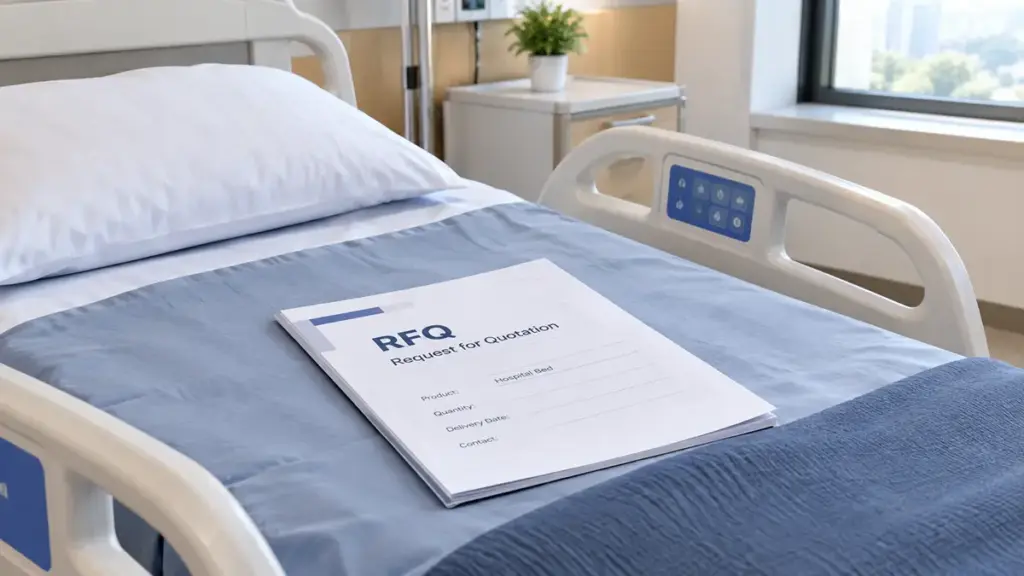
Once you have shortlisted hospital bed manufacturers, the quality of your RFQ determines the quality of responses. Include the following information and questions:
Define your specifications clearly. State bed type (electric/manual/semi-electric), required functions (Hi-Lo, Trendelenburg, liberación de RCP, bed extension), target safe working load, mattress dimensions, side-rail type, control interface preferences, and any regulatory market requirements (CE for EU, FDA 510(k) for USA).
Ask about production capacity and lead times. Request monthly output figures, standard lead time for your order quantity, and rush-order capability. A manufacturer producing 200,000 units monthly handles different volume commitments than one producing 5,000.
Request certification documentation upfront. Ask for ISO 13485 certificate number, CE Declaration of Conformity, FDA registration number (if applicable), and test reports for IEC 60601-2-38 (electric medical bed safety) and IEC 60601-2-52 (side-rail entrapment). Verify these independently—do not rely solely on PDF copies. Our article on normas de seguridad en camas de hospital details what each certification covers.
Clarify OEM/ODM terms. If you need private-label products, ask about minimum customization quantities, tooling/mold costs, branding options (logo placement, custom color, packaging design), and intellectual-property protections.
Inquire about after-sales support. Warranty period, spare-parts catalog availability, replacement part lead times, technical documentation language options, and dedicated account management all affect your long-term operating costs. A manufacturer that stocks common wear parts (motores, control handsets, casters, side-rail hinges) and ships within 48 hours reduces facility downtime significantly.
Request factory audit access and clear payment terms. Reputable manufacturers welcome third-party inspections (SGS, TUV, Bureau Veritas) or buyer visits. During the audit, check raw-material storage, welding equipment calibration records, powder-coating thickness measurements, and final load-testing documentation. Also confirm accepted payment methods (T/T, L/C, trade assurance), deposit percentage, balance timing, Incoterms (EXW, ENGAÑAR, CIF), and packaging specifications—including how many units fit per 40HQ container and whether mixed-SKU loading is supported.
Preguntas frecuentes
Who are the top hospital bed manufacturers?
The top hospital bed manufacturers globally include Baxter (Hillrom), Stryker, LINET Group, Paramount Bed, and Arjo. These companies lead in market share, technological innovation, and geographic reach. For OEM-focused manufacturing, DINGLI Medical is a recognized factory-direct supplier specializing in customizable hospital beds for international distributors.
Who makes the best hospital beds?
“Best” depends on your application. Baxter/Hillrom leads in smart connected beds for acute care. LINET excels in premium European ICU beds. Paramount Bed dominates in reliability for Asian markets. For distributors needing customizable beds at competitive factory pricing without brand premium, specialized OEM manufacturers like DINGLI Medical offer ISO 13485-certified production with full customization control.
What are the most reliable hospital bed manufacturers?
Reliability is measured by years in operation, certification maintenance, and after-sales track record. Gendron (founded 1871), Hillrom/Baxter (1929), Paramount Bed (1947), and Stryker (1941) all have multi-decade histories. Among newer players, Médico DINGLI (1986) maintains a three-year no-complaint after-sales record across its export markets, with automated Kawasaki robotic welding ensuring consistent structural integrity.
How do I choose a hospital bed manufacturer?
Evaluate five factors: (1) regulatory certifications for your target market, (2) production capacity and lead times matching your volume, (3) OEM/ODM capability if you need customization, (4) after-sales support infrastructure including spare parts, y (5) factory transparency—audit reports, production-line access, and verifiable references from existing customers in your region.
What should I look for in a hospital bed manufacturer?
Look for ISO 13485 certification, product compliance with IEC 60601-2-38 safety standards, documented quality-control processes (incoming inspection, in-process FAI, final load testing), automated manufacturing capabilities, clear warranty terms, and willingness to support third-party factory audits. Manufacturers that hold multiple international certifications (CE + FDA + ISO) demonstrate broader compliance readiness.
Which hospital bed manufacturers offer OEM services?
Most multinational brands (Baxter, Stryker, Paramount) sell exclusively under their own labels. OEM/ODM services are typically offered by specialized manufacturers like DINGLI Medical, which provides full customization from frame geometry and motor selection to branded control panels and packaging. Medline also offers private-label products through its distribution platform for qualified volume buyers.
Who are the major hospital bed manufacturers in the world?
By revenue and installed base, the major players are Baxter/Hillrom (USA), Stryker (USA), LINET Group (Czech Republic/Germany), Paramount Bed (Japan), Arjo (Sweden), and Medline (USA). Together these companies account for the majority of hospital beds installed in developed healthcare markets. China-based manufacturers like DINGLI Medical serve a growing share of the global OEM and wholesale segment.
What certifications should a hospital bed manufacturer have?
At minimum: ISO 13485 (medical device quality management), CE marking (European market access), and FDA registration (US market access). Product-level standards include IEC 60601-2-38 for electrical safety of hospital beds and IEC 60601-2-52 for side-rail entrapment prevention. Additional certifications like ISO 14001 (environmental management) y FSC (sustainable materials) indicate broader operational maturity.
How can I verify a hospital bed supplier?
Verify through five channels: (1) check certification numbers directly with issuing bodies, (2) request third-party factory audit reports (SGS, TUV, BV), (3) ask for customer references in your target market, (4) order a sample unit and conduct independent testing, y (5) visit the production facility in person or via live video tour. Legitimate manufacturers welcome all five verification methods without hesitation.
What is the difference between a hospital bed manufacturer and supplier?
A manufacturer owns production facilities, controls raw-material sourcing, performs fabrication and assembly in-house, and holds product certifications under its own name. A supplier (or trading company) sources products from manufacturers and resells them, often without direct quality control over production. Manufacturers offer better pricing at volume, customization capability, and direct accountability for defects. Suppliers may offer broader product ranges but add markup and reduce traceability.
Pensamientos finales
The global hospital bed manufacturing landscape spans a wide spectrum—from century-old corporations with billion-dollar revenues serving national health systems, to specialized factories like DINGLI Medical that equip independent distributors with factory-direct OEM capability. No single manufacturer is universally “best”; the right choice depends on your market, volume, customization needs, and budget structure.
For distributors and procurement teams evaluating hospital bed manufacturers, the decision framework is straightforward: verify certifications independently, demand factory transparency, match production scale to your order volume, and test with a sample before committing to container quantities. The manufacturers profiled in this guide all pass the baseline credibility threshold—your shortlist should then narrow based on which model (branded retail vs. OEM/wholesale) fits your business.
If your project requires customizable hospital beds with competitive factory pricing, our engineering team can provide detailed specifications, certification documentation, and production timelines tailored to your requirements.