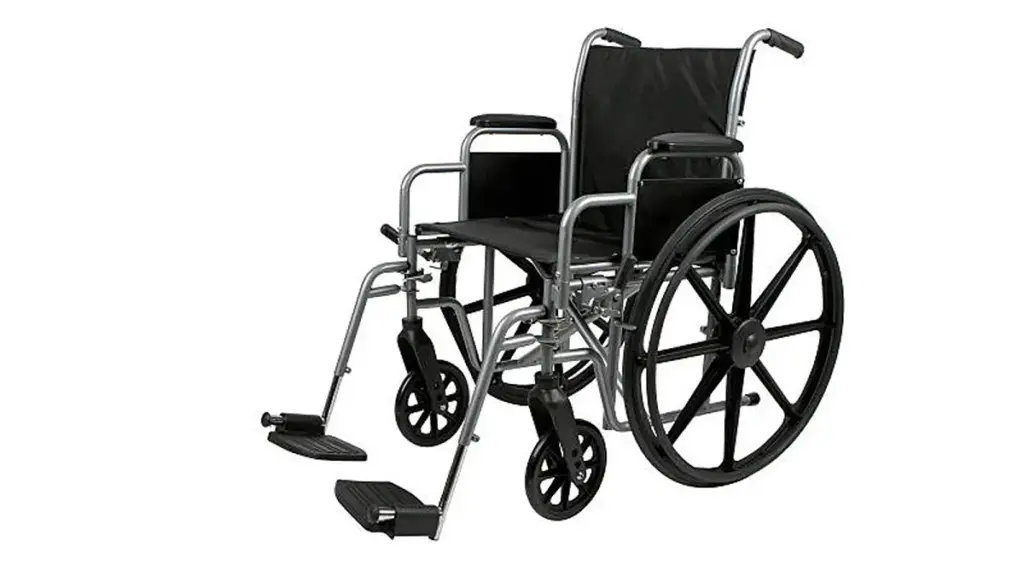
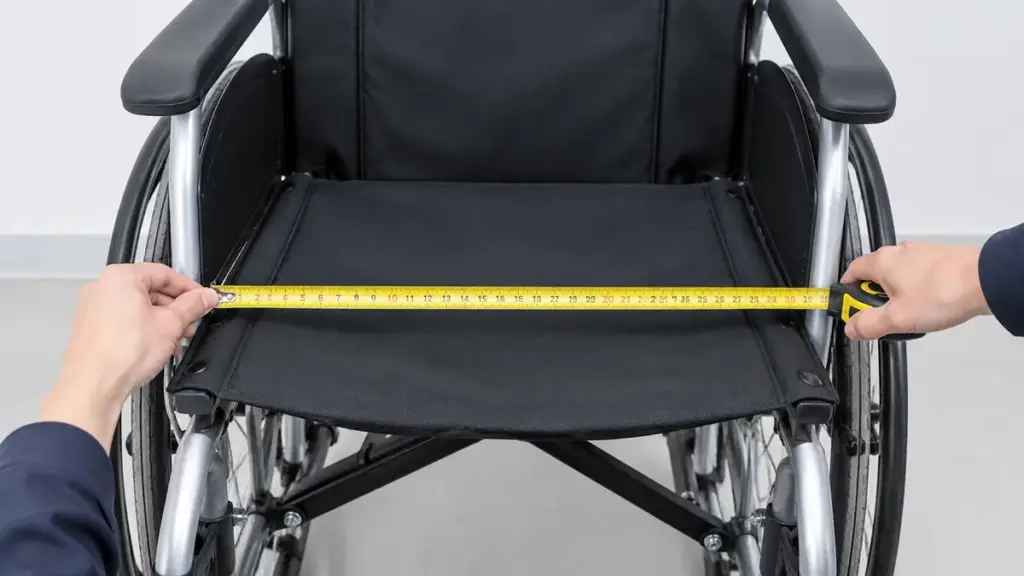
Ask a first-time buyer to name the difference in a transport chair vs wheelchair and the answer is usually “the smaller one.” That is the wrong dividing line. The only reliable test is who pushes. A transport chair needs an attendant, while a wheelchair is built so the seated person can drive themselves. Every other spec follows from that one fact.
For bulk buyers the distinction shapes the catalog, not just the unit price. Transport chairs are light, freight-efficient and trunk-friendly; wheelchairs carry the 24-inch rear wheels that make independent movement possible. This guide compares transport chair vs wheelchair on the lines that actually appear on a purchase order, using factory data sheets rather than consumer guesses.
Transport Chair vs Wheelchair at a Glance
The table contrasts the two categories on the six spec lines that show up on a purchase order. The numbers come from Dingli production data sheets, so they are auditable rather than illustrative. Market-wide figures vary; these are the ones a factory stands behind.
| Spec line | Transport chair | Manual wheelchair |
|---|---|---|
| Propulsion | Attendant pushes; no handrims | User self-propels via handrims |
| Rear wheel | 8-inch solid PVC | 24-inch solid or sporty |
| Net weight | 7.55 kg aluminium frame | 13.5–22 kg steel frames |
| Seat width | 40 सेमी | 45–46 cm |
| Folded profile | Folds compact for stacking | 27–30 cm on cross-brace frames |
| वजन क्षमता | 100 किग्रा | 100–120 kg by model |
Two patterns are worth reading before the details. पहला, the transport chair wins every handling line: वज़न, the folded pack, and how many units fit a container. दूसरा, the wheelchair owns the independence line, and nothing about an 8-inch wheel changes that. A catalog stocked with only one category answers half of its customers’ questions and loses the other half to a competitor with a fuller page.
Once the table is in hand, the transport chair vs wheelchair conversation with a customer gets shorter. Two questions settle most of it: who pushes, and where the chair lives between trips. If the answer is a companion and a car trunk, the transport column wins. If it is the user and a bedroom doorway, the wheelchair column decides.
Wheel Size and Propulsion Is the Core Difference
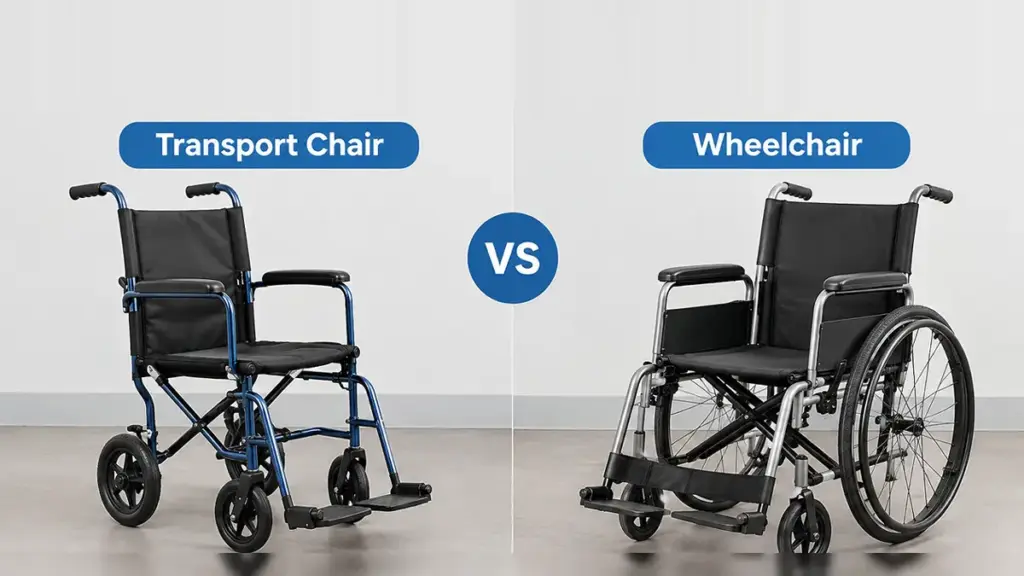
Wheel diameter decides who can move the chair. A 24-inch rear wheel places the handrim at the seated user’s reach, at a height where arms and shoulders can drive it in a natural arc. The same wheel acts as gearing: one push of a 24-inch rim covers far more floor than an 8-inch wheel ever could. On a transport chair, the 8-inch rear wheels sit low and small, below comfortable reach for most users, and there is no rim to grip. The push handles behind the backrest exist for exactly that reason.
Read the Front Caster Line Before You Quote
Rear wheels decide who pushes. Front casters decide whether a spec sheet is complete enough to quote from. Across the four Dingli SKUs the caster line splits three ways. The travel chair takes 6-inch PVC casters, the sporty wheelchair 7-inch, and both the steel chair and the heavy-duty model 8-inch. A datasheet that prints only the rear wheel leaves the buyer to guess the rest.
- Rear wheel and tyre. Solid 8-inch PVC on the transport chair, 24-inch solid or sporty wheels on the three wheelchairs. This is the propulsion line.
- Front caster diameter. Six, seven, or eight inches depending on the model. Ask for the number, because a quote that skips it describes only half the rolling gear.
- Brake hardware. Toggle brakes plus linked rear-handle brakes on the steel wheelchair, and no brake line at all on the aluminium transport chair.
Braking follows the same split. The steel manual wheelchair with 24-inch rear wheels pairs below-seat toggle brakes with linked rear-handle brakes. An attendant can hold the chair on a ramp, and the user still controls stops. The 1002 spec sheet lists no brake line at all, because stopping mid-roll is the pusher’s job by design. Specification sheets that blur this line sell the wrong chair twice: once to a family, and again when the user’s strength returns and independence becomes the requirement.
Elevating Leg Rests Mark a Clinical Build
Seated support diverges for the same reason the wheels do. The steel wheelchair runs a 74 cm backrest against the transport chair’s 35 cm panel, and a seat depth of 43 cm versus 38.5 सेमी. Detachable armrests ease lateral transfers, and elevating leg rests serve post-surgical swelling. The transport chair offers flip-up arms and a seatbelt, exactly the right equipment for a fifteen-minute ride and not enough for a recovery week.
The hardware list is where a care chair separates from a travel chair. Dingli’s steel wheelchair carries leg rests that detach and raise to 88-90 डिग्री, which holds an injured leg up after surgery. Its armrests come off entirely, so a user can slide across from a bed. The heavy-duty model adds flip-back armrests and anti-tip devices. The transport chair stops at flip-up arms, a seatbelt, and a storage bag.
Weight, Portability and Car Trunk Fit

Weight is where transport chairs justify their name. The aluminium 1002 model nets 7.55 किग्रा, which one adult can lift into a sedan trunk without a technique lesson. A steel manual wheelchair at 22 kg demands two hands, a bent back, or a second person. Multiply that difference across a day of transfers—home to car, car to clinic, clinic to car—and the lighter chair stops being a convenience and becomes the deciding spec.
Folded geometry does the rest. The ultra-lightweight aluminium transport chair folds into a compact pack for a car trunk or a hallway corner. Its 52 cm overall width slips through doorways a 65 cm wheelchair struggles with. For the factory, the same lines read as freight math: an 8.85 kg gross carton means more units per 40HQ and lower landed cost per chair. Portability and shipping density are the same physical fact seen from two ends of the supply chain.
Overall Length Decides What a Trunk Accepts
Seat width gets the questions. Overall length decides the argument, because most buyers run the transport chair vs wheelchair test in a driveway with the boot open. The aluminium travel chair measures 85 एक्स 52 एक्स 85 सेमी, the sporty wheelchair 105 एक्स 68 एक्स 91 सेमी, and the steel wheelchair 122 एक्स 65 एक्स 90 सेमी. Thirty-seven centimetres separates the shortest chair from the longest, and no folding mechanism takes that out of the load.
Publish the overall line beside the seat line on every datasheet you send. Seat width answers the doorway. Overall length answers the car, and the two numbers point at different chairs.
Container math repeats the trunk test at industrial scale. Transport chairs fill the gaps of a mixed 40HQ beside beds and mattresses, while the 64-68 cm wheelchairs need full slots. That density shows up in landed cost per unit, and landed cost shows up on the retail shelf. Distributors who quote freight per chair rather than per container routinely underprice wheelchairs and overprice transport chairs.
Folded Width Beats Folded Marketing
“Folds flat” is a claim. The folded dimension is a spec. The steel wheelchair closes to 30 cm across and the heavy-duty model to 27 सेमी. The sporty wheelchair folds to 78 एक्स 69 एक्स 29 सेमी, which is still 69 cm across once it is packed. Two chairs can carry the same load rating and take very different space in the same container.
Dingli’s transport chair publishes no folded dimension on its datasheet, and that gap is the item to press any factory about. Ask for folded measurements and carton size on each line before a mixed 40HQ is priced. A seat-width matrix tells you what a person fits into; it says nothing about what a container fits.
Where Each Chair Type Works Best
Transport chairs earn their place in short, escorted trips: hospital discharge to home, airport gate to parking lot, apartment to the visiting grandparent’s room. The user does not propel; the companion does, through spaces where a full wheelchair cannot turn. Wheelchairs take over wherever the seated person moves on their own for hours—a rehabilitation courtyard, a nursing home corridor, a workplace. The World Health Organization classifies wheelchairs as priority assistive products, and that framing is about independence, not conveyance.
Channel logic follows the use case. Home-care retailers sell transport chairs to families in bulk and attach cushions, rain covers, and carry bags as margin. Facility buyers specify wheelchairs per bed count, and American resellers plan around Part B rules that cover wheelchairs as durable medical equipment for home use. Either way, verify what the chair must survive before choosing which chair to buy; the safety-standards checklist we wrote for hospital beds transfers to mobility equipment almost line for line.
Rental desks and post-discharge services sit between the two channels, and they tend to stock both. A transport chair leaves with the family the same afternoon. The wheelchair follows once therapy confirms the user will propel it. The resale mistake is reading that sequence as a one-way upgrade. Buyers who start with a wheelchair often add a transport chair for travel once a second driver exists in the household.
Weight Capacity and Sizing Options Compared
Capacity and seat geometry are where a catalog either covers a market or leaves holes. The four Dingli SKUs below show how the two categories differ once options are laid out side by side, and how one frame family can serve several buyer profiles.
| Model | Seat (W x D) | Net weight | Capacity | Folded |
|---|---|---|---|---|
| Aluminium transport chair | 40 एक्स 38.5 सेमी | 7.55 किग्रा | 100 किग्रा | Folds compact |
| Steel wheelchair, detachable arms | 46 एक्स 43 सेमी | 22 किग्रा | 100 किग्रा | 30 cm wide |
| Carbon-steel sporty wheelchair | 45 एक्स 43 सेमी | 13.5 किग्रा | 100 किग्रा | 69 cm wide, 29 cm thick |
| Heavy-duty wheelchair | 46 एक्स 40 सेमी | 19 किग्रा | 120 किग्रा | 27 cm wide |
Read the matrix as an ordering sheet. The transport line ships in a three-color series with a built-in seatbelt, which covers gift-market and rental channels without extra SKUs. On the wheelchair side, the heavy-duty model with double cross-brace frame raises capacity to 120 किग्रा, the figure most facility tenders commonly specify. Sporty 24-inch wheels move the wheelchair category toward younger, active buyers—same platform, different catalog story.
Seat Height Is Only Half the Line
Seat height deserves a line on the ordering sheet too. The transport chair sits 48 cm off the floor; the steel wheelchair’s 55 cm seat matches tables and dining chairs. Neither number is better; they answer different floor plans, and the spec table is where buyers check them before asking price.
The other two SKUs sit between those floors. The heavy-duty wheelchair measures 51 cm at the seat and the sporty wheelchair 48 सेमी. Both of the 48 cm chairs read the same on paper. One is a travel chair carrying a 35 cm backrest, the other a wheelchair built around 24-inch wheels a seated user can reach. That is where a transport chair vs wheelchair catalog goes wrong on a spec sheet, two chairs matching on one line and on nothing else.
Seat Width Caps the Catalog Reach
The widest seat in this range is 46 सेमी, shared by the steel wheelchair and the heavy-duty model. The sporty frame lands at 45 cm and the travel chair at 40 सेमी. Nothing on this page crosses 46 सेमी. A buyer sizing from hip width rather than load rating hits that ceiling first, and it is a decision to make before a tender rather than after one.
State the gap in the quote sheet. Pushing a 46 cm seat into a placement that needs more width costs the order and the reorder that followed it. The fix is a different frame, not a taller capacity number.
Capacity Ratings Describe Users, Not Build Quality
Three of the four SKUs carry the same 100 kg ceiling. It appears on the 7.55 kg aluminium chair and on the 22 kg steel wheelchair, almost three times the frame weight for the same number. Read that line as the target user, not as a strength score for the frame. Only the heavy-duty wheelchair breaks the pattern, at 120 किग्रा, and it does so through a double cross-brace frame while keeping the seat at 46 cm wide.
Which Chair Should Facilities Stock in Bulk

Weight the mix toward your customer’s job. Home-care retailers and e-commerce sellers should anchor on transport chairs: lowest freight per unit, easiest returns handling, and the trunk test decides most family purchases. Rehabilitation departments, nursing homes, and tender buyers need wheelchairs, because their residents move themselves and inspectors count independent-use equipment per bed.
The categories also stack together. Transport chairs are classic mixed-container fillers—their flat cartons pack the gaps beside beds and mattresses in one 40HQ, the same consolidation logic we walk through for wholesale hospital beds. Start from a one-unit sample order, validate the spec sheet against real doors, trunks, and users, then commit the container. A balanced mobility page—transport chair, standard wheelchair, heavy-duty wheelchair—answers every walk-in question in one quote instead of sending the buyer to a competitor for the missing line.
Give the mix a test order before a container. Dingli’s one-unit MOQ exists for exactly this: put a transport chair vs wheelchair pair in the same showroom or the same discharge packet and watch which one customers describe correctly. Track the questions they ask, because the width, capacity, and brake answers on this page become their checklist. The catalog that survives the first reorder is the one that made the distinction for the buyer, not the one that discounted it.
Frequently Asked Questions About Transport Chairs
Can the user self-propel a transport chair?
नहीं. A transport chair has no handrims, and its 8-inch rear wheels sit too low and too small to push by hand. An attendant drives it from the handles behind the backrest. If the seated person needs to move independently, that is a wheelchair, not an option package.
What size wheels are on a transport chair?
Small ones by design. Dingli’s aluminium transport chair pairs 6-inch front PVC wheels with 8-inch solid rear wheels. A standard manual wheelchair runs 24-inch rear wheels with handrims and 7-8-inch front casters. The wheel line on the spec sheet identifies the category faster than the product name does.
Is a transport chair covered by insurance?
It depends on the payer’s equipment schedule. Medicare Part B covers wheelchairs as durable medical equipment for home use under federal regulation, but whether a small-wheeled transport model qualifies is coded case by case. Resellers should confirm coverage categories with each payer before advertising one.
How heavy is an aluminum transport chair?
Dingli’s aluminium model nets 7.55 किग्रा, or about 16.6 पाउंड, with an 8.85 kg shipping carton. A steel manual wheelchair runs 19-22 kg in the same catalog. The aluminium chair lifts into a car trunk with one hand, which is the test most family buyers apply in the showroom.
Can a transport chair fit through an airplane aisle?
Plan on gate-checking it. Cabin aisles and aircraft seats are narrower than most folding chairs, so the transfer happens with the airline’s own aisle chair. The relevant number is the 52 cm overall width, which clears terminal doors, jet bridges, and hotel corridors. Notify the airline ahead and ask about stowage.
What weight limit does a standard transport chair have?
Dingli rates its aluminium transport chair to 100 किग्रा, roughly 220 पाउंड, the same ceiling as its standard wheelchairs. The heavy-duty wheelchair raises the limit to 120 kg with a reinforced double cross-brace frame. Catalogs serving larger users should list both figures rather than one generic number.