Hospital bed weight capacity is often confused with Maximum Patient Weight. The patient is only part of the total load; the mattress, biancheria da letto, and bed-mounted accessories must also be considered. If these additional loads are overlooked, the bed may be used beyond its rated capacity.
This guide explains the difference between Safe Working Load (SWL) and Maximum Patient Weight. It also covers what SWL includes, how excess load affects key components, and which labels and documents buyers should check before placing an order.
Capacità di peso del letto ospedaliero: SWL vs Maximum Patient Weight

Safe Working Load covers the total load supported by the bed, while Maximum Patient Weight applies only to the patient.
Carico di lavoro sicuro
Carico di lavoro sicuro (SWL) is the maximum total load a hospital bed is designed to support during normal operation. It includes the patient and other supported loads defined for the bed configuration, such as the mattress, biancheria da letto, and approved accessories.
The declared SWL should be supported by the applicable structural, stability, and functional tests. Buyers should check that the same value appears on the bed label, specifica del prodotto, and test documents.
Peso massimo del paziente
Peso massimo del paziente (MPW) is the highest patient weight declared for the bed. It does not include the mattress or other supported loads.
SWL and MPW should be treated as separate limits. A patient must remain within the stated MPW, while the combined load must remain within the bed’s SWL. Buyers should use the manufacturer’s marked values rather than calculate a new patient limit themselves.
What Does the Safe Working Load Include?
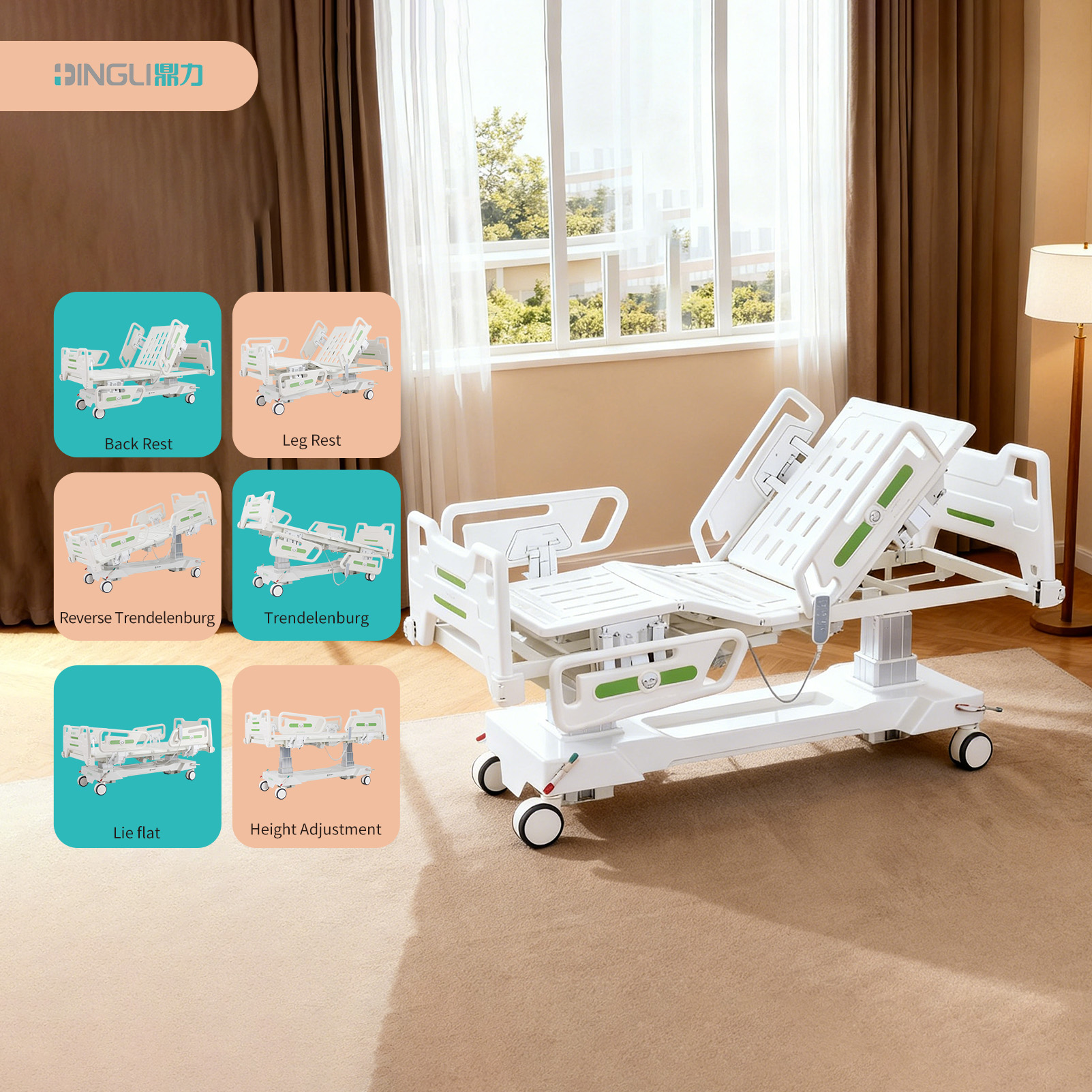
SWL covers the patient and the other loads supported by the bed in its approved configuration.
Patient and Mattress
Buyers should confirm which mattress types and dimensions are approved for the bed. Changing the mattress may affect both the total load and compatibility with the side rails. If a pressure-relief surface is required, see our guide to choosing a medical-grade anti-bedsore air mattress.
Buyers should confirm which mattress types and dimensions are approved for the bed. Changing the mattress may affect both the total load and compatibility with the side rails.
Accessories and Equipment
Bed-mounted accessories may support additional equipment, such as infusion bags, monitors, or items placed on an overbed tray. These loads must remain within the limits stated by the manufacturer.
Check the product specification and Instructions for Use to see which accessories are included in the tested configuration and whether any of them have a separate load limit.
How Overloading Affects Bed Components

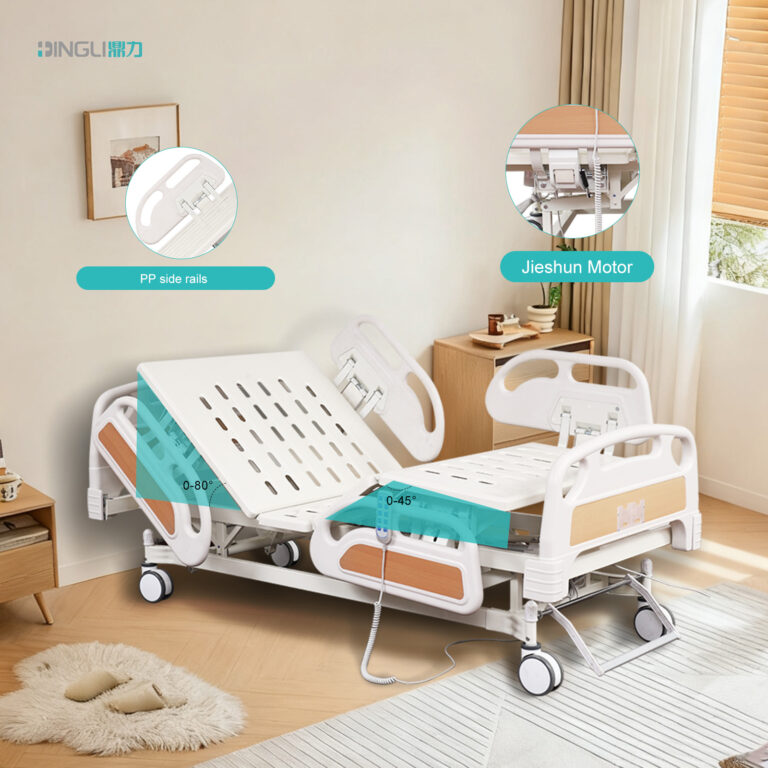
Exceeding the Safe Working Load can affect the lifting system, frame, casters, and brakes, even when no damage is immediately visible.
Immediate Effects
An overloaded powered bed may move slowly, stop during adjustment, or activate its overload protection. Continued operation can place additional stress on the actuators, control system, lifting mechanism, and frame. UK government guidance on the safe use of assistive technology also identifies exceeding the maximum allowed load as a form of equipment misuse.
Excess load can also make the bed harder to move or stop. Casters, stems, and brake components may deform or lose performance, while sudden impacts can place extra stress on welded joints and other load-bearing parts.
Long-Term Wear
Repeated use above the rated SWL can shorten the service life of motors, attuatori, joints, casters, and brakes. Possible warning signs include unusual noise, uneven movement, difficulty adjusting the bed, reduced braking performance, or visible frame deformation.
If a bed has been overloaded or shows any of these signs, remove it from service and arrange an inspection according to the manufacturer’s maintenance instructions. Do not continue using it until its condition has been assessed.
How to Verify a Bed’s Load Capacity
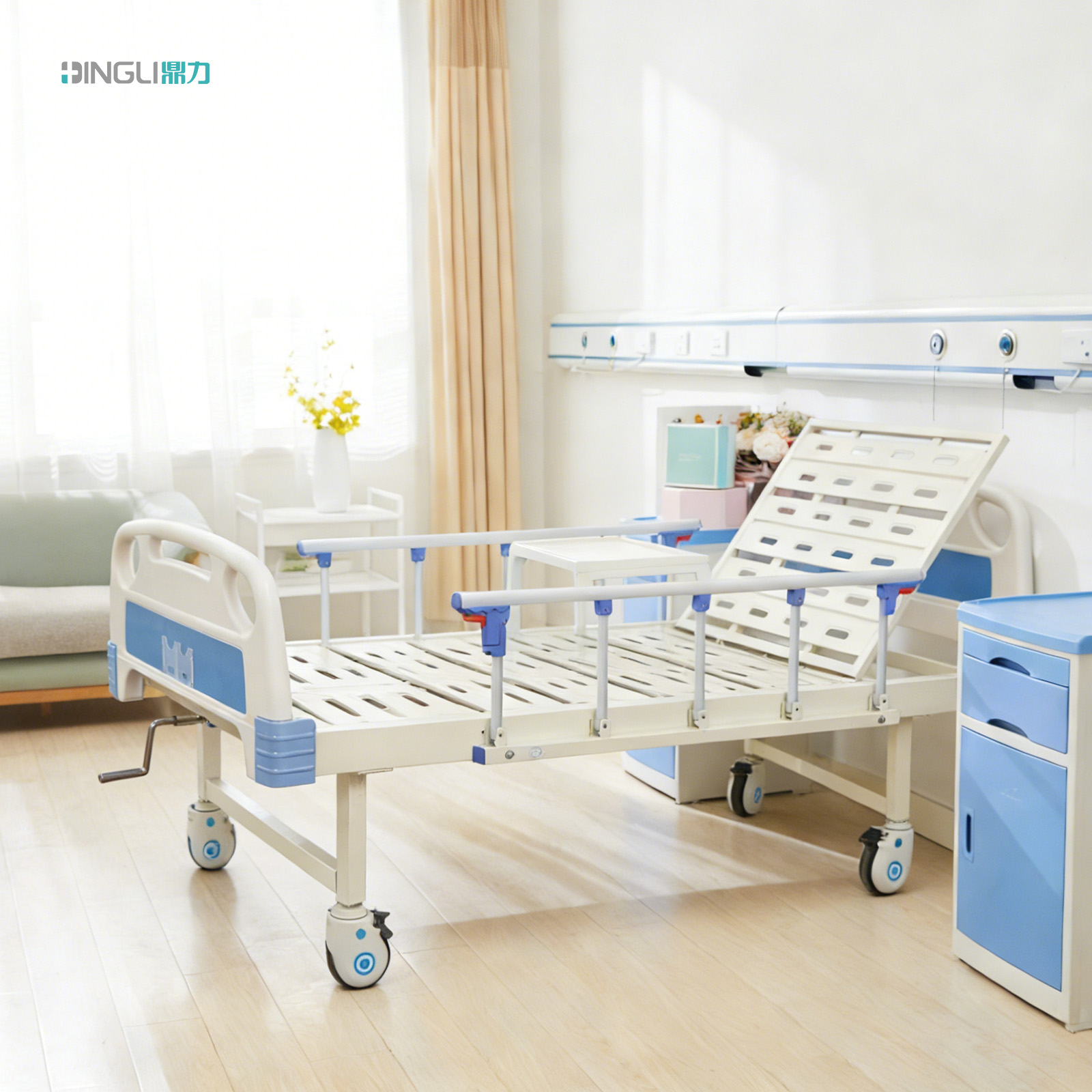
The load values shown on the bed should match its product specification and supporting test documents.
Labels and Product Specifications
A hospital bed should clearly display its Safe Working Load and Maximum Patient Weight. The label should be durable, easy to locate, and linked to an identifiable model or serial number.
Buyers should compare the following information:
- Peso massimo del paziente: The declared limit for the patient.
- Carico di lavoro sicuro: The total supported load defined for the approved bed configuration.
- Model identification: The model on the label should match the product being ordered.
- Product specification: The SWL and MPW should be consistent across the label, specification, e istruzioni per l'uso.
Test Documents
The supporting documents should identify the manufacturer, modello letto, tested configuration, edizione standard, and test results. Relevant assessments may cover structural strength, stability, operation under load, and durability. Gli acquirenti possono anche consultare la nostra guida a scegliere un produttore affidabile di letti ospedalieri per ulteriori controlli sui fornitori e sul controllo qualità.
CEI 80601-2-52:2026 is the latest international edition for adult medical beds, but earlier editions may still be accepted in some markets. Buyers should confirm which edition applies in the destination country and whether the submitted evidence covers the exact model, materasso, controlli, and accessories included in the order.
Buyer’s Load Verification Checklist
| Verification Stage | Cosa dovrebbero controllare gli acquirenti |
|---|---|
| Before Selection |
|
| At Delivery and Commissioning |
|
Domande frequenti
What is the weight capacity of a hospital bed?
Hospital bed capacity varies by model and intended use. Buyers should check two separate values:
- Peso massimo del paziente: The highest patient weight declared for the bed.
- Carico di lavoro sicuro: The total supported load defined for the bed configuration, including the patient and other specified loads.
Standard, ICU, and bariatric beds may have different ratings. Always use the values shown on the product label and specification rather than relying on a general capacity range.
Does hospital bed weight capacity include the mattress?
It depends on which capacity value is being used. Safe Working Load includes the mattress and other supported loads defined for the bed configuration, while Maximum Patient Weight applies only to the patient. Buyers should check the approved mattress specification, especially when using a heavier air or pressure-relief mattress.
How is hospital bed load capacity tested?
Hospital bed capacity is assessed under the applicable medical bed standard, such as IEC 80601-2-52:2026 or an accepted earlier edition. Testing may include:
- Strength tests: Loads are applied at specified positions to assess the frame, piattaforma del materasso, and load-bearing parts.
- Functional tests: Powered adjustments are checked while the bed supports the required test load.
- Stability tests: The bed is evaluated for tipping under defined positions and loading conditions.
Buyers should confirm that the test documents cover the exact bed model and configuration being ordered.
Considerazioni finali
Hospital bed weight capacity should be checked through both Safe Working Load and Maximum Patient Weight. Before ordering, make sure these values are consistent across the bed label, specifica del prodotto, Istruzioni per l'uso, and available test documents. The evidence should also cover the exact model and configuration being purchased.
Use the checklist above when comparing products and reviewing supplier documents. If you need help choosing a suitable load capacity, contatta il nostro team to compare hospital bed models or discuss your OEM/ODM specifications.