Sourcing a reliable anti bedsore air mattress means cutting through online listings that lack certified proof. Choosing a supplier on price alone exposes your business to high warranty claims, regulatory penalties, and product failures that compromise patient safety.
This analysis provides an objective framework for vetting suppliers. We evaluate the technical data that defines a medical-grade unit, from pump air flow volumes and material durability to the correct way to authenticate FDA and CE registration codes.
Material Realities: Comparing Raw PVC, Nylon-PVC Blends, and TPU
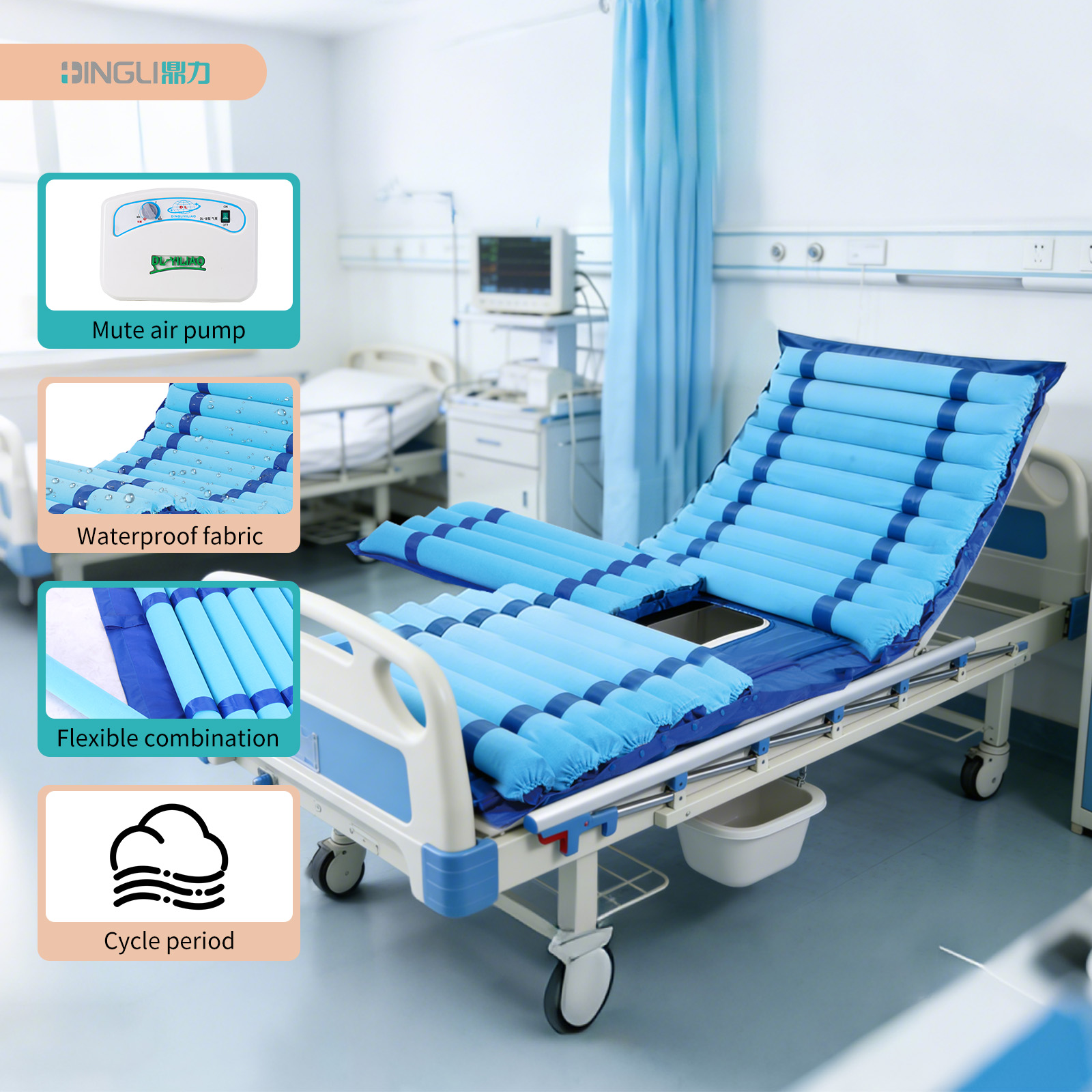
TPU delivers premium performance at a high cost, Nylon-PVC blends offer a durable mid-tier upgrade, while raw PVC remains the budget option despite its drawbacks.
Performance, Durability, and User Experience
When you’re looking at anti-bedsore mattresses, the material directly impacts how it performs and feels. The differences aren’t subtle—they affect everything from durability to patient comfort.
- TPU (Thermoplastic Polyurethane): This material stands out with excellent flexibility, durability, and performance in cold weather. It has very little odor, making it the best choice for chemically sensitive users.
- Nylon-PVC Blends: These blends improve on basic PVC by adding tear resistance and structural strength. This creates a much more robust mid-tier product that holds up better to clinical use.
- Raw PVC (Polyvinyl Chloride): This is the most rigid of the three. It gets brittle and can crack in the cold, and often comes with a noticeable chemical smell or off-gassing issues.
Application Tiers and Cost Hierarchy
Material choice creates a clear good-better-best hierarchy in both application and cost. You get what you pay for, and the right choice depends entirely on the product’s intended use and market position.
- Raw PVC: This is the low-cost baseline. You’ll find it in budget or mass-market inflatables where the price tag is the number one priority.
- Nylon-PVC Blends: This is the mid-range option, often used for medical-grade mattresses that require better structural integrity and durability than you get from plain PVC.
- TPU: This sits at the top as the premium, highest-cost material. It’s reserved for high-specification medical products and PVC-free mattresses where long-term reliability is non-negotiable.
Pump Parameters: Verifying Air Flow Volumes and Lifecycle Ratings
Pump specs like air flow and lifecycle are just numbers on a sheet until proven. The real test is whether the pump can inflate cells against a patient’s weight and run 24/7 without degrading.
Defining and Verifying Air Flow Volume
Air flow rate, measured in liters per minute (L/min), isn’t just about moving air. The pump must deliver enough volume to inflate the mattress cells against a patient’s weight within the programmed cycle time. If the flow is too weak for the patient’s load, the mattress fails to provide therapy.
Verifying this requires more than reading a spec sheet. You need to confirm performance under realistic conditions.
- Bench Testing: Use flow meters to measure the pump’s air output at specific back pressures (例えば, 30–60 mmHg) that simulate the load from a patient lying on the mattress. Free-flow numbers don’t tell the whole story.
- System-Level Checks: Test the pump with the actual mattress it will power. Confirm it can inflate the mattress from a flat state in a reasonable time. Most important, check that alternating cells reach their target pressure without letting the patient “bottom out” and touch the bed frame.
Understanding Pump Lifecycle Ratings and Durability
A lifecycle rating specifies the pump’s expected operational life. This is often stated in continuous running hours or as a Mean Time Between Failures (MTBF) figure. For a device intended to run 24/7 in a clinical setting, this rating is a critical indicator of reliability.
True durability is determined by the quality of the internal components. These are the parts that either last or fail under constant use.
- Motor and Diaphragm: The quality of the motor and the fatigue resistance of the diaphragm material directly impact how long the pump can sustain its performance.
- Thermal Management: A pump running continuously generates heat. Effective thermal management, like adequate heat dissipation, prevents overheating and premature component failure.
時間とともに, wear and tear will reduce a pump’s flow output. This leads to slower inflation times and incomplete pressure cycles, which ultimately compromises the mattress’s therapeutic function. Regular performance checks are necessary to catch this degradation before it affects patient care.
Source Certified Medical Equipment Direct from Factory
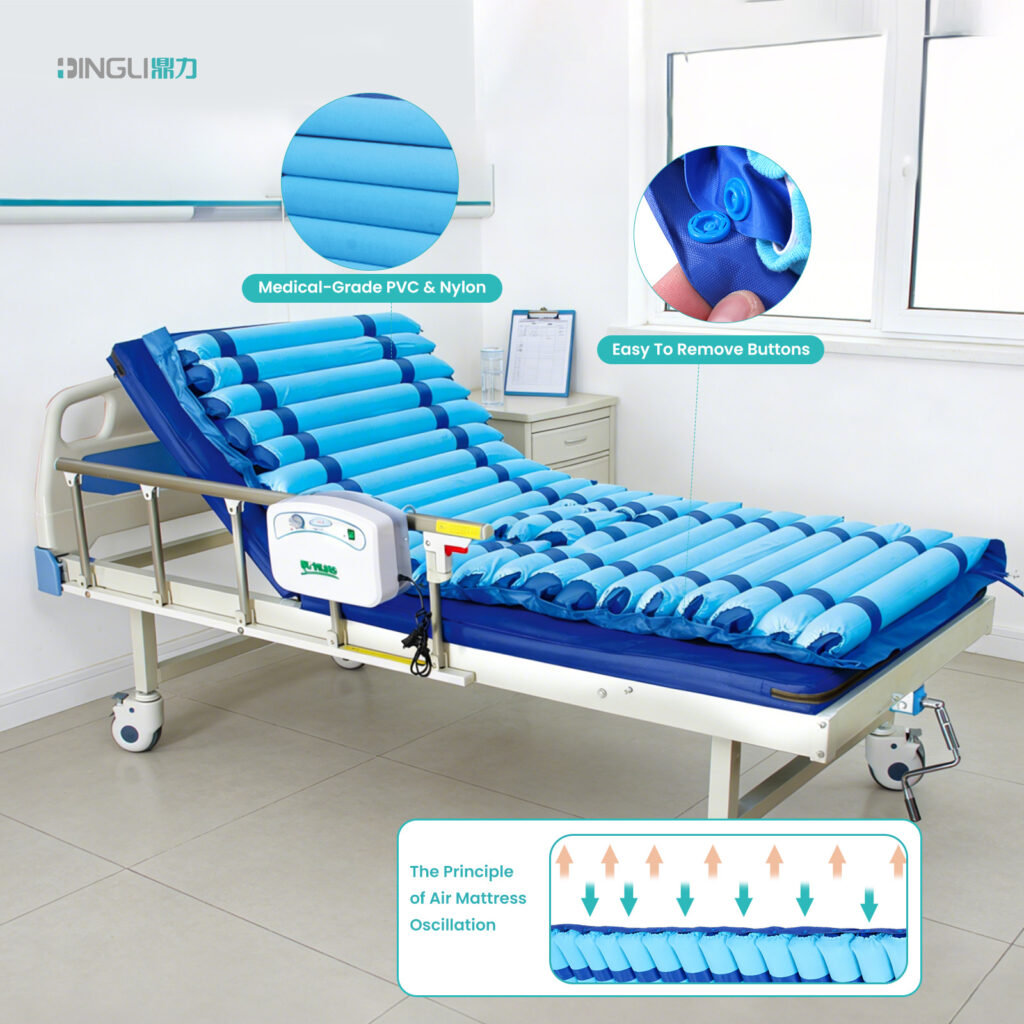
Essential Lifesaving Integrations: Emergency CPR Deflation Valves
A CPR valve transforms a therapeutic mattress from a barrier into a life-saving platform, enabling effective chest compressions in seconds without moving the patient.
Rapid Deflation for Effective CPR
When a patient goes into cardiac arrest, effective chest compressions require a hard, flat surface. An inflated anti-bedsore mattress is designed to be soft and yielding, which is great for preventing pressure sores but a major problem for CPR. The soft surface absorbs the force of the compressions, meaning the chest isn’t depressed enough to circulate blood effectively.
This is where the emergency CPR deflation valve comes in. It’s not a subtle feature; it’s a large-bore, high-flow port designed for one purpose: to dump air as fast as possible. When activated, it bypasses the pump and vents the air from the mattress, specifically from the cells under the patient’s torso. The goal is to create a firm surface in seconds—often under 30 seconds—so resuscitation efforts aren’t delayed or compromised.
Seamless Integration into Emergency Workflow
A CPR valve is useless if staff can’t find or operate it under pressure. Its design must be integrated directly into the chaos of a real-world emergency workflow. This isn’t about convenience; it’s about minimizing the time between recognizing an arrest and delivering high-quality compressions. The valve allows resuscitation to happen right on the bed, eliminating the dangerous and time-consuming task of moving an unstable patient to the floor.
Effective integration depends on a few key human-factors design choices:
- Obvious Location and Labeling: The valve must be easy to spot. It’s typically marked with a high-contrast color like red or orange and clearly labeled “CPR” or with a universal icon. It’s placed where it can be accessed without digging under bedding.
- Single-Action Operation: In an emergency, there’s no time for complex procedures. The valve is designed for a single, decisive action—a pull, a twist, or flipping a lever. It works mechanically, so it functions even during a power failure.
- Standardized Training: Clinical staff are trained to activate the valve as one of the first steps in a cardiac arrest response, in parallel with calling for help and starting compressions. It becomes muscle memory, not an afterthought.
卓越した製造: High-Frequency Thermal Leak-Proof Seams
High-frequency thermal welding is the go-to method for creating the strong, leak-proof, and clean seams essential for reliable anti-bedsore air mattresses used in clinical settings.
In anti-bedsore mattresses, the seams are the most common point of failure. Unlike stitching or adhesives, high-frequency (HF) welding creates a monolithic, non-porous bond by melting thermoplastic films like PVC or TPU from the inside out. This process is non-negotiable for producing air-tight cells that can withstand millions of pressure cycles, patient movement, and aggressive cleaning protocols.
Precision Control of Critical Welding Parameters
Achieving a consistently leak-proof seam isn’t about guesswork. It requires dialing in and locking down several critical process parameters. Getting any of these wrong leads to voids, micro-leaks, or weak bonds that fail under load. For high-volume production, these variables must be statistically controlled.
- RF Power and Frequency: This determines the heat generation rate. Too little power results in an incomplete weld, while too much can burn or thin the material, creating a new weak point.
- Weld Time: The duration of energy application must be long enough for complete fusion but short enough to prevent material degradation.
- Clamp Pressure: This ensures uniform contact between the film layers. If pressure is too low, you get gaps and leaks. If it’s too high, the melted material squeezes out, thinning the seam.
- Cooling Time: The seam must solidify under pressure to prevent micro-cracking or relaxation. Skipping or shortening this step compromises the final bond strength.
Inline Monitoring and Quality Assurance Protocols
Serious manufacturers don’t just rely on final inspection; they build quality control directly into the production line. Since a single leaky cell can compromise the entire mattress’s therapeutic function, preventing defects is far more efficient than catching them at the end. Investment in robust QA is a direct indicator of a supplier’s commitment to clinical reliability.
- Inline Thermal Imaging: High-speed thermal cameras monitor weld temperatures in real time. This system can detect temperature anomalies that correlate to defects, triggering alerts or even automatically adjusting process parameters in a closed-loop system.
- 100% Leak Testing: Every mattress or air cell assembly undergoes an automated pressure decay or bubble test. This is a non-negotiable final gate to catch any leaks that slipped past process controls.
- Destructive Testing: For process validation and periodic audits, technicians perform peel and tensile tests to ensure seam strength exceeds the base material’s tear strength. They also analyze cross-sections to verify complete fusion and the absence of internal voids.
Regulatory Filings: How to Authenticate FDA and CE Registration Codes
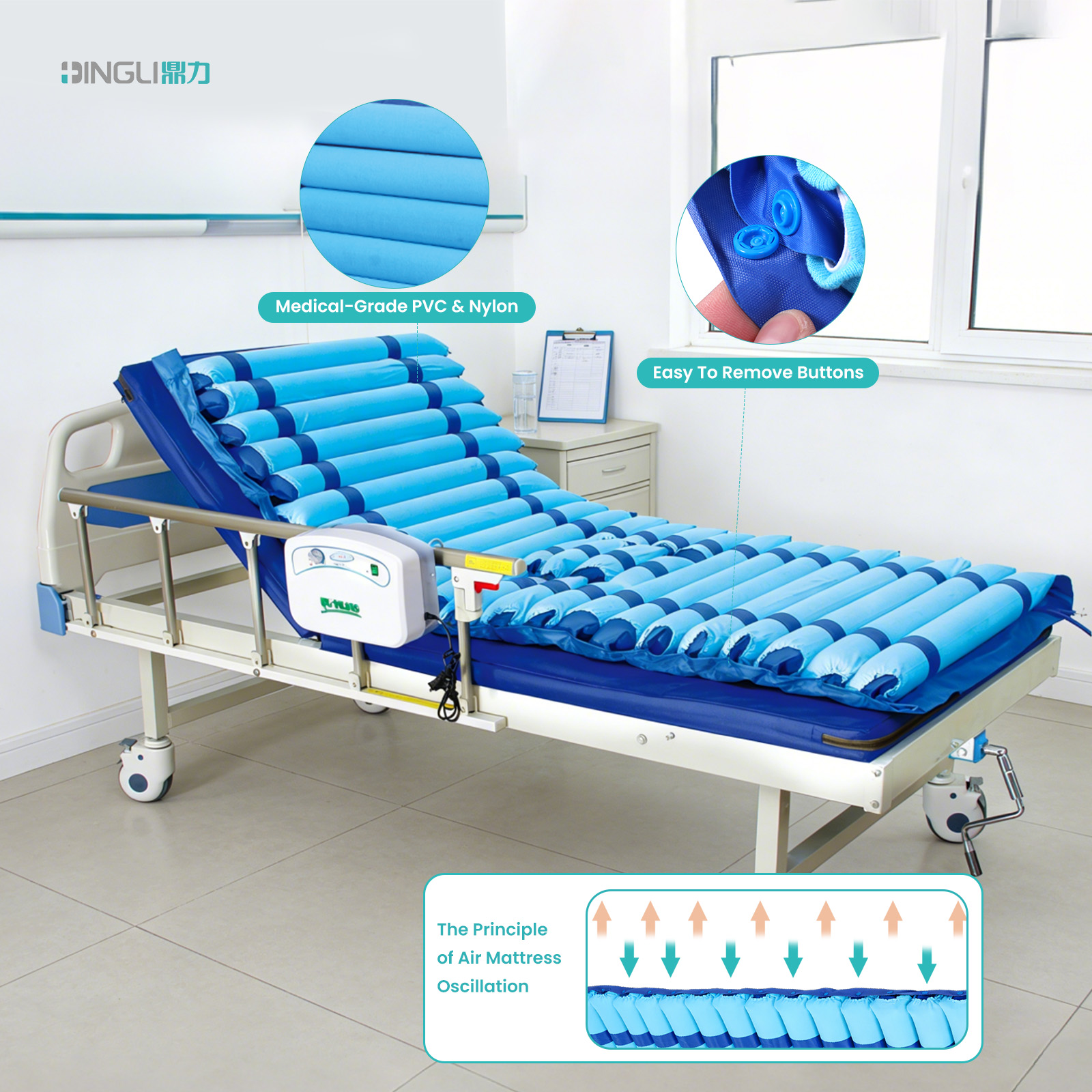
Don’t trust certificates. Verify every FDA and CE claim directly in official government databases. Here’s how you cut through the paperwork and find the truth.
Anti-bedsore mattresses are medical devices. That means any claim of being “FDA Registered” または “CE Marked” isn’t just marketing—it’s a regulatory assertion that you must verify. Suppliers often present official-looking documents, but many are meaningless. Your job is to ignore the paper and check the public records.
Verifying FDA Establishment Registration and Device Clearance
For the US market, there are two separate things to check: the company’s registration and the device’s clearance. They are not the same thing, and a lot of suppliers blur the lines. Here’s how you separate fact from fiction.
- Use the FDA’s Establishment Registration & Device Listing database. This is your first stop. Search for the company to confirm they are actively registered with the FDA and that they actually list anti-bedsore mattresses as a device they manufacture or handle.
- Search the Devices@FDA database. If a supplier claims their mattress is “FDA Cleared” or provides a 510(k) number, this is where you verify it. A 510(k) proves the product itself passed review, which is a much higher bar than simple facility registration.
- Treat “FDA Registration Certificates” as non-official documents. The FDA does not issue them. These are generated by private consultants to make a company’s registration status look like an official endorsement. They prove nothing on their own and should be ignored.
Validating CE Marking and Notified Body Certificates
In the EU, the CE mark on a medical device is backed by a pile of technical documentation and, for most anti-bedsore mattresses, oversight from a third-party organization called a Notified Body. Your task is to check the entire chain of custody.
- Check the four-digit Notified Body (NB) number in the EU’s NANDO database. This number appears next to the CE mark. The database confirms the NB is legitimate and authorized to certify medical devices like yours.
- Request the NB-issued CE certificate for the specific mattress. Most Notified Bodies have an online portal where you can enter the certificate number to verify it is active and hasn’t been withdrawn. This proves the product-specific certification is real.
- Review the manufacturer’s EU Declaration of Conformity (DoC). This legal document is the manufacturer’s formal claim that their product is compliant. Make sure it aligns with the mattress model, the NB certificate, and the current Medical Device Regulation (MDR).
Vendor Quality Checklists for Volume B2B Commercial Buyers
For commercial buys, you need two checklists. One vets the product’s clinical specs and safety. The other vets the vendor’s business and supply chain stability. Miss either one, you’re exposed.
| Technical & Clinical Compliance Checklist | Business & Logistical Viability Checklist |
|---|---|
|
|
Warranty Coverage Details and Global Spare Component Logistical Support
Medical air mattress warranties prioritize clinical uptime with rapid component replacement and modular service, unlike long, prorated consumer terms that are irrelevant in this market.
Standard Warranty Terms and Exclusions
Anti-bedsore air mattresses are durable medical equipment, and their warranties reflect this. You won’t find the 20-year prorated schedules common in the retail airbed market. Instead, expect a non-prorated limited warranty focused on getting a functional unit back in service quickly. Typically, the pump or control unit has a 12 to 24-month warranty, and the mattress itself carries a similar term, often 12 に 24 months. For large institutional contracts, these terms can sometimes be extended.
The coverage is straightforward, targeting defects in materials and workmanship. This includes premature pump motor failure, electronic faults, and air leaks from factory-defective seams or connectors. But the list of what is *not* covered is where facilities need to pay attention. Damage is frequently a point of contention, so clear policies are critical.
Common exclusions include:
- User Damage: Punctures from sharp objects, cuts, burns, and general misuse are almost never covered.
- Improper Cleaning: Damage from aggressive, non-approved cleaning agents that cause the cover material to crack or degrade is a common reason for a denied claim.
- Contamination: Heavily soiled or biologically contaminated mattresses that violate infection control standards are typically excluded from repair or replacement under warranty.
- Normal Wear and Tear: Gradual changes in aesthetics or slight softening of materials that don’t impact the therapeutic function are not considered defects.
Global Logistics for Spare Components and Service
Because uptime is clinically critical, the logistics for spare parts are built around a modular, rapid-replacement model. You don’t send the whole bed back; you replace the failed component. A solid support network stocks key parts to minimize downtime.
To support a global fleet, suppliers rely on a multi-tiered system. Regional distribution centers in North America, Europe, and APAC hold the main inventory. Below that, country-level service partners or distributors maintain a minimum stock of fast-moving parts like pumps and covers. For large hospital systems, it’s also common practice to maintain their own on-site buffer stock of spare pumps and covers to handle immediate failures and maintain infection control during cleaning cycles.
よくある質問
What features define a high-quality medical-grade anti-bedsore air mattress?
A top-tier system combines alternating pressure and low air loss therapy to protect skin. It typically has 18 に 20 durable air cells that inflate and deflate on a 6 to 10-minute cycle to redistribute body weight. The pump should be quiet (around 30 dB), allow for adjustable pressure, and include a static mode for patient transfers. A waterproof yet breathable cover and a rapid CPR deflation valve are also essential for hygiene and safety.
How long do anti-bedsore air mattresses last in a hospital or care facility?
Under constant 24/7 use in a care facility, a medical-grade air mattress generally has a functional lifespan of 3 に 5 年. Continuous pump operation, frequent patient transfers, and aggressive cleaning protocols contribute to more wear than typical home use. The mattress requires replacement when it no longer holds pressure reliably or its cover’s integrity is compromised.
What is a CPR valve and why is it important?
A CPR valve is a rapid-deflation mechanism, usually marked with a red or yellow tab at the head of the mattress. It is a critical safety feature. Performing effective chest compressions requires a firm, stable surface. The CPR valve allows a caregiver to deflate the mattress within seconds, providing a solid base for resuscitation without needing to move the patient from the bed.
What certifications are necessary when importing medical air mattresses?
Importers need a package of documents to verify safety and quality. Essential certificates include ISO 13485 for the factory’s quality system, electrical safety reports for the pump (like IEC 60601-1), and biocompatibility reports for patient-contact materials (ISO 10993). Depending on the final market, specific regulatory approvals like a CE certificate for Europe or FDA clearance for the US are also required.
最終的な考え
Choosing a mattress based on a low price is a business risk. The technical and regulatory standards outlined here are your defense against product failure, patient safety incidents, and damage to your brand reputation. A certified, clinically sound product protects your investment and your clients.
Don’t just rely on spec sheets; verify the engineering firsthand. Your next move is to get a sample for evaluation. Contact our team to discuss your private-label requirements and secure a product for your catalog review.