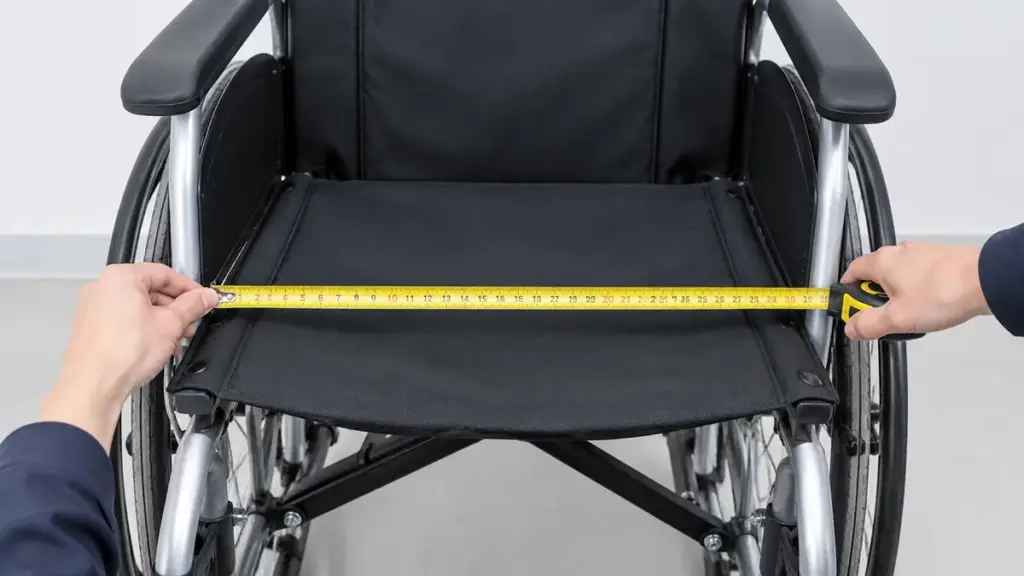
A wheelchair is a small machine with a long vocabulary. Buyers who learn the parts of a wheelchair in one pass can name a broken component, quote a repair, and answer an end user without a technician in the room. This guide names the major components, groups them into the systems that actually matter, and closes with the spare-parts program that turns that vocabulary into recurring orders.
Two readers are served here. The novice needs a name for the part that just failed. The veteran needs a stocking plan for casters, tyres, and upholstery that keeps a service desk profitable. Both get the same foundation: understand the rolling chassis, the contact surfaces, and the brake and safety hardware, and a correct parts list writes itself.
Wheelchair Anatomy and Its Three Main Systems
Every part of a manual chair belongs to one of three systems. The rolling chassis carries load: frame tubes, cross brace, axles, rear wheels, and front casters. The contact interface positions the person: seat pan, backrest, upholstery, armrests, and footrests. The control set governs stopping and falls: brakes, push handles, and anti-tip devices. Electric chairs add a fourth system of motors, controller, joystick, and battery, which sits outside this manual-chair component list.
The division matters because failure follows it. Chassis faults are structural and slow: a bent cross brace, a cracked weld, a folding action gone loose. Interface faults are comfort failures: sagging upholstery, cracked armrest pads, a torn footplate strap. Control faults strand the user immediately: a seized caster, a flat tyre, a brake that drags. A reseller who triages the parts of a wheelchair by system quotes the right fix on the first phone call.
| System | Parts Inside It | Typical First Failure | Replacement Route |
|---|---|---|---|
| Rolling chassis | Frame tubes and cross brace | Loose folding pivot | Factory service, rarely swapped |
| Rolling chassis | Rear wheels and handrims | Tyre wear, spoke wobble | Dealer stock |
| Rolling chassis | Front casters and forks | Swivel bearing grit | Dealer stock, fastest seller |
| Contact interface | Seat pan and backrest | Upholstery sag or tear | Dealer stock |
| Contact interface | Armrests and footrests | Cracked pads, seized hinges | Dealer stock, high margin |
| Control set | Brakes, axles, anti-tip devices | Handle travel, lost anti-tip | Check and adjust first |
Now the honest answer behind most searches. No, the parts of a wheelchair are not universal across brands. Caster forks, armrest brackets, and brake brackets differ between manufacturers, and a supplier who promises otherwise is likely to ship the wrong carton. Two things do standardize: tyre and tube sizes follow rim bead standards, and the test methods behind safety claims are published internationally. Everything else is brand geography.
Frame Cross Brace and Folding Mechanism
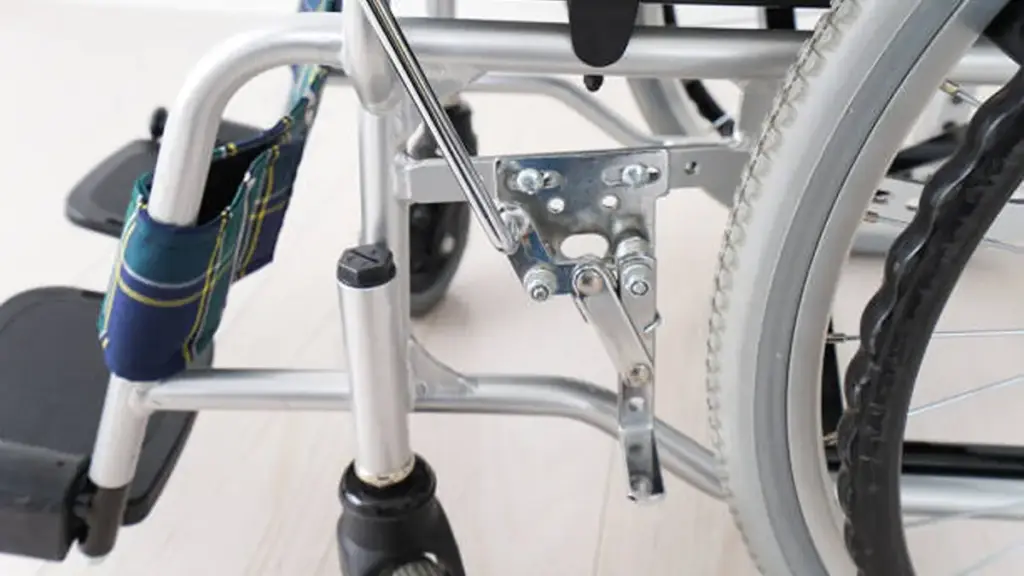
The frame is the chassis: two side posts, seat frame tubes between them, and backrest canes rising behind. On a folding chair the cross brace is the X-shaped tube set under the seat. Squeeze the two side posts inward and the X closes; release and the springs push the chair back open. That hinge action, not the upholstery, is what a user feels as the chair gets old.
Two build details decide frame life. First, tube gauge: the standard Dingli workhorse runs a 22 mm tube with a 1.2 mm wall. The heavy-duty model doubles the cross brace into an I-shaped support for 120 kg users. Second, surface finish: electroplated steel shows the metal and is typically specified for indoor clinical use, while powder coating lays a polymer skin baked onto the tube. Dingli cuts sheet and tube to a 0.1 mm tolerance, welds with robots on key joints, and holds its coating line to a three-year corrosion standard.
Folded width is the freight number importers actually compete on. The sampled Dingli frames fold between 23 and 30 cm. The fixed-armrest steel model tucks to 23 cm, the commode model to 24 cm, the heavy-duty double cross-brace frame to 27 cm, and the detachable-armrest chair to 30 cm. Every centimeter removed from the fold is carton space reclaimed on the voyage home, and denser loading is a per-unit discount nobody has to negotiate.
Wheels Tires Casters and Handrims Explained

The large rear wheels do almost everything: carry load, transmit pushes, and roll over thresholds. All five sampled Dingli steel frames ship 24-inch (60 cm) rear wheels, while the wider market runs from 20 to 26 inches and Dingli’s pediatric line uses 22-inch wheels. The small front wheels are casters, commonly 4 to 8 inches, swiveling inside a fork. In the Dingli tables the sport frame takes 7-inch casters, while the steel frames run 8-inch PVC wheels on steel or metal forks. These are the parts of a wheelchair that meet the ground, and they wear out before the frame does.
Tyres split two ways, and the split decides your whole stocking plan. Solid moulded tyres never flat, never need air, and never need a tube, which is why they sit on institutional chairs and on every sampled Dingli frame. Pneumatic tyres ride softer because the air carries the shock over cracks and cobblestone. Their tubes are stocked by rim size, and the trade-standard fitment for a 24-inch wheelchair wheel is a 24 x 1 3/8 tube, printed 37-540 on the sidewall.
Around the rear wheel sits the handrim, the ring the user grips to push. It is bolted or clamped to the spokes, and its coating, bare aluminium, powder coat, or vinyl dip, is an ergonomic choice rather than a cosmetic one. Worn handrims are one of the few wheel parts replaced alone instead of as a full wheel. On the hub side, the aftermarket splits fixed axles, standard on institutional chairs, from quick-release axles, common on active frames; check the spec sheet, because not every catalog offers both.
Seat Pan Backrest and Upholstery Options
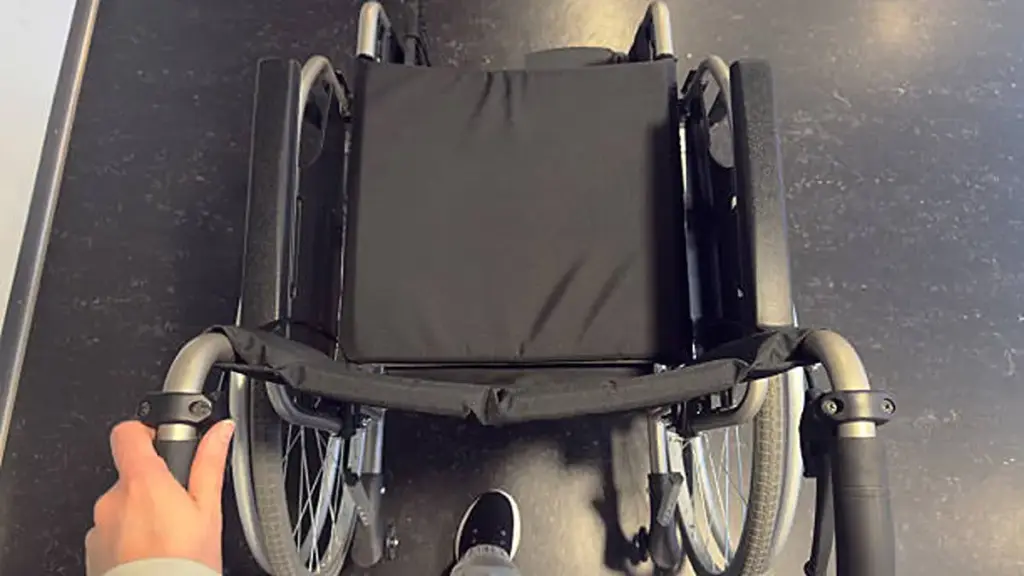
The seat pan is the suspended surface between the frame posts. On most manual chairs it is a fabric sling tensioned across the frame rather than a solid board; on commode models it becomes a moulded cushion with a cutout. Three numbers define fit: width, depth, and height. Across Dingli’s five sampled steel frames, seat width runs 45 to 46 cm. Seat depth sits 40 to 44 cm, about 16 to 17 inches, and pan height 48 to 55 cm from the floor.
Backrest height is the loudest comfort variable and the least requested. The sampled models span 37 cm on the sport chair to 74 cm on the care chair, a spread that changes trunk and shoulder support completely. Upholstery pairs a visible face with a structural layer: high-tensile leather or Oxford cloth over 600D canvas with foam padding, and the heavy-duty frame specifies a flame-retardant face cloth.
Two more parts live on the seat itself. A built-in seatbelt appears on the commode and heavy-duty frames, and the commode cutout drops a PVC bucket under the cushion for bedside hygiene. Both change the pan’s structure, which is why a commode seat rarely bolts onto a standard chair. This is the second place where the word universal breaks: seating geometry is frame-specific even when the screw sizes match.
Footrests Armrests and Push Handle Systems
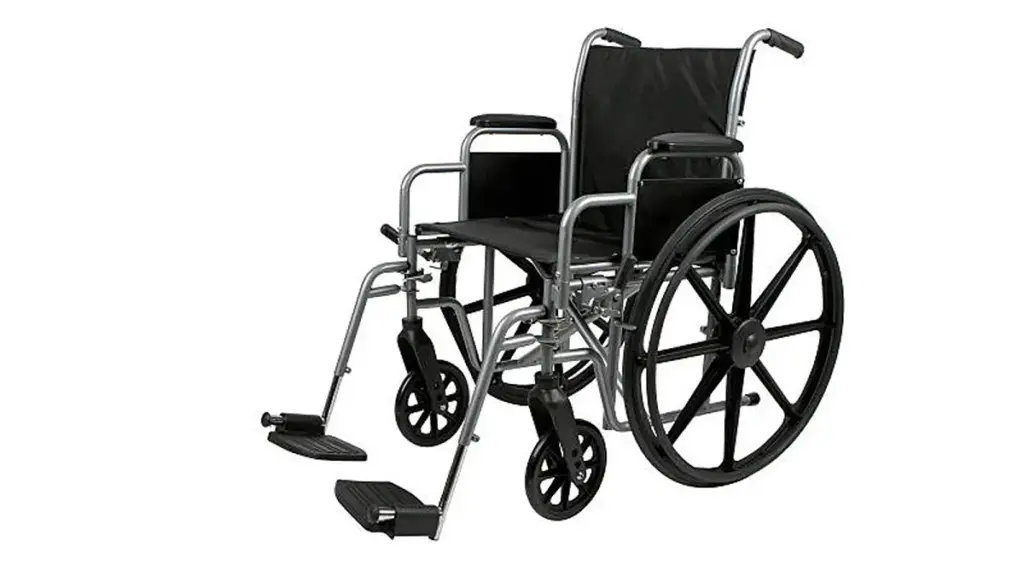
Footrests come in four recognizable types. A fixed footplate angles the feet down and never moves. A swing-away footrest hinges sideways out of the seat edge, letting a user slide across from a bed, then locks back into place. Elevating legrests lift the leg for circulation and swelling; the detachable-armrest chair from Dingli offers them adjustable between 88 and 90 degrees with calf pads. Heel loops are straps that hold the heel, not supports, and are typical on transport chairs.
Armrests split by motion. Fixed armrests are welded or bolted at elbow height; a fixed-slanted variant angles inward for shoulder support on the manual wheelchair with aluminum alloy footplates. Detachable armrests lift off completely. Flip-back armrests swing up and back, the type caregivers ask for by name in side transfers. Desk-length arms slide under a table. Pad materials run blow-molded plastic or PU foam, and the pads are the wear item, which makes them the repeat purchase hiding inside a one-time chair sale.
Ordering by motion instead of by picture prevents the classic wrong carton: an armrest that matches the photo but not the folding mechanism. Read a spec table the way the detachable-armrest model is written: detachable arms, elevating leg rests, toggle brake, linked handle brake. That spec line is already a parts list, with nothing left to guess. Push handles join the same chain: on frames with caregiver brakes, the brake lever sits on the handle, so handle height and brake cable are one service story.
Brakes Axles and Anti-Tip Safety Devices
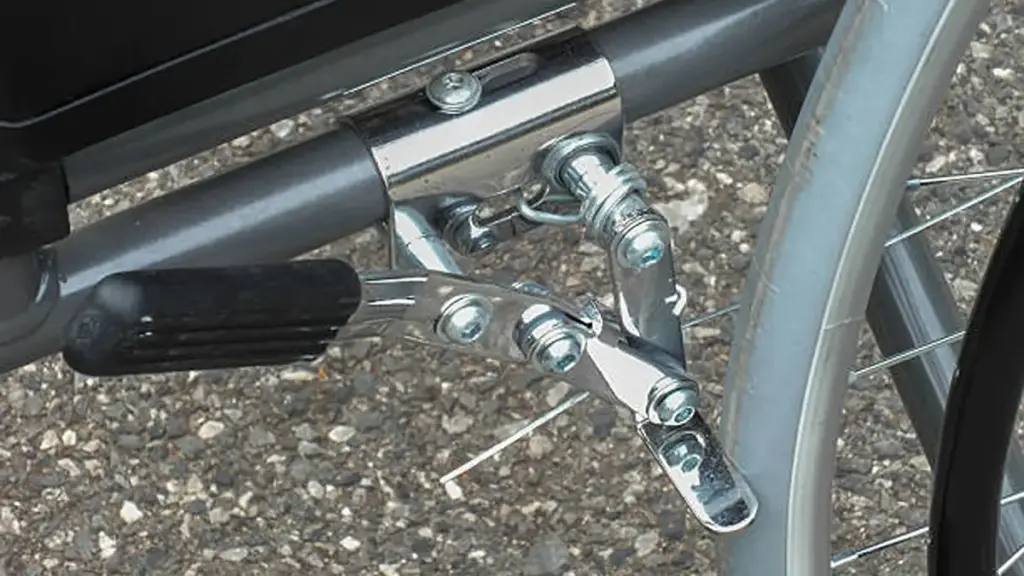
Manual chairs carry two brake families. The parking brake acts on the rear wheels or their axles; Dingli’s toggle-type brake sits below seat level when engaged, keeping it clear of the user’s legs. The second family is the linked rear-handle brake on the detachable-armrest and heavy-duty frames, letting a caregiver stop the chair from behind without bending down. Active chairs add a third device, a wheel lock clamped by lever onto the handrim. Of the parts of a wheelchair, brakes and axles are where liability sits, so verify them by device name rather than by catalog photo.
Anti-tip devices are the safety parts most often lost between factory and end user. The heavy-duty frame ships with anti-tipping footplate sleeves that extend the wheelbase backward, resisting rearward tipping on ramps or when a user leans back. Independent test houses verify these claims: TUV Rheinland’s wheelchair testing programme covers EN 12183 for manual chairs and EN 12184 for powered chairs and scooters, alongside the ISO 7176 series.
The ISO 7176 family is worth naming precisely because catalogs misuse it. Part 8 covers static, impact, and fatigue strength, the load tests a frame must survive. Stability is tested by different parts of the same series, and the ISO wheelchair standards guide lists every part. A supplier citing ISO 7176-8 for stability has copied a number without reading its scope. The verification habit is the one our hospital bed safety standards checklist teaches: name the device, demand the test, confirm the datasheet.
Building a Spare Parts Program That Wins Accounts
Now the veteran’s question: which parts of a wheelchair deserve shelf space? The wear curve repeats in every fleet: caster wheels and forks, tyres and tubes where the chair has them, armrest pads, and footplate straps. Upholstery slings, brake cables, and anti-tip sleeves close the list. Rear spokes and handrims sell slower; frames essentially never do. Stock the wear curve rather than the showroom list, and quote parts by function so a customer describing a squeak can be matched to a carton.
| Component | Detachable-Armrest Steel | Red Sport Carbon Steel | Double Cross-Brace Heavy-Duty |
|---|---|---|---|
| Frame | 22 mm electroplated steel tube | Powder-coated carbon steel | Double cross-brace, I-shaped support |
| Rear wheels | 24-inch solid tires | 24-inch sporty wheels | 24-inch wheels |
| Front wheels | 8-inch PVC, steel fork | 7-inch casters | 8-inch PVC, metal fork |
| Armrests | Fully detachable | Blow-molded PP/PE pads | Flip-back with PU pads |
| Foot support | Elevating leg rests, calf pads | Fixed iron footplates | Detachable swing footrests, calf straps |
| Brakes | Toggle plus linked handle brake | Not listed on the spec sheet | Toggle plus linked handle brake |
| Weight / capacity | 22 kg net, 100 kg user | 13.5 kg net, 100 kg user | 19 kg net, 120 kg user |
Read that matrix as a stocking list. The three frames share rear-wheel and caster sizes, so one carton of 8-inch PVC casters serves two of them; the sport frame’s 7-inch casters need their own line. Armrest pads, footplate straps, and upholstery slings are per-model, which is exactly why the reorder sheet should carry model numbers beside part names.
A parts program is sold, not just stocked. Dingli’s supply terms fit the model: MOQ starts at one unit and standard dispatch runs 7 to 10 days. A mixed 40HQ can carry frames and small parts in one container, so replenishment ships with the next sale. The three-year warranty is backed by lifetime spare-parts support and a 12-hour response window. The staged plan we outline for wholesale hospital beds applies part for part: sell the chair, earn the caster sale, then win the annual parts account.
Frequently Asked Questions About Wheelchair Parts
What are the small front wheels on a wheelchair called?
They are casters. Each one is a small swiveling wheel, usually 4 to 8 inches, mounted in a fork under the front of the frame. Casters steer the chair and take the first bearing of impact against curbs and carpet edges, which makes them the fastest-wearing and best-selling part on any service shelf.
What is the ring you push on a wheelchair called?
It is the handrim, sometimes written hand rim. The handrim attaches to the outside of the rear wheel, and the user grips and drives it with the hands. Coatings run from bare aluminium to powder-coated and vinyl-dipped grips, and a worn handrim can be replaced alone without touching the wheel.
Are wheelchair parts universal across brands?
No, with two partial exceptions. Caster forks, armrest brackets, and seat pans differ by manufacturer, so a part bought for one chair often will not fit another. Tyres and inner tubes do standardize on rim bead sizes, and safety test methods follow published standards. When in doubt, order against the model’s spec sheet, not a photo.
What size inner tube fits a 24 inch wheelchair wheel?
Most pneumatic 24-inch wheelchair wheels take a 24 x 1 3/8 tube, marked 37-540 on the tyre sidewall. Read that sidewall marking before ordering, because 24-inch rims are not all the same bead diameter. One commercial note: frames shipped with solid moulded tyres, as most Dingli export wheelchairs are, have no tube to stock at all.
How do swing-away footrests work?
They hinge sideways. A release lever or knob frees the footrest tube, which swings out and away from the seat edge so the foot plate clears the floor. The user slides across from a bed or car seat, then the rest swings back until it clicks into its lock. Elevating legrests add a second joint that lifts the leg.
How often should wheelchair casters and tires be replaced?
Inspect quarterly, replace on evidence. A caster goes when the swivel feels gritty or the wheel develops side play. A pneumatic tyre goes with cracks, cord showing, or repeat flats, and a solid tyre wears flat over time. Fleet users reach those points in months, home users in years, which is why a service distributor stocks both the fleet-volume and home-user ends of the replacement business.