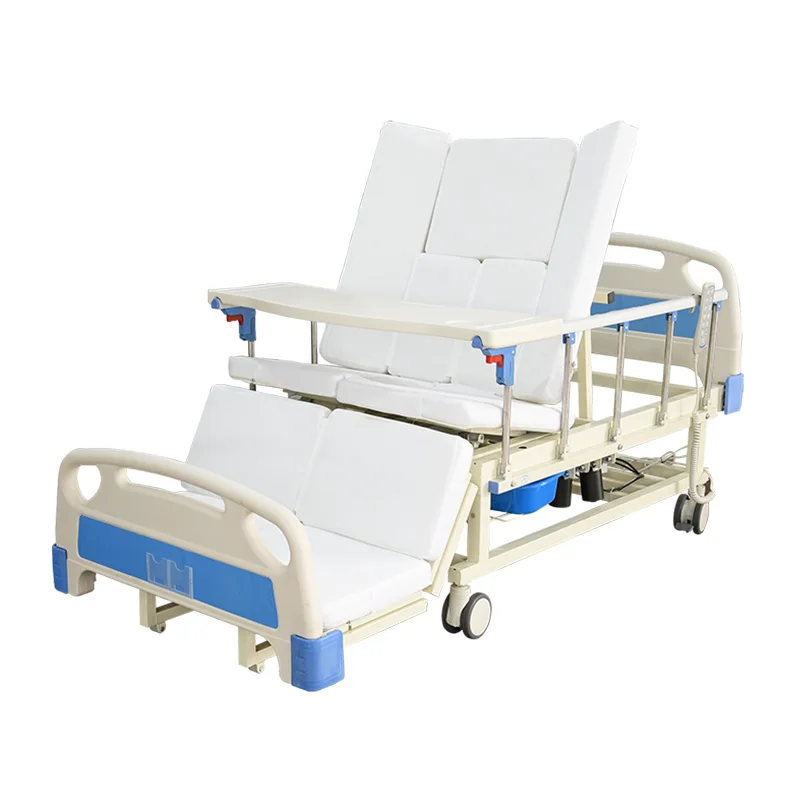
The true cost of an electric hospital bed is tied to its electronic components, not the steel frame. Overlooking the high-wear nature of actuators, motors, and hand controls leads to budget overruns from frequent warranty claims and unexpected maintenance downtime, impacting both procurement audits and daily operations.
This analysis provides an engineering baseline for evaluating these critical systems. We examine the core components, from the lead screw mechanisms in linear actuators to the insulation resistance tests performed during factory inspections. Understanding these specifications is essential for forecasting repair cycles and verifying manufacturing reliability against IEC 60601-1 standards.
Core Mechanical Architecture of Medical Beds
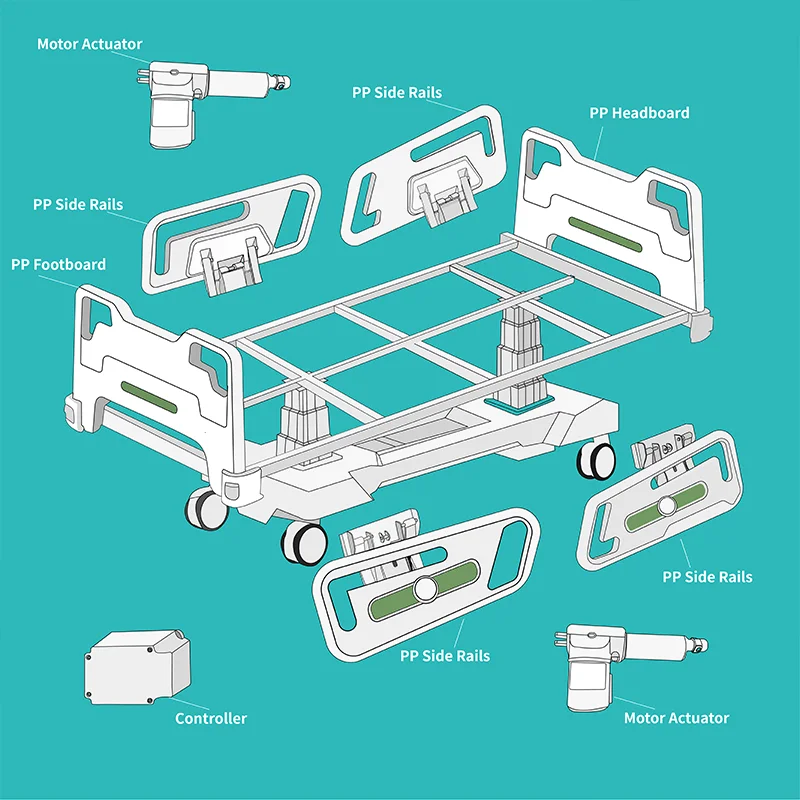
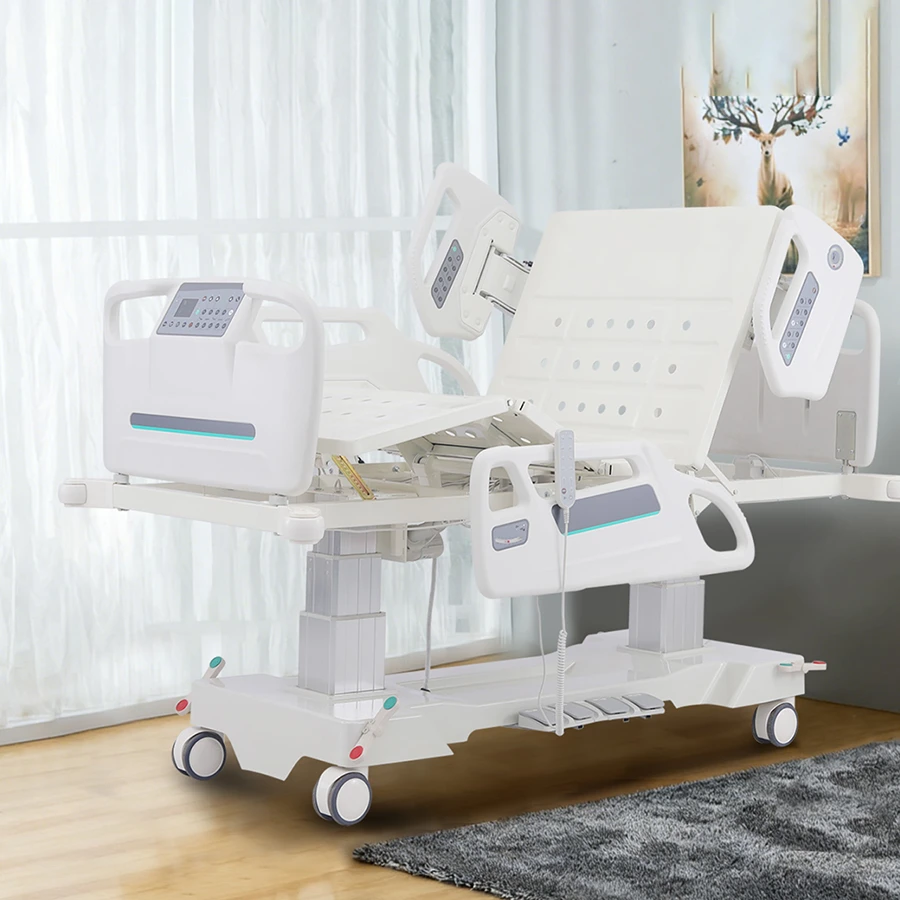
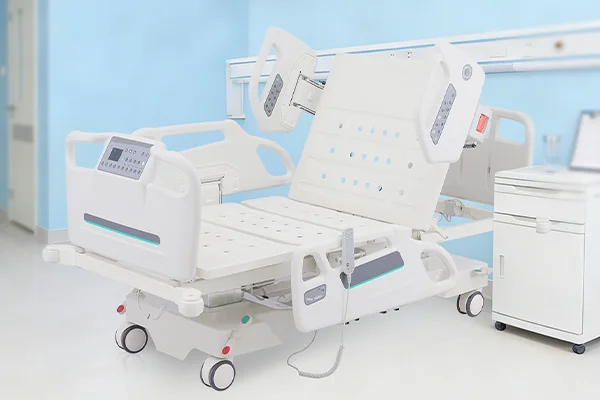
A medical bed’s mechanical core is a system of a load-bearing frame, articulating sections, and linkages, all designed for safe patient positioning and caregiver access.
Structural and Motion Components
The skeleton of a medical bed is a purpose-built system designed to handle heavy loads while enabling complex, smooth motion. It’s not just a frame; it’s a collection of interconnected parts that work together to position a patient safely and effectively.
- A primary frame acts as the central load-bearing structure, supporting the patient and all components.
- Linkages and pivot points transmit force from actuators to create smooth, synchronized platform movement.
- The height-adjustment mechanism provides vertical travel for caregiver access and patient transfers.
- A base frame with casters ensures both mobility for transport and stability when locked.
Actuation, Safety, and System Integration
The mechanical design must also accommodate the electrical and safety components that make the bed functional. The architecture is incomplete until it integrates the systems that drive motion, ensure safety, and allow for practical use in a clinical setting.
- Electric actuators drive bed movements, converting power into controlled linear motion for adjustments.
- Side rails and head/foot boards are integral safety structures mechanically attached to the frame.
- Hand controllers and other user interface hardware mount directly onto the bed structure.
The Engineering Behind Linear Actuators and Motors
Electric hospital beds use linear actuators to convert a motor’s rotation into powerful linear motion. This engineered system is the core of all powered adjustments.
Core Components and Conversion Mechanism
Most electric hospital beds use a simple but effective system: a rotary electric motor paired with a screw mechanism. The motor spins a threaded shaft, usually a lead screw. A nut, fixed to a push tube, travels along this screw, converting the rotation into the linear push-and-pull motion that adjusts the bed. This is the standard method for producing the required force.
A typical medical-grade actuator is a self-contained unit with several key parts working together.
- Electric Motor: The power source, most often a low-voltage DC motor (brushed or brushless) for patient safety and simple control.
- Gearbox: Reduces the motor’s high speed and multiplies its torque to generate enough force to lift heavy loads.
- Screw Mechanism: The lead screw or ball screw that translates the gearbox’s rotation into linear travel.
- Nut and Push Tube: The assembly that moves along the screw and extends from the actuator housing to push or pull the bed linkages.
- Sensors & Switches: Internal limit switches prevent over-extension, and sensors like Hall-effect sensors can provide position feedback to the controller.
While options like hydraulic or pneumatic actuators exist, electric systems dominate because they are clean, quiet, and integrate easily with control electronics. Pure linear motors are also rare in this application. They’re generally overkill for the moderate speeds and high force a bed requires, making the standard screw-driven actuator a more practical and cost-effective choice.
Key Performance Parameters and Controls
When designing or specifying these components, engineers zero in on a few critical performance metrics to ensure safety and reliability in a clinical setting.
- Load Capacity: The actuator must be strong enough to handle the combined weight of the patient, mattress, and any attached accessories, both statically and during movement.
- Speed: Motion needs to be slow enough for patient comfort and safety but fast enough to be clinically useful, like for a quick CPR-flat position.
- Noise and Vibration: Low noise is essential for patient rest. Engineers achieve this through motor design, gear precision, and damping elements.
The control systems for these actuators vary. Basic control systems are straightforward, where a handset simply reverses the motor’s polarity to make the actuator extend or retract. It’s a simple and reliable setup.
Secure Your Supply Chain with Compliant Medical Equipment
Push-Button Controls and Multi-Axis Articulation
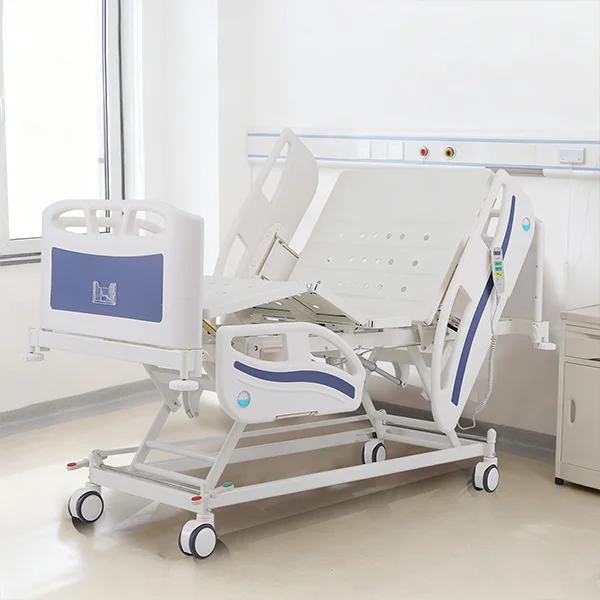
Electric hospital beds translate simple button presses into precise, multi-axis movements. This system gives patients control and makes positioning safer and easier for caregivers.
The Push-Button Interface and Control System
The control system is straightforward. A patient or caregiver presses a button on a handheld remote, side rail, or footboard panel. This action sends a signal to an onboard control box, which acts as the bed’s brain. The control box then directs power to the specific electric actuator responsible for that function—whether it’s raising the backrest, adjusting the leg section, or changing the entire bed’s height. When the button is released, the movement stops and the actuator locks in place.
Multi-Axis Articulation for Patient Positioning
“Multi-axis articulation” means different sections of the bed platform can move independently. A typical fully electric bed has at least three powered axes of movement:
- Height Adjustment: The entire bed frame moves up or down. Lowering the bed makes it safer for patients to get in and out, while raising it puts the patient at a better working height for caregivers.
- Backrest/Head Section: This section articulates the upper body, enabling clinical positions like Fowler’s position to ease breathing or assist with feeding.
- Leg/Knee Section: Elevating the legs and bending the knees can improve circulation, manage edema, and prevent the patient from sliding down when the backrest is raised.
Power Supply Systems and Emergency Battery Backups
Electric beds run on standard wall power but use a mix of internal batteries, manual cranks, and hospital-wide generators to ensure patient safety during outages.
Primary Electrical System
Electric hospital beds are built to be plug-and-play anywhere in the world. They operate on a wide voltage range, typically 110–240V AC, to match the electrical grids in North America, Europe, and Asia. This versatility means facilities can deploy the same bed model globally without worrying about power compatibility.
Inside the bed, a dedicated power supply unit converts the high-voltage AC power from the wall outlet into low-voltage DC power. This conversion is a critical safety feature. It ensures the motors, actuators, and control systems that adjust the bed run on a much safer current, minimizing electrical risk to both the patient and caregivers.
Backup Power Mechanisms
Many electric beds include an integrated battery backup. This isn’t designed to run the bed for hours, but to provide temporary power for essential adjustments during a power failure. It gives staff enough time to reposition a patient for safety or comfort until the main power is restored or the bed can be moved.
As a true failsafe, a manual crank system is often included. This is a purely mechanical override for situations where both mains power and battery backup are unavailable. While using it is slower and more labor-intensive, it guarantees that a caregiver can always adjust the bed’s height and articulating sections, no matter the electrical situation.
Standard Safety Lockouts and Emergency Disconnects

Safety lockouts give staff control over bed functions to prevent misuse, while emergency disconnects enable rapid shutdown or repositioning during urgent events like a cardiac arrest.
Safety Lockout Mechanisms
Safety lockouts are simply controls that let clinical staff disable specific bed movements. This stops a patient or visitor from accidentally changing the bed’s height, backrest angle, or tilt in an unsafe way. You’ll typically find these lockout functions on a dedicated control panel, usually located on the footboard or integrated into a side rail.
Emergency Disconnect Functions
Emergency disconnects are built for urgent situations, giving staff a way to shut down or reposition the bed immediately. They are not for routine adjustments.
- CPR Release: This is a critical function, often a mechanical lever or an electric button, that rapidly flattens the backrest. It creates the firm, flat surface needed for effective chest compressions during a cardiac arrest.
- Electrical Disconnect: The most basic disconnect is the quick-release power cord. Pulling the plug instantly isolates the bed’s electronics, which is essential for preventing electrical hazards from liquid spills or system faults.
Comparing Structural Lifespans of Electric Components
An electric bed’s steel frame can last over a decade, but its motors and electronics won’t. Asset life is a tale of two systems: durable structure versus wearable motion components.
| Component | Typical Service Life | Primary Wear Mechanisms |
|---|---|---|
| Frame & Welded Structure | 8–15 years | Corrosion, weld fatigue, joint loosening. |
| Side Rails & Hardware | Durable but use-dependent | Mechanical wear from repeated locking, latch failure, impact damage. |
| Motors & Actuators | Shorter, highly use-dependent | Repeated load cycling, heat buildup, electrical stress, internal gear/brush wear. |
| Control Box & Electronics | Mid-life, electrically sensitive | Power surges, moisture ingress, connector wear, board component aging. |
| Hand Controls & Cables | High-wear consumable item | Cable flexing/pinching, button wear, physical stress from drops and pulling. |
Electrical and Motion Component Wear
The motors, actuators, and control boxes have a much shorter, more use-dependent lifespan. Their failure often dictates when a bed needs a major repair or is taken out of service entirely. These parts are constantly under load, cycling up and down, which generates heat and electrical stress. This leads to slower movement, strange noises, or a complete loss of function. Hand controls and their cables are the most common wear items. They get bent, pinched, and the buttons just wear out from constant use, making them a frequent point of failure.
Factory Inspection Routines for Electronic Motor Assemblies
Factory inspections for bed motors are multi-stage routines governed by medical device standards, ensuring safety and reliability from raw components through final assembly.
Component and In-Process Verification
For medical beds, quality control isn’t a final step—it’s built into the entire production flow. Verification starts the moment a motor assembly or its components arrive at the factory and continues through every stage of integration into the bed frame.
Incoming inspection confirms that what you bought is what you got. First, inspectors verify the paperwork, checking certificates of conformity and matching the motor’s nameplate data (voltage, IP rating, duty cycle) against the bed’s design specifications. Then comes the physical check for any damage like cracks in the housing or a bent shaft. Critical dimensions for mounting interfaces and shaft runout are measured to ensure proper fit and low vibration. Finally, a sample of motors undergoes basic electrical screening.
During assembly, in-process checks ensure the motor is integrated correctly. Technicians verify motor alignment with the actuator or gearbox, torque all mounting bolts to spec, and confirm wiring is routed safely to avoid being pinched by moving parts. For the electronic driver boards, visual inspections follow IPC-A-610 standards to catch any soldering defects or incorrectly placed components.
Assembled System Functional and Safety Testing
Once the motor assembly is installed in the bed, the entire system undergoes functional and safety testing. This isn’t just about whether it moves; it’s about whether it moves correctly, quietly, and safely under load. Technicians run every motorized function—height, backrest, leg articulation—through its full range of motion. They validate that movement direction matches the controller input and that the system stops precisely at its predefined limits.
The final gate is a series of system-level electrical safety tests on the fully assembled bed. This includes another round of hipot and insulation resistance tests to confirm the entire product meets medical device standards like IEC 60601-1. Inspectors also verify earth continuity from the motor housing to the main protective ground. Lastly, they test all the fail-safes—confirming that the nurse lockouts work, overload protection engages when a motor is stalled, and any emergency stop functions cut power as designed.
Frequently Asked Questions
What is a full electric hospital bed?
A full electric hospital bed is a powered medical bed where all three primary adjustments—head, foot, and overall bed height—are driven by electric motors controlled with a remote. This setup allows both patients and caregivers to change positions with the push of a button. It differs from semi-electric beds, where height adjustment is manual, and manual beds, which use cranks for all movements.
How many motors are in an electric hospital bed?
An electric hospital bed typically has between one and four motors, or linear actuators. A standard model often uses three motors: one for the head, one for the foot, and one for height adjustment. Simpler beds may have one or two, while advanced or bariatric models can have four or more to handle heavier loads and additional positioning features like tilting.
Can a patient manually adjust an electric bed if the power goes out?
Generally, no. While most electric beds include an emergency manual crank for power outages, it is designed for a caregiver to use. The crank mechanism is usually located at the foot of the bed or underneath the frame, making it inaccessible for a patient lying in bed. Some beds have a battery backup that might allow a patient to lower the bed, but full manual adjustment is a task for a caregiver.
What causes an electric hospital bed motor to stop working?
A motor can fail for several reasons. The most common issues are related to the power supply, such as a disconnected cord or a blown fuse. Other causes include a faulty hand control, damaged internal wiring, or a failed control box. Mechanical problems like an obstructed or worn-out actuator, often from exceeding the weight limit, can also cause the motor to stop working. Sometimes, a built-in safety feature will shut the motor down to prevent damage.
How much weight can an electric hospital bed lift?
Lifting capacity varies by model. Standard electric hospital beds typically have a patient weight capacity of 250 to 450 pounds. Heavy-duty or bariatric models are built to lift much more, with patient capacities ranging from 500 to over 1,000 pounds. It’s important to check the bed’s Safe Working Load (SWL), which is the total weight capacity including the patient, mattress, and any accessories.
Is it safe to use an electric hospital bed with oxygen equipment?
Yes, it is safe when you follow standard safety precautions. Oxygen itself doesn’t burn but can make fires start more easily and burn faster. You must ensure the bed is plugged into a properly grounded outlet and that all cords are in good condition. Keep all ignition sources, like open flames or sparks, away from the oxygen. With proper electrical safety and cable management, electric beds are used safely with oxygen in hospitals and homes every day.
Final Thoughts
From durable mechanical structures and reliable linear actuators to compliant electrical systems and rigorous factory inspections, every component plays a role in ensuring long-term performance, patient safety, and lower maintenance costs. Choosing a manufacturer with proven production capabilities and strict quality control is essential for dependable medical equipment.
At Дингли, we combine advanced manufacturing, comprehensive quality assurance, and flexible OEM/ODM services to deliver reliable hospital beds for healthcare providers and distributors worldwide. Contact us today to learn more about our electric hospital bed solutions, request product specifications or samples, and receive a customized quotation.