Sourcing an ICU hospital bed based on features instead of core engineering specs exposes your facility to compliance failures and clinical risks. Selecting an unsuitable model can affect workflow efficiency, patient safety management, and long-term maintenance costs.
This guide explains the key specifications and functions that procurement teams should evaluate before purchasing an ICU hospital bed. We break down the non-negotiable specifications, 包括国际电工委员会 60601-2-52 requirements for medical bed safety, essential performance, and Safe Working Load (SWL), the mechanics of a manual CPR release, and the clinical requirements for Trendelenburg positioning.
What Makes an ICU Hospital Bed Different?
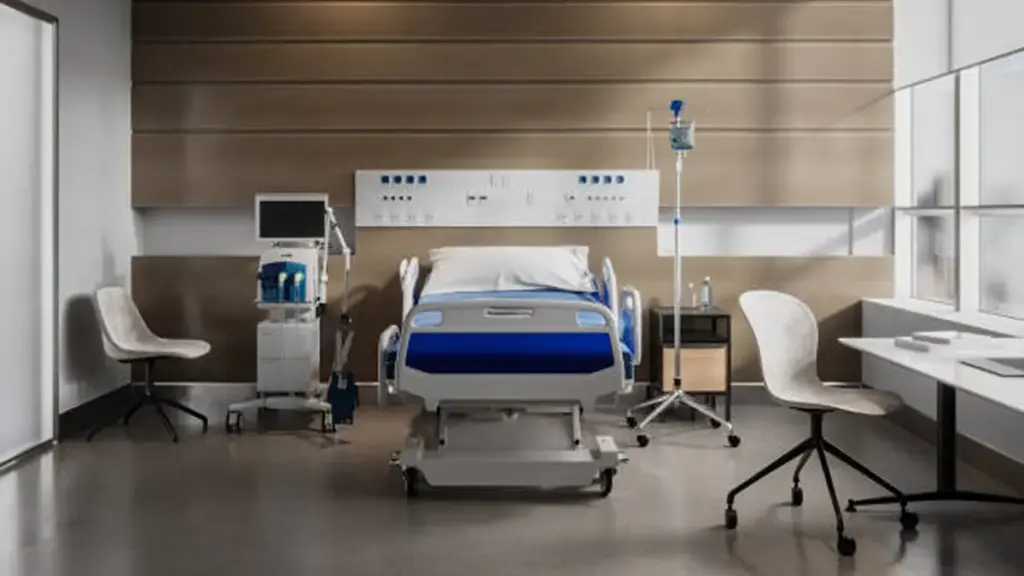
An ICU bed combines powered positioning, safety features, and accessory compatibility to support critical care procedures and daily patient management.
Advanced Adjustability and Robust Construction
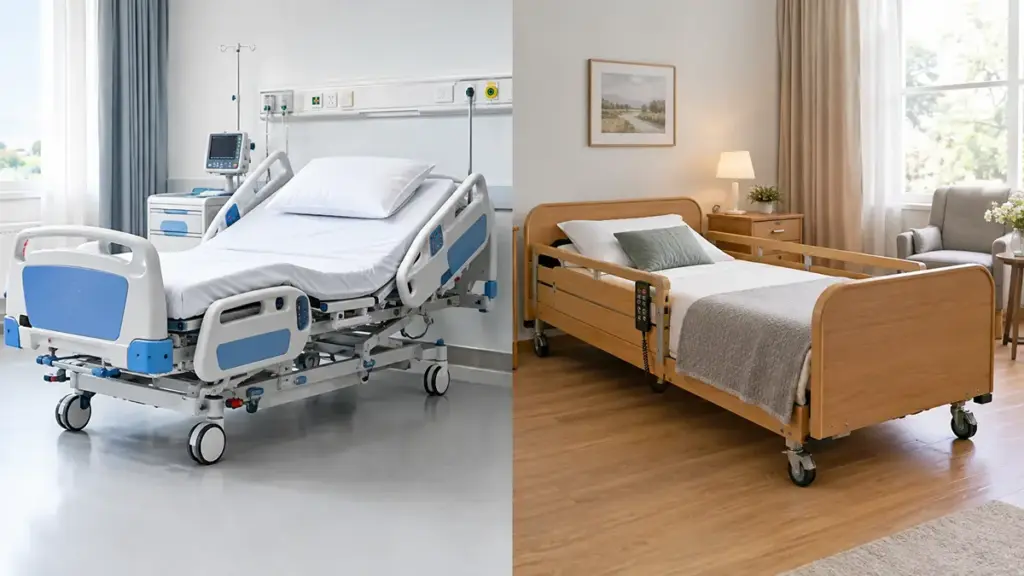
Unlike a standard 病床, which is built for basic recovery, an ICU bed is an engineered piece of clinical equipment. The differences in its construction are obvious once you know what to look for.
- Most modern ICU beds use electric actuators for key positioning functions, including height adjustment, backrest elevation, and bed tilting. These powered functions are also commonly found in electric hospital beds, which are designed to provide more precise positioning compared with manual models.
- Many ICU beds on the market are designed with SWL ratings above 200 千克, depending on the model configuration and intended application. This capacity is needed to support the patient and all the heavy onboard equipment.
- The range of motion is much greater, offering steeper Trendelenburg angles for specific procedures and a very low height setting. This low position is critical for patient safety and giving staff proper access for CPR.
- Mobility and stability are key. These beds use large, heavy-duty castors and a central locking brake system, allowing secure transport of an unstable patient and then locking the bed down tight for procedures.
Integrated Clinical and Safety Functions
ICU beds support daily clinical procedures through adjustable positioning, monitoring accessories, and emergency functions. The built-in functions are there to support clinical protocols and improve safety in a high-risk environment.
- Many advanced ICU beds include specialized positions such as the cardiac chair function. Some beds also provide automated therapies like continuous lateral rotation to actively improve patient outcomes.
- Safety is paramount. You’ll find features like integrated head-of-bed angle alarms, full-length side rails to prevent falls, and quick-release levers for emergency CPR access.
- The bed frame anticipates the need for advanced pressure-relieving mattresses and microclimate control surfaces. This is essential for protecting the skin integrity of immobile patients.
- The frame functions as a clinical workstation. It often includes built-in scales for accurate drug dosing, integrated IV poles, and dedicated mounts for monitors and infusion pumps.
Key Positioning Functions for Critical Care
ICU bed positions are not for comfort; they are clinical tools for breathing support, circulation management, and emergency response, directly impacting patient outcomes.
Therapeutic and Clinical Positions
Beyond basic adjustments, ICU beds provide specific therapeutic positions that are critical for managing complex conditions. These aren’t just about comfort; they are prescribed clinical interventions. The main ones are Trendelenburg, Reverse Trendelenburg, and the Cardiac Chair position. High-end beds also offer lateral tilt for automated repositioning. This is an advanced option mainly found on premium ICU systems.
The Trendelenburg and Reverse Trendelenburg functions tilt the entire bed platform. They are essential for managing circulation and respiration. These tilts are typically in the range of 12° to 18°.
- 特伦德伦伯卧位 (Head Down): Tilts the bed so the head is lower than the feet. It’s used as a short-term intervention for managing certain types of shock by increasing venous return to the heart and is also used to help with placing central lines.
- Reverse Trendelenburg (Head Up): Tilts the bed so the head is higher than the feet. This position helps improve breathing mechanics, reduces aspiration risk in ventilated patients, and can help manage intracranial pressure in neurological cases.
The Cardiac Chair position is another key feature, often activated with a single button. It combines backrest elevation with leg lowering to put the patient in a seated posture. This position helps optimize respiratory and cardiac function, making it easier for patients to breathe and tolerate being upright, which is important for weaning from a ventilator.
Foundational and Safety Adjustments
Every therapeutic position is built on a set of foundational, fully electric adjustments. These core movements are non-negotiable for both routine care and emergency situations. They include backrest and knee-rest articulation, overall bed height adjustment, and a rapid CPR-flattening function.
The backrest elevation (typically 0-70° or more) and knee-rest adjustment (0-45°) work together. Elevating the head of the bed is a standard practice to reduce the risk of ventilator-associated pneumonia. The knee-rest function helps prevent the patient from sliding down the bed, which reduces skin shearing. Many beds have an “auto-contour” feature that synchronizes these movements automatically.
Whole-bed height adjustment (Hi-Lo) is a critical safety and ergonomic feature. The bed can be lowered to reduce the impact of a potential fall or to help a patient transfer out of bed. It can be raised to an ergonomic height for caregivers, preventing back strain during procedures like intubation or line placement.
最后, the CPR or quick-flat function is a mandatory safety feature. In a cardiac arrest, you need a flat, firm surface for effective chest compressions immediately. ICU beds have a one-touch button or a manual lever that rapidly lowers the backrest to a horizontal position in seconds, ensuring no time is wasted during an emergency.
Source ICU Hospital Beds Directly from the Manufacturer
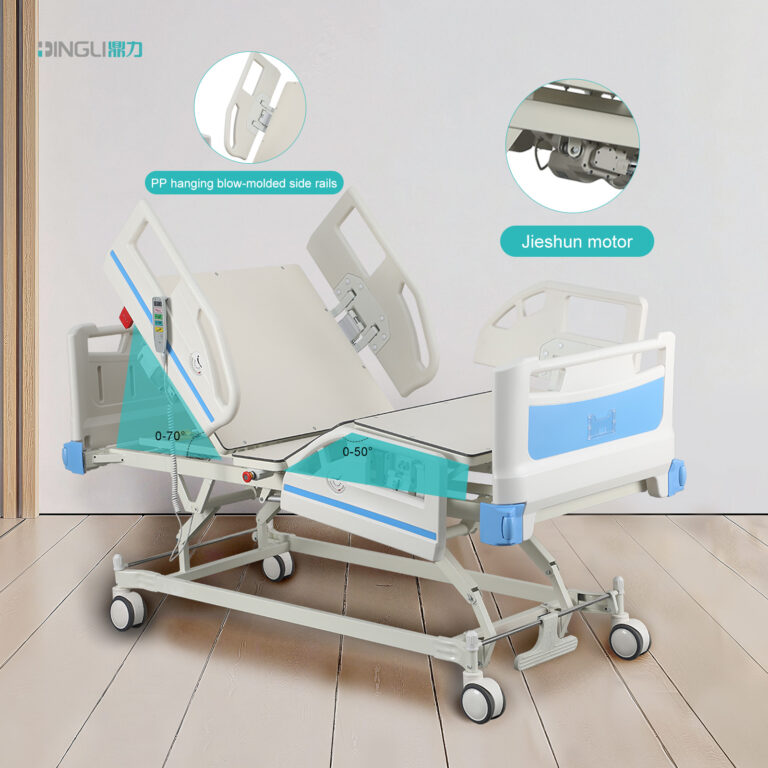
Electric Controls and Emergency Safety Features
ICU bed controls combine electric precision for daily adjustments with foolproof mechanical and battery-backed overrides for emergencies, ensuring function is never lost when it matters most.
Standard Electric Control Functions
The daily work of an ICU bed is handled by a system of electric linear actuators. These motors drive all primary movements, including backrest and leg section articulation, overall bed height, and tilting functions like Trendelenburg. Staff operate these movements through various interfaces, such as a patient handset, integrated side-rail controls, or a centralized nurse console at the foot of the bed. These panels provide simple, icon-based buttons for quick adjustments.
Beyond basic directional controls, many ICU beds feature one-touch programmed functions. A single button press can move the bed into a pre-set clinical position like the “cardiac chair,” which combines back, leg, and tilt adjustments to optimize a patient’s respiratory function. These automated shortcuts reduce manual effort and ensure consistent, repeatable positioning.
Emergency Operation and Failsafes
When a code blue is called, there is no time to navigate menus. ICU beds are built with redundant emergency systems designed for speed and reliability, fully independent of each other. The core of this is the CPR function, which exists in two forms: electric and mechanical.
- Electric One-Key CPR: The nurse console typically has a dedicated CPR button. Pressing it triggers an automatic sequence that rapidly flattens the backrest and leg sections, creating the firm, horizontal surface needed for effective chest compressions.
- Manual CPR Release: This is the ultimate fail-safe. A mechanical lever or rod, usually located on both sides of the bed for quick access, allows staff to instantly decouple the backrest actuator. Pulling this lever causes the backrest to lower to a horizontal position in just 3-4 seconds. This function works without any power, ensuring the bed can be flattened during a complete power failure. A damping mechanism ensures the backrest lowers quickly but smoothly, preventing jarring impacts to the patient.
To guard against power interruptions, all modern ICU beds include a backup battery. This battery ensures that all electric functions, including one-touch CPR and basic positioning, remain operational during a power outage or while the bed is being transported. These emergency functions help maintain essential performance during system failures, which is an important consideration under medical bed safety standards such as IEC 60601-2-52.
Integrated Weighing Systems: A Valuable ICU Bed Option
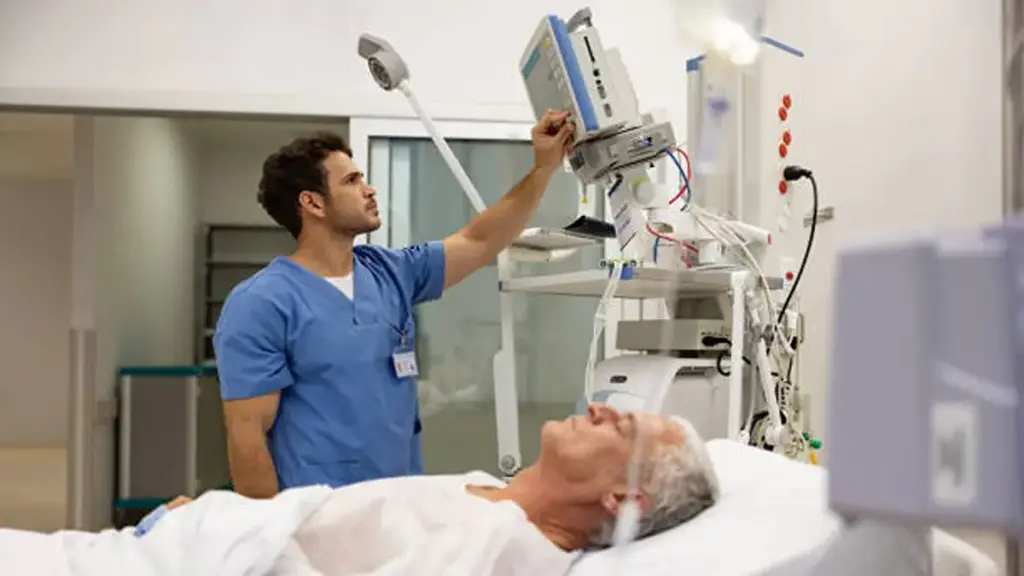
Integrated scales are a critical ICU bed feature that improves patient safety and workflow efficiency. Procurement teams must define clear clinical and technical specifications to get the right system.
Clinical and Workflow Justification
Adding an integrated scale to an ICU bed isn’t just a convenience feature; it’s a clinical tool. The real value comes from improved patient safety and more efficient workflows in high-acuity units.
- It directly supports core ICU tasks like fluid-balance management, medication dosing, and nutritional assessments. Staff can weigh patients without risky transfers, which is crucial for unstable individuals.
- The feature significantly reduces fall risks and the physical burden on staff, especially when dealing with weak, sedated, or device-connected patients. Fewer manual lifts means fewer opportunities for injury to both patient and nurse.
- Workflow efficiency gets a real boost. Capturing weight at the bedside is much faster than using separate weighing equipment, freeing up valuable nursing time that can be reallocated to direct patient care.
- Clinicians can identify fluid retention or loss much sooner. Having access to continuous or repeated weight data helps track trends that might otherwise be missed, leading to earlier interventions.
- This function delivers the most value in high-acuity units like ICUs, where frequent and precise weight monitoring directly impacts patient safety and improves the quality of care decisions.
Key Specification Criteria for Tenders
When putting together a tender for ICU beds, getting the weighing system specifications right is critical. You need to move beyond just asking for a “scale” and define the functional requirements to avoid getting a system that doesn’t meet clinical needs.
- Procurement documents must clearly define the required measurement range, accuracy, and the ability to switch between kilograms and pounds. Don’t leave this open to interpretation.
- Specify essential functions. This includes a weight-hold feature for moving patients, auto-compensation for added bedding or equipment, and reliable operation even when the bed is in different articulated positions.
- If you want to automate documentation, require compatibility with your facility’s EMR or hospital information system (HIS). This prevents manual data entry errors and streamlines charting.
- Verify the scale system is certified for medical use. Also ensure it includes a battery backup for power outages and has a clear, easy-to-use display that staff can read from a distance.
- Include requirements for calibration protocols, ongoing maintenance, and service support. A scale is useless if it isn’t accurate, so a plan to ensure long-term reliability is non-negotiable.
Patient Safety Design: 侧轨, Headboards, and Access
In an ICU, side rails and headboards must do two jobs at once: keep the patient secure and allow immediate clinical access. This design requires a careful balance between patient protection and caregiver accessibility.
Balancing Patient Safety and Clinical Access
ICU bed components like side rails and headboards walk a fine line. They have to provide patient containment but also allow caregivers to get to the patient instantly for critical procedures. It’s a constant tug-of-war between safety and access.
A removable headboard is standard issue, not an afterthought. It allows clinicians to get unobstructed access to the patient’s head and airway, which is essential for urgent procedures like intubation. Seconds matter, and the bed can’t be an obstacle.
Adjustable or split hospital bed side rails are designed to keep the patient from falling. But they also let caregivers lower a section to manage IV lines, tubes, and conduct exams without removing all protection. This modular approach helps staff work efficiently while maintaining a degree of safety.
Preventing Patient Entrapment Hazards
Patient entrapment is a huge safety risk. The danger zones are the gaps created within the rails themselves, or between the rails, the mattress, and the headboard. A disoriented or agitated patient can get caught in these spaces, leading to serious injury.
Safe design isn’t guesswork; it follows strict rules. Industry safety standards aim to minimize all gaps, often limiting any opening to less than 120 毫米 (about 4¾ inches) specifically to prevent a patient’s head from becoming trapped.
Using the correctly sized mattress for the bed frame is a critical safety control. A mattress that’s too small, or one that compresses too easily at the edges, can shift and create new and dangerous gaps where there shouldn’t be any. It’s a system, and all parts have to fit correctly.
Mobility and Stability: Casters and Central Braking Systems

In an ICU, casters and central braking aren’t just for mobility. They are a core safety system, providing instant, reliable stability for patient care and transfers.
Caster Design and Functional Modes
ICU beds rely on high-load, twin-wheel casters, typically with a diameter of 100 mm or more. This design distributes the bed’s significant weight and allows for smoother movement over thresholds and different flooring. The system is built around three distinct functional modes to manage movement safely.
- Free movement: This mode allows both the wheels to rotate and the casters to swivel freely. It’s used for general repositioning within a room.
- Directional lock: This locks the caster’s swivel but lets the wheels rotate. It forces the bed to move in a straight line, which is essential for controlled transport down long corridors.
- Total lock: This mode immobilizes both wheel rotation and caster swivel at the same time. The bed becomes completely stationary, a mandatory feature for patient stability during transfers or bedside procedures.
Central Locking System Mechanics
A central locking system connects all the casters through a mechanical linkage. This linkage is controlled by a single, centrally located pedal. When a nurse steps on the pedal, it engages the brakes on all casters at once. This one-step action provides rapid and dependable locking across the entire bed. In a high-stakes environment like the ICU, this reliability is non-negotiable for patient safety, especially during transfers, emergency response, or any procedure where an unstable bed could lead to serious harm.
Understanding SWL Requirements and Compliance Documents
For ICU beds, Safe Working Load (SWL) is a critical safety standard mandated by IEC 60601-2-52. It requires a minimum capacity and specific documents to prove compliance.
Defining the Safe Working Load (SWL)
The Safe Working Load (SWL) isn’t just the patient’s weight. It’s the maximum total load an ICU bed can safely handle while moving through all its functions—height adjustment, tilting, and backrest articulation. This total load includes the patient, the mattress, all bedding, and any attached accessories like IV poles and pumps.
The international standard IEC 60601-2-52 governs this. It classifies ICUs as “intensive and acute care” environments, which demands a higher standard. The required Safe Working Load depends on the bed’s intended application environment. In ICU and critical care applications, manufacturers typically design beds with higher SWL ratings to safely support the patient, 床垫, and attached accessories. This is higher than the 1700 氮 (~170 kg) minimum for beds in less critical settings like long-term care.
It’s important not to confuse SWL with maximum patient weight. The SWL is always higher because it accounts for the weight of the mattress and accessories. A bed might have a max patient weight of 180 kg but an SWL of 220 千克. Many premium ICU beds are designed with higher SWL ratings to accommodate heavier patients and additional medical accessories.
Key Documents for Verifying SWL
When you’re procuring an ICU bed, you can’t just take the manufacturer’s word for the SWL. You need to see the proof. This isn’t optional; it’s a core part of due diligence to ensure patient safety and regulatory compliance.
- Declaration of Conformity: This is the manufacturer’s formal statement that the bed complies with IEC 60601-2-52. It’s a non-negotiable starting point.
- Third-Party Test Reports: Ask for reports from an accredited test lab. These documents detail the specific tests performed (例如, corner loading, full-load articulation) and confirm the bed passed the standard’s requirements for its claimed SWL.
- Technical Specification Sheets: The official spec sheet must clearly list both the Safe Working Load and the Maximum Patient Weight. If these numbers are missing or vague, it’s a red flag.
- User Manual / Instructions for Use (IFU): The user manual must also state the SWL and patient weight limits. It provides essential operational warnings about loading, which are critical for training hospital staff.
Your own procurement specifications should demand these documents upfront. And once the beds are in service, your maintenance and inspection records become the final piece of documentation, ensuring the bed continues to meet its original SWL rating throughout its entire lifecycle.
Choosing a Reliable ICU Hospital Bed Manufacturer
When selecting an ICU hospital bed supplier, technical specifications are only part of the decision. A reliable manufacturer should also provide stable production capacity, strict quality control, and long-term OEM/ODM support. Dingli Medical operates a modern medical equipment manufacturing base with dedicated production workshops, advanced processing equipment, and a monthly production capacity of up to 200,000 units. With ISO9001, ISO13485, CE, 和 FDA 认证, Dingli supports hospitals, distributors, and healthcare projects with dependable quality management and customized solutions.
ICU Hospital Bed Procurement Checklist
Buying an ICU bed isn’t just about features. It’s a lifecycle decision balancing clinical needs, technical specs, vendor reliability, and total cost of ownership from day one.
| Product Technical and Safety Requirements | Procurement Process and Lifecycle Management |
|---|---|
|
|
常见问题解答
What are the essential features of an ICU bed?
An ICU bed is designed to support critical care procedures, patient positioning, and daily clinical management. Essential features typically include powered positioning functions such as height adjustment, backrest elevation, 特伦德伦伯卧位, reverse Trendelenburg, and cardiac chair positioning. Other important features include an appropriate Safe Working Load (SWL), emergency CPR release, integrated safety systems, and compatibility with accessories such as IV poles, monitors, and infusion pumps. Depending on clinical requirements, advanced ICU beds may also include integrated weighing systems, bed exit alarms, radiolucent platforms, and easy-to-clean surfaces to support infection control.
What is the difference between an ICU bed and a standard hospital bed?
An ICU bed is a specialized treatment station, while a standard bed is for general patient care and comfort. ICU beds generally provide higher load capacities and more advanced positioning functions compared with standard hospital beds. They also integrate clinical tools like scales and alarms and have emergency features like a one-touch CPR release, which standard beds typically lack.
What is the Trendelenburg function used for on an ICU bed?
The Trendelenburg function is a powered feature that tilts the entire bed platform, placing the patient’s head lower than their feet. 在重症监护室, it’s used for short-term, specific medical purposes, such as managing a sudden drop in blood pressure (shock) by helping return blood to the heart. It is also used to help clinicians safely insert central venous catheters. It is not used for prolonged periods due to potential complications.
Does every ICU bed have an integrated weighing scale?
不. While integrated scales are a common feature on modern ICU beds, they are often an optional upgrade rather than a standard component. The presence of a built-in scale depends on the specific model and the hospital’s procurement choices. Hospitals may opt for models without scales to reduce costs and use portable bed scales when needed. The feature is crucial for accurate drug dosing and fluid balance monitoring in critically ill patients.
What key documents should buyers request for an ICU bed?
Buyers should request documents to verify safety, quality, and performance. This includes regulatory certificates proving compliance with medical safety standards (like IEC 60601-2-52), a detailed technical data sheet listing all functions and specifications, and the manufacturer’s quality management certification (like ISO 13485). It is also important to get a clear warranty policy, a service manual, and a list of available spare parts to understand the total cost of ownership.
最后的想法
Choosing an ICU bed means balancing your budget against non-negotiable clinical demands. A bed that fails to meet its certified Safe Working Load or has a slow CPR release creates unacceptable risks for patients and staff. Adhering to these technical standards isn’t an extra cost; it’s a direct investment in patient safety and your facility’s operational integrity.
You now have the framework to build a tender that protects your investment. Our team can provide the technical data sheets, compliance documents, and lifecycle cost analysis for our full range of ICU beds. Contact us to discuss your project specifications or explore OEM and distribution opportunities.