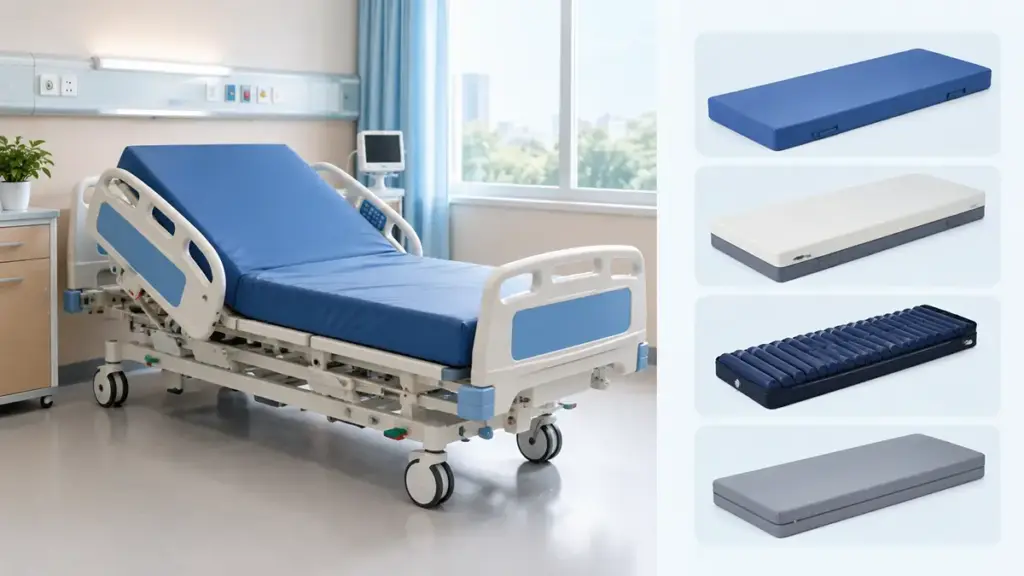
There is no single “best” hospital bed for home use. The right answer depends on the care scenario the bed will actually serve—long-term elderly care, post-surgical recovery, bariatric support, or fall-risk management—and on the commercial structure of the distributor, care-facility procurement team, or OEM brand placing the order. This guide compares seven types of best hospital beds for home use side by side, with the technical and procurement dimensions that determine which model fits which channel.
Every specification cited here is anchored to IEC 60601-2-52, FDA hospital bed guidance, or Dingli’s verified factory data. Load capacities, motor cycle ratings, and dimensional tolerances marked in the source are industry-standard reference ranges pending final SKU-level confirmation.
What Makes a Hospital Bed Best for Home Use
“Best” for a home care channel is not the same as “best” for a consumer. It is a function of safety compliance, articulation performance, distributor margin, after-sales coverage, and OEM depth—in that order.
Safety Compliance Comes Before Any Feature List
A home hospital bed that cannot pass IEC 60601-2-52 side-rail and entrapment-zone testing is not sellable through medical channels, regardless of price. Two numbers matter most: effective rail height above the uncompressed mattress must stay at or above 220 mm, and Zone 3 gaps between rail and mattress must remain below 120 mm under load. Frames built to German production standards with Kawasaki robotic welding hold these tolerances consistently; hand-welded frames drift. See Dingli’s full manufacturing capability for the welding, cutting, and coating process details.
Distribution Economics: Margin, MOQ, and After-Sales
For distributors and care-facility buyers, the “best” bed is the one that survives three commercial tests. Can you order a single unit for sample validation (MOQ 1)? Can the manufacturer ship within a working quarter (7–10 days for standard models)? Will spare parts still be available in year three (lifetime parts support, not just a warranty window)? Beds that fail any of these three tests create inventory and service debt that erodes channel margin faster than any price advantage.
OEM and ODM Depth for Local Market Fit
Home care markets are fragmented. Voltage differs (110V vs 220V), plug standards differ, room dimensions differ, and private-label brands need differentiated headboards, guardrail materials, and packaging. A manufacturer that only offers catalog SKUs forces distributors to resell the same product as every other channel in the market. Deep OEM—drawing-to-mold development, custom voltage adaptation, private logo silk-screening—is what allows a distributor to defend margin.
Best Hospital Beds for Home Use by Care Need
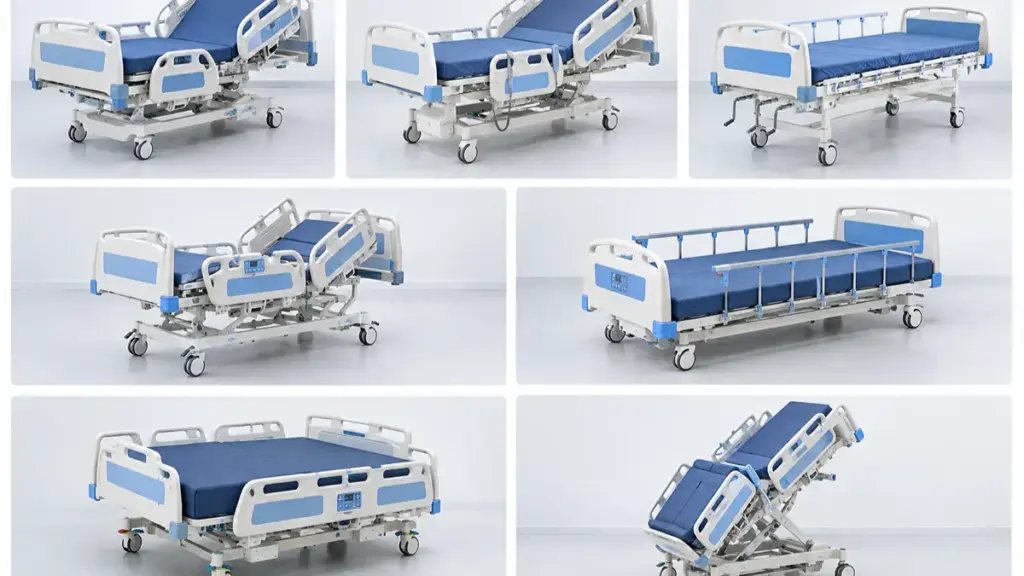
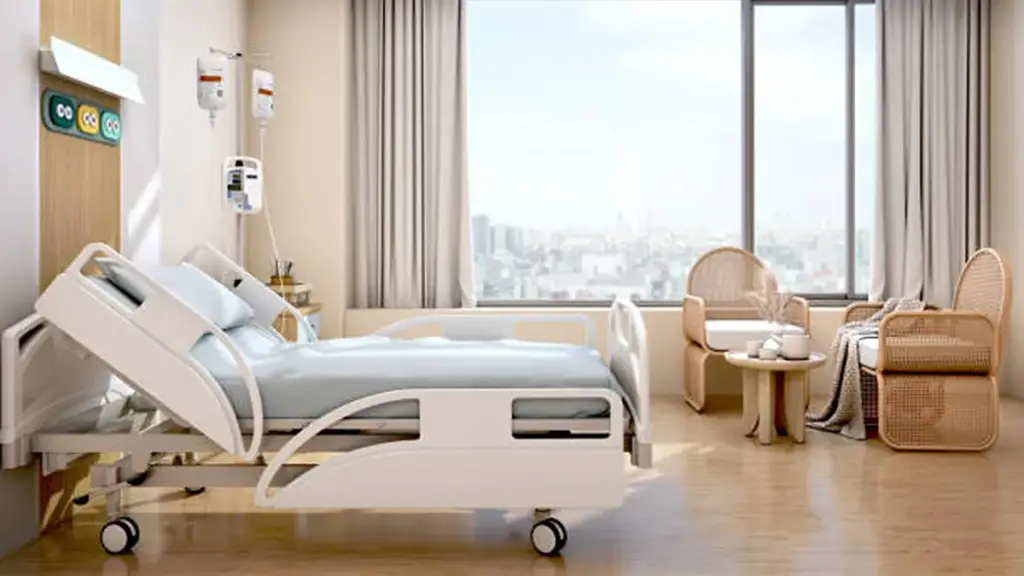
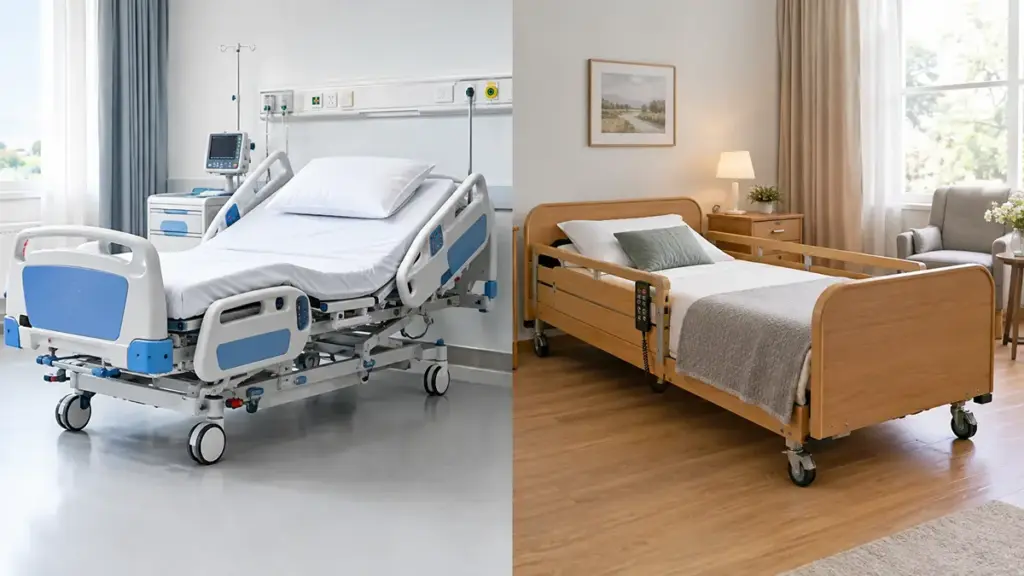
The seven categories below map to distinct care scenarios and channel positions. Each maps directly to a Dingli product line—electric hospital beds, manual hospital beds, and home care beds—with the technical anchors that determine which category fits which end-user.
1. Full-Electric Home Hospital Bed
Three motors drive backrest, leg section, and overall bed height independently, controlled by a wired handset and optional caregiver panel. Best for long-term bedridden users and full-assistance elderly care where repositioning happens multiple times per day. Load capacity typically 250 kg+ under dynamic test. Motors rated for 10,000+ cycles with optional IP66 protection. This is the mainstream SKU for developed-market home care channels and the highest-margin position in the mix.
2. Semi-Electric Home Hospital Bed
Electric backrest and leg articulation combined with a manual height crank. Cuts motor count from three to two, dropping FOB cost while keeping the two functions users actually operate daily. Positioned between full-electric and manual in both price and functionality, semi-electric is the workhorse for post-surgical recovery channels and cost-sensitive private-pay markets where full electric is over-specified.
3. Manual 2-Crank Home Hospital Bed
Two independent mechanical cranks drive backrest and leg elevation. No power dependency, no motor failure modes, minimal maintenance. This is the volume SKU for emerging markets—Southeast Asia, Middle East, Africa, Latin America—where home electricity reliability varies and price points must stay accessible. High-strength mechanical screw rods eliminate the wire-slipping failure mode common in low-cost competitor beds.
4. Manual 5-Function Home Hospital Bed
Five cranks cover backrest, leg section, overall height, lateral tilt, and integrated toilet aperture. Delivers most of the positioning flexibility of a full-electric bed at manual price points, for care scenarios where electricity access is limited but clinical positioning needs are not. Popular with institutional buyers in emerging markets—nursing homes, hospice facilities, and government tender programs.
5. Low-Height Fall-Prevention Bed
Minimum deck height typically 25 cm or lower, often paired with impact-absorbing floor mats. Designed for users with cognitive impairment, dementia, or a documented fall history, where rolling out of bed is the primary risk. The low deck reduces fall distance and injury severity; the trade-off is caregiver ergonomics, which is why many low beds include a powered height range up to a working position for care tasks.
6. Bariatric Home Hospital Bed
Reinforced steel frame, widened deck (typically 90–120 cm), and load capacity in the 300–450 kg range. Not simply a stretched standard bed—the frame geometry, welding pattern, motor torque, and caster rating must all be re-engineered for the higher working load. Bariatric SKUs command a specialist premium and are a natural margin defense for distributors who can support the clinical specification process.
7. Tilt-in-Space Home Care Bed
The entire deck tilts as a single plane (Trendelenburg and reverse-Trendelenburg), rather than folding at hip and knee. Clinically indicated for postural drainage, orthostatic hypotension management, and pressure-redistribution protocols that cannot be achieved through articulation alone. Highest-specification category in the home care line, typically sold through clinical channels and specialist care providers rather than general retail.
| Type | Best For | Load Capacity | Power Source | Key Feature | Dingli Line |
|---|---|---|---|---|---|
| Full-Electric | Long-term bedridden, full-assistance elderly | 250 kg+ | 3 motors, 110V/220V | Independent back / leg / height control | P02-1 |
| Semi-Electric | Post-surgical recovery, cost-sensitive private-pay | 250 kg+ | 2 motors + manual height | Balanced cost / function | P02-1 |
| Manual 2-Crank | Emerging-market volume, home use with unreliable power | 250 kg+ | 2 mechanical cranks | No power dependency | P02-2 |
| Manual 5-Function | Institutional tender, nursing homes without full power | 250 kg+ | 5 mechanical cranks | Lateral tilt + toilet aperture | P02-2 |
| Low-Height | Fall-risk elderly, dementia care | 180–250 kg | Electric or manual | Deck ≤25 cm at lowest position | P02-3 |
| Bariatric | BMI ≥30 users, specialist care channels | 300–450 kg | Electric (high-torque motors) | Widened 90–120 cm deck | P02-3 |
| Tilt-in-Space | Postural drainage, orthostatic management | 200–250 kg | Electric (3–4 motors) | Whole-deck Trendelenburg plane | P02-3 |
Electric vs Manual Home Hospital Beds
Electric versus manual is not a quality question. It is a channel-mix question: which end-market, which caregiver profile, which after-sales infrastructure, and which margin structure.
Cost, Functionality, and Channel Fit
The comparison below is written for procurement teams building a product portfolio, not for a single end-user purchase decision.
| Dimension | Electric Home Hospital Bed | Manual Home Hospital Bed |
|---|---|---|
| FOB Cost Band | Higher (motor count drives BOM) | Lower (mechanical cranks only) |
| Distributor Margin | Higher absolute margin per unit | Lower per-unit margin, higher volume |
| Power Dependency | Requires stable 110V / 220V supply | None |
| Maintenance Profile | Motor and control-board service needed | Crank and screw-rod service only |
| End-User Profile | Independent users, single-caregiver households | Multi-caregiver settings, cost-constrained buyers |
| Typical Target Market | North America, EU, Japan, Australia, Gulf states | Southeast Asia, Middle East, Africa, Latin America |
| MOQ Impact | Higher unit cost makes MOQ 1 sample policy critical | Container-load economics favor mixed-SKU 40HQ orders |
Building a Balanced Product Mix
Distributors who commit to a single category leave money on the table. A practical mix for a mid-sized home care channel: 40–50% electric (full-electric and semi-electric) for margin, 30–40% manual for volume in cost-sensitive segments, 10–20% specialty SKUs (low-height, bariatric, tilt-in-space) for differentiated positioning, and 5–10% accessory attach (mattresses, rails, overbed tables) to lift average order value. Dingli’s 40HQ mixed-container loading supports exactly this kind of portfolio purchase in a single shipment.
Key Features to Compare Before Buying

Six technical checks separate a bed that survives three years of channel distribution from one that generates warranty claims and erodes margin.
- Motor brand and cycle rating. Named-tier motors (Linak, DewertOker, TiMOTION, or equivalent) with documented 10,000+ cycle testing. Unbranded motors are the single largest source of after-sales failure in electric beds.
- Frame welding method. Robotic fish-scale welding (Kawasaki or equivalent) produces continuous seams with zero hidden fracture risk at stress points. Spot-welded frames fail at the weld under cyclic loading.
- Powder coating process. Look for sandblasting plus multi-stage degreasing before a 360° automated powder coat. This is the difference between a 3-year no-corrosion service life and visible rust within 12 months in humid climates.
- Load capacity certification. Ask for the dynamic load test report, not just the labeled capacity. A 250 kg rating is meaningless without a documented test protocol.
- Side rail design. Full-length, half-length, split-rail, and integrated designs serve different care scenarios. Confirm rail height delivers ≥220 mm effective clearance above the intended mattress thickness (IEC 60601-2-52).
- Warranty and spare-parts SLA. A 3-year frame warranty plus lifetime parts availability is the current benchmark. Suppliers who offer only 12-month coverage shift the entire after-sales cost onto the distributor.
Dingli’s factory delivers all six: Kawasaki robotic welding, ±0.1 mm laser cutting, 360° automated eco-friendly powder coating, an 8S-managed three-stage QC process (incoming / in-process FAI / final dynamic load test), a 3-year frame warranty, and lifetime spare-parts support with a 3-year no-complaint after-sales record.
Mattress, Rail, and Weight Capacity Considerations
Frame, mattress, and rail behave as a single certified system. Sourcing them separately—even from reputable suppliers—breaks the compliance configuration.
Load Capacity Is a System Number, Not a Frame Number
A 250 kg frame rating does not mean 250 kg of safe working load once a mattress, rails, and patient-handling accessories are added. Distributors should ask for the certified system configuration: which specific mattress models, which rail SKUs, and which accessory attachments the load rating was tested against. Substituting any component invalidates the certification.
Rail Height and Mattress Thickness Work Against Each Other
IEC 60601-2-52 requires at least 220 mm of effective rail height above the uncompressed mattress surface. Every additional 25 mm of mattress thickness consumes 25 mm of that clearance. Thicker mattresses improve pressure-redistribution performance but reduce fall protection—a real trade-off in elderly care channels. Detailed dimensional checks, including FDA Zone 3 and Zone 4 gap measurements under compression, are covered in our hospital bed mattress compatibility guide.
Specialty Beds Have Specialty Mattress Requirements
Bariatric beds need wider, higher-density mattresses rated for the same load as the frame. Low-height beds need thinner mattresses to preserve the fall-distance benefit. Tilt-in-space beds need mattresses that stay secured during whole-deck rotation. For beds serving users at high pressure-injury risk, an anti-bedsore air mattress with alternating-pressure or low-air-loss function is often specified alongside the frame—Dingli manufactures both, so the system configuration is certified as a matched pair rather than assembled from third-party components.
How to Choose the Right Home Hospital Bed
A five-step procurement path that works whether you are a distributor building a catalog, an OEM specifying a private-label line, or a care-facility buyer running a tender.
- Define the end-market care scenario. Developed-market home care, emerging-market institutional tender, private-pay post-surgical recovery, bariatric specialty, and dementia care each favor a different bed category. Do not start with a product; start with the scenario.
- Match product type to scenario. Use the 7-category matrix above. If more than 40% of your volume falls into a single category, question whether the channel is over-concentrated.
- Verify manufacturer capability. Factory scale (Dingli: 15,590 m² Hebei campus plus 11,000 m² smart warehouse), certifications (ISO 9001:2015, ISO 13485:2016, CE, FDA, FSC, QES), automation (Kawasaki robotic welding, ±0.1 mm laser cutting, 360° powder coating), and R&D depth (5-person engineering team, 30+ authorized patents including 2 PCT international filings).
- Confirm commercial terms. MOQ (Dingli: 1 unit for sampling), lead time (7–10 days standard), container loading (40HQ mixed-SKU supported), warranty (3 years frame + lifetime parts), and technical response SLA (12 hours).
- Request sample and factory audit. A single-unit sample tested against your own end-market protocol catches issues no datasheet will reveal. Where volume justifies it, an on-site or third-party factory audit is standard practice for institutional tenders and private-label programs.
Distributors who need differentiated SKUs—custom headboards, private-label silk-screening, region-specific voltage and plug configurations, or narrow-body frames for tight home rooms—should engage at the OEM/ODM stage rather than the catalog stage. Dingli’s R&D team supports drawing-to-mold development with a 12-hour technical response window, and single-piece sample testing before bulk commitment.
FAQ
What is the best hospital bed for home use?
There is no single answer—it depends on the care scenario. Full-electric beds suit long-term bedridden users and developed-market home care. Manual 2-crank beds are the volume choice for emerging markets. Low-height beds serve fall-risk elderly users. Bariatric and tilt-in-space beds address specialist clinical needs. Match the category to the end-user profile before comparing individual SKUs.
What type of hospital bed is best for home use?
Full-electric is the mainstream choice in developed markets (North America, EU, Japan, Gulf states) where users value independent repositioning. Manual 2-crank dominates in emerging markets where cost sensitivity and unreliable power are the constraints. Semi-electric sits between them and is the workhorse for post-surgical recovery channels.
Are hospital beds suitable for home use?
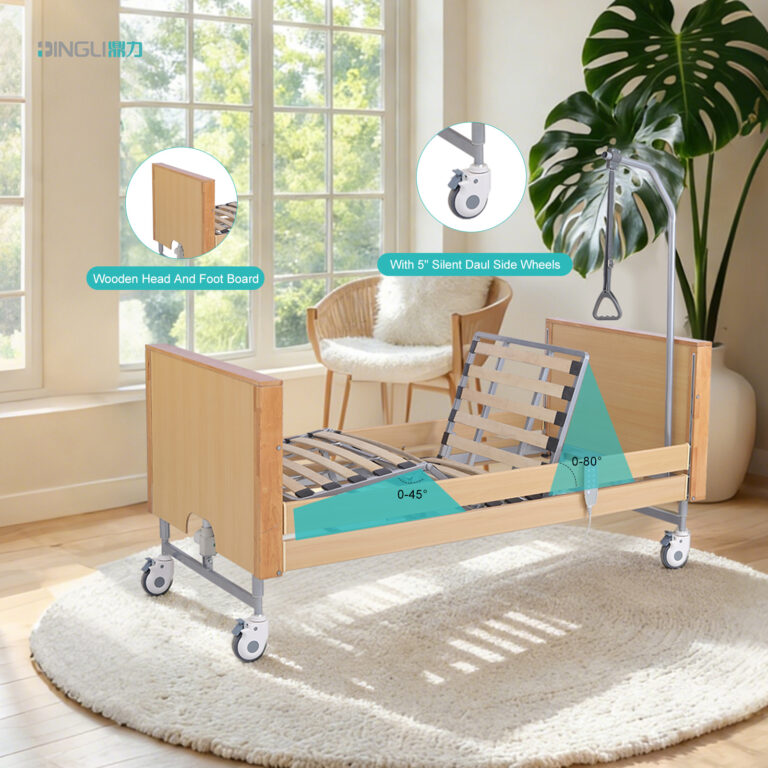
Yes—home care beds are a distinct product category designed specifically for residential settings. Compared to acute-care hospital beds, they use quieter motors, warmer aesthetic finishes (including wooden headboards), narrower footprints for standard doorways, and residential-compatible power systems. They retain the same IEC 60601-2-52 safety compliance as hospital-grade equipment.
What is the best hospital bed for elderly people?
For elderly care channels, two categories dominate. Full-electric beds support independent repositioning for users with limited strength, reducing caregiver workload. Low-height fall-prevention beds (deck ≤25 cm) are the standard specification for users with dementia or documented fall history. Most elderly care programs stock both and match the SKU to the individual assessment.
What is the best hospital bed for someone with limited mobility?
It depends on the degree of limitation. Users with partial mobility who can operate a handset benefit most from full-electric beds. Users with severe limitation and pressure-injury risk need tilt-in-space beds for postural management. Users with higher body mass need bariatric frames rated 300–450 kg. A clinical assessment should always precede SKU selection.
Are electric hospital beds better than manual beds?
Neither is universally better. Electric beds deliver more functions, independent user operation, and higher per-unit margin—but require stable power and motor maintenance. Manual beds are cheaper, more reliable in low-resource settings, and easier to service—but limit user independence. Distributors should stock both and match to the end-market, not choose one over the other.
What affects the wholesale cost of home hospital beds for distributors?
Six factors drive FOB pricing: motor brand and count (the largest single cost driver in electric beds), steel gauge and frame welding method, certification scope (CE, FDA, ISO 13485 add testing cost), load capacity rating, order volume and container configuration (40HQ mixed loading reduces per-unit freight), and OEM customization depth (private molds, custom voltage, silk-screened branding). Dingli provides factory-direct quotations within 12 hours—specific pricing is quoted per configuration rather than published.
How do U.S. Medicare reimbursement rules affect overseas distributors sourcing home hospital beds?
Medicare covers home hospital beds as Durable Medical Equipment (DME) under specific HCPCS codes, with different codes for manual, semi-electric, and full-electric configurations. For overseas manufacturers and distributors, three practical implications follow: the product must hold FDA registration to be resold into Medicare-participating channels; the U.S. importer or DME supplier must hold a Medicare supplier number; and product specifications (load rating, function set, safety compliance) must match the HCPCS code being billed. Distributors targeting the U.S. Medicare channel should confirm HCPCS alignment before ordering, not after.
Final Thoughts
The best hospital beds for home use are not the ones with the longest feature list. They are the ones that match a defined care scenario, survive three years of channel distribution without warranty drag, and come from a manufacturer whose OEM depth lets you defend margin against undifferentiated competitors. Seven categories, three product lines, one factory-direct sourcing decision.
Send us your target care scenarios, end-market regulatory requirements, and volume forecast. Dingli’s engineering team returns a matched SKU recommendation, OEM customization scope, and factory-direct quotation within 12 hours. Sample orders start at MOQ 1—explore the full home care bed line or request a wholesale quote.