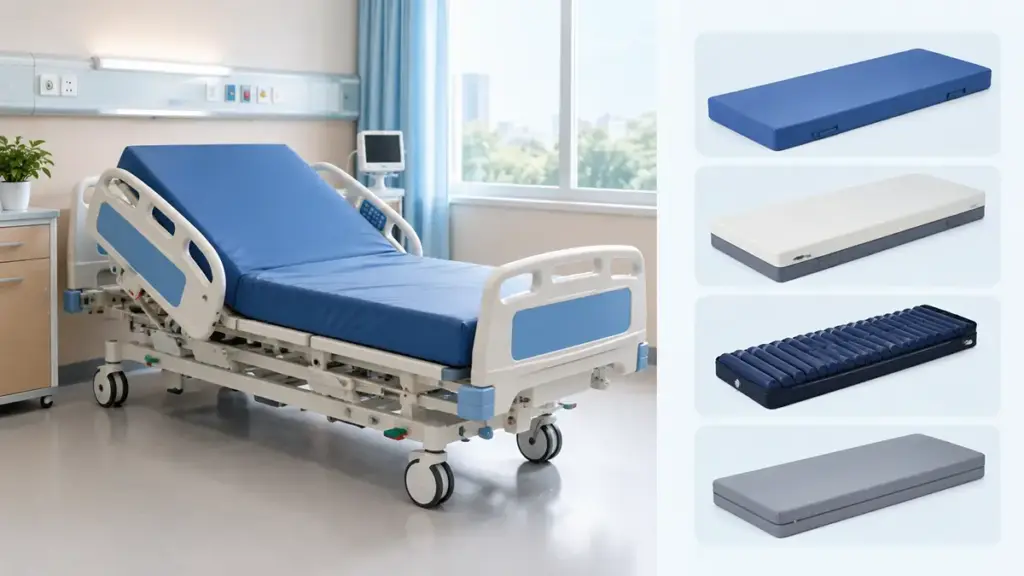
A bedsore prevention air mattress is the standard intervention when turning schedules alone are not enough. For a care facility, a single advanced ulcer means a significant financial liability. For a family, it is about preventing severe pain and infection. Tissue damage begins silently, long before the skin shows visible breakdown, making the right surface critical.
This analysis focuses on the mechanics. We evaluate how alternating pressure cycles and low-air-loss technology counter the forces that cause bedsores. The data provides a framework for selecting a surface that effectively prevents tissue damage before it starts.
Understanding Bedsores: A Clinical Overview
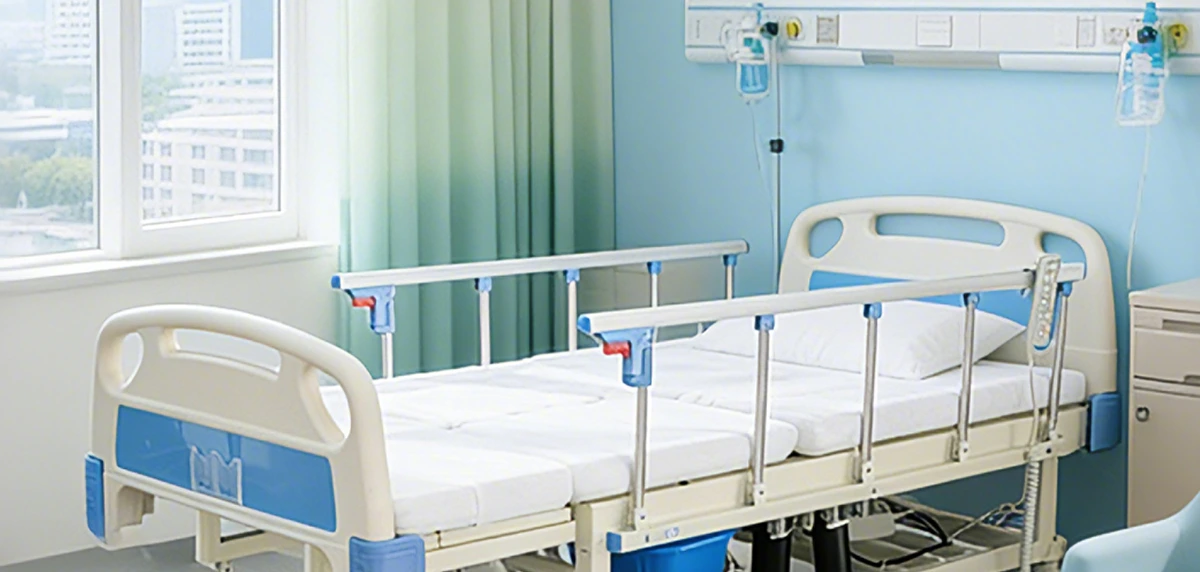
Bedsores are tissue damage from unrelieved pressure over bony areas, cutting off blood flow. Immobility, poor nutrition, and moisture are the biggest risk factors for vulnerable patients.
What Causes Bedsores and Who Is Most at Risk
Bedsores, also called pressure ulcers or pressure injuries, are localized damage to skin and underlying tissue. They happen when sustained pressure, usually over a bony area, reduces or completely cuts off blood flow to the tissue. This lack of blood flow leads to oxygen deprivation (ischemia) and cell death, causing the tissue to break down.
Three main mechanical forces are at play. First is direct pressure. Second is shear, which occurs when skin slides over deeper tissues, like when a patient slides down in a raised bed. Third is friction from skin rubbing against surfaces. Moisture from sweat or incontinence can also weaken the skin, making it more susceptible to injury.
Certain groups are far more vulnerable. The biggest risk factor is immobility, whether from surgery, spinal injury, stroke, or advanced dementia. Anyone who is bed-bound or wheelchair-bound is at high risk.
- Older adults with frail skin.
- Individuals with poor nutrition or dehydration, which compromises skin integrity.
- Patients with Inkontinenz, as constant moisture macerates the skin.
- Those with vascular disease, poor circulation, or diabetes, which impair blood flow and sensation.
- People with cognitive impairments who cannot communicate pain or the need to move.
Clinical Staging, Common Locations, and Prevention Methods
Bedsores typically form where bone is close to the skin. The most common sites are loaded heavily when a person is lying down for long periods.
- Sacrum and coccyx (tailbone)
- Heels
- Hips
- Elbows
- Back of the head and shoulders
Clinicians classify pressure ulcers into stages to describe the extent of tissue damage. This staging helps guide treatment, including the type of support surface needed.
| Stage | Clinical Features |
|---|---|
| Stage 1 | Intact skin with a patch of non-blanchable redness (it doesn’t turn white when pressed). This is the earliest sign and a critical opportunity for prevention. |
| Stage 2 | Partial-thickness skin loss. It looks like a shallow open ulcer or an intact blister. The dermis is exposed. |
| Stage 3 | Full-thickness skin loss. Subcutaneous fat is visible, but not bone, tendon, or muscle. The ulcer is deeper and may have undermining or tunneling. |
| Stage 4 | Full-thickness tissue loss with exposed bone, tendon, or muscle. Infection risk is very high. |
| Unstageable / DTI | The base of the ulcer is covered by slough or eschar, obscuring its true depth. A Deep Tissue Injury (DTI) appears as a purple or maroon area of intact skin. |
The Core Principle: How Pressure Redistribution Prevents Tissue Damage
Air mattresses spread weight over a larger surface and vary pressure over time. This dual approach keeps blood flowing to the skin and prevents tissue breakdown.
Bedsore prevention air mattresses aren’t just about feeling “soft.” They are engineered devices that directly counter the two main factors that cause pressure injuries: high pressure concentrated on a small area and sustained pressure over time. They accomplish this through two distinct mechanical actions.
Spreading Pressure Across a Larger Surface Area
The basic physics are simple: Pressure equals force divided by area. On a standard mattress, a patient’s weight is concentrated on small, bony prominences like the sacrum, hips, and heels. This small contact area results in high localized pressure, which can easily exceed the 25-32 mmHg threshold that closes off capillaries and starves tissue of oxygen.
An air mattress fights this by dramatically increasing the contact area. It allows the body to sink into the surface (immersion) while the air cells conform to the body’s specific contours (envelopment). This spreads the load across broader soft-tissue regions, not just the bones. By maximizing the contact surface, the mattress lowers the peak pressure at any single point, keeping it below the critical threshold for tissue damage.
Varying Pressure Over Time to Restore Perfusion
Even moderate pressure can cause a bedsore if it’s applied for too long. The body needs regular breaks from pressure to allow blood to flow back into tissues, a process called reperfusion. Since high-risk patients often can’t reposition themselves, the mattress has to do it for them.
This is the job of an active or “alternating pressure” system. A pump cyclically inflates and deflates different sets of air cells, typically every 5 Zu 20 minutes. While one set of cells is inflated and bearing the load, the adjacent set deflates, effectively unloading the tissue above it. This constant shifting ensures no single area remains under sustained pressure long enough to cause irreversible ischemic damage. It’s a mechanical way to mimic the protective effect of frequent manual repositioning.
Your One-Stop Certified Medical Equipment Partner
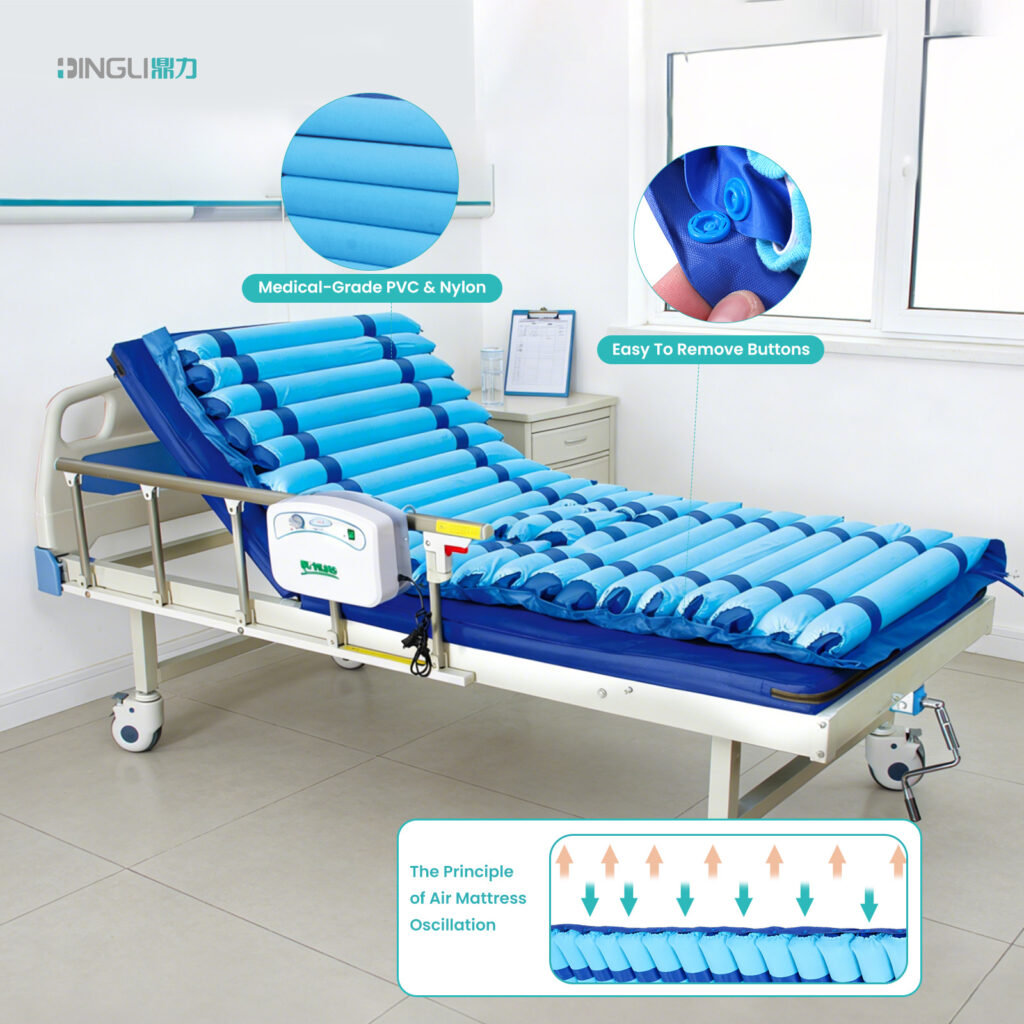
Decoding the Technology: How Hospital Air Mattresses Work
Hospital air mattresses use different air technologies—alternating, low loss, and constant pressure—to redistribute a patient’s weight, manage skin moisture, and prevent tissue breakdown.
A hospital air mattress isn’t just a bed; it’s a therapeutic device with specific engineering to combat pressure ulcers. The technology works by manipulating air in three primary ways to protect vulnerable skin and tissue.
Alternating Pressure Therapy (APT)
This is the most active form of therapy. The core function is to mimic the natural movement that an able-bodied person does, even during sleep. It removes constant pressure from any single spot.
- The mattress cyclically inflates and deflates different sets of air cells, usually on a 5- to 20-minute cycle.
- This process shifts pressure points across the body, which allows compressed tissue to regain blood flow and oxygen (a process called reperfusion).
- It directly interrupts the main cause of pressure ulcers by ensuring no single area of the body bears the full load for too long.
Low Air Loss (LAL) and Microclimate Management
Moisture and heat are major enemies of skin integrity. LAL technology addresses the microclimate—the environment right at the skin’s surface—to keep it cool and dry.
- The system releases a continuous, gentle flow of air through microscopic holes in the mattress cover.
- This subtle airflow wicks away moisture from perspiration or incontinence and pulls heat away from the skin.
- Managing this microclimate is critical for preventing maceration, where skin becomes soft and weak from prolonged wetness, making it highly susceptible to breakdown.
Constant Low Pressure (CLP)
Sometimes, movement isn’t the goal. Instead, the focus is on spreading the patient’s weight as evenly as possible to reduce pressure peaks on bony areas.
- This mode maintains all air cells at a stable, uniform low pressure. The patient’s body immerses or sinks slightly into the surface.
- This immersion distributes body weight over the largest possible contact area, which significantly reduces the peak pressure on vulnerable spots like the heels and sacrum.
- CLP is often used as a static or “firm” mode on dynamic mattresses. It creates a stable surface for patient transfers, nursing care, or for patients who can’t tolerate the motion of alternating therapy.
Key Features to Evaluate in a Clinical-Grade Air Mattress
A clinical mattress is a therapeutic device. Evaluation must focus on its ability to manage pressure, shear, and microclimate, along with critical safety and infection control features.
| Feature | Key Evaluation Criteria |
|---|---|
Cell Design and Immersion/Envelopment Properties |
|
Cover Material: Shear Reduction and Infection Control |
|
Control Unit (Pump) Intelligence and Safety Alarms |
|
CPR Release Valve and Transport Mode |
|
Implementation and Best Practices for Care Facilities
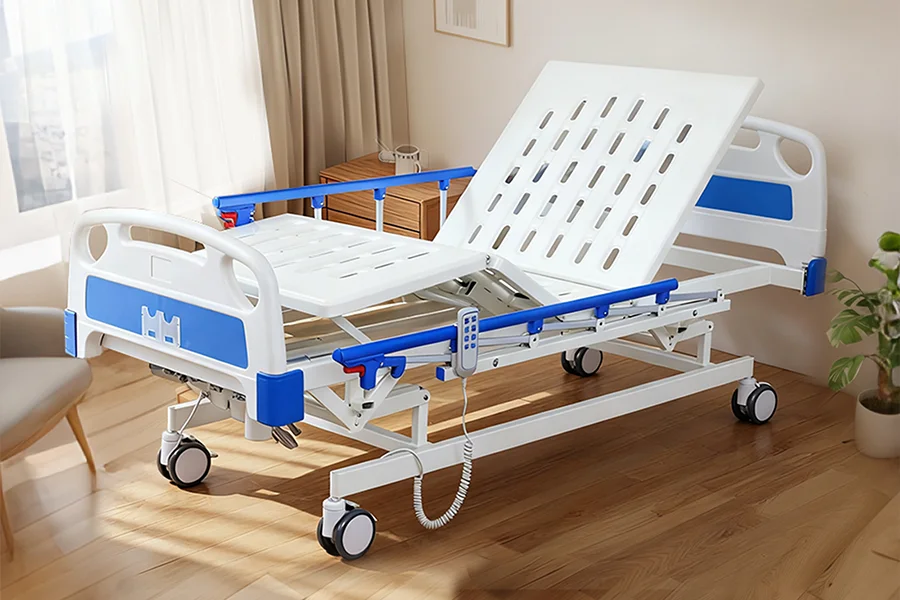
A high-end mattress is useless without a solid protocol. Effective implementation hinges on rigorous patient assessment, consistent staff training, and disciplined maintenance.
Putting these mattresses into service isn’t just a procurement task; it’s a clinical process. The hardware is only as good as the system built around it. A breakdown in any one area—assessment, training, or cleaning—compromises patient safety and wastes the investment. Here’s a no-nonsense breakdown of the operational best practices that actually matter.
| Patient Assessment and Risk Stratification | Staff Training on Mattress Functions | Maintenance and Decontamination Protocols |
|---|---|---|
|
|
|
Air Mattresses vs. Traditional Support Surfaces
Powered air mattresses actively cycle pressure off high-risk areas. Foam and gel surfaces just reactively spread the load without providing timed, active relief.
Comparison with Static Foam Mattresses
The choice between a powered air mattress and a static foam surface comes down to patient risk and the type of pressure management needed.
- Pressure Relief: Air mattresses actively cycle pressure away from vulnerable spots, a feature foam just doesn’t have. Foam is reactive; it spreads pressure but can’t actively shift it away to restore blood flow.
- Patient Risk Profile: Air systems are for high-risk, bed-bound patients, especially those with existing pressure injuries. Foam is the workhorse for low-to-moderate risk patients who can still reposition themselves.
- Stability & Mobilität: Foam provides a solid, stable surface that makes transfers and independent movement much easier. The moving surface of an active air mattress can feel unstable to some patients.
Comparison with Gel/Air Overlays
Overlays are a step up from basic foam but still function differently than a full powered mattress system.
- Performance Level: Alternating air is a higher level of clinical intervention. It’s built for very high-risk patients or those with deep tissue injuries, performing beyond what a static overlay can offer.
- Stability: Gel overlays are typically more stable than static air overlays or full air mattresses, giving patients a more secure surface for transfers and repositioning.
- Operational Needs: Overlays are simpler. Static air types just need occasional inflation checks. Powered air mattresses depend on electricity, correct setup, and consistent monitoring of the pump and system.
Letzte Gedanken
Choosing a support surface based on price alone is a critical clinical error. The features detailed here—alternating pressure, low air loss, and cell-on-cell design—are the operational standard for mitigating the high costs and liability of advanced pressure injuries. This technology isn’t an expense; it’s a required tool for risk management and patient care.
Protecting your patients, residents, or family members starts with the right equipment. Contact our team to review the technical specifications and discuss your facility’s specific needs. We can help you standardize the right surface for your high-risk population.