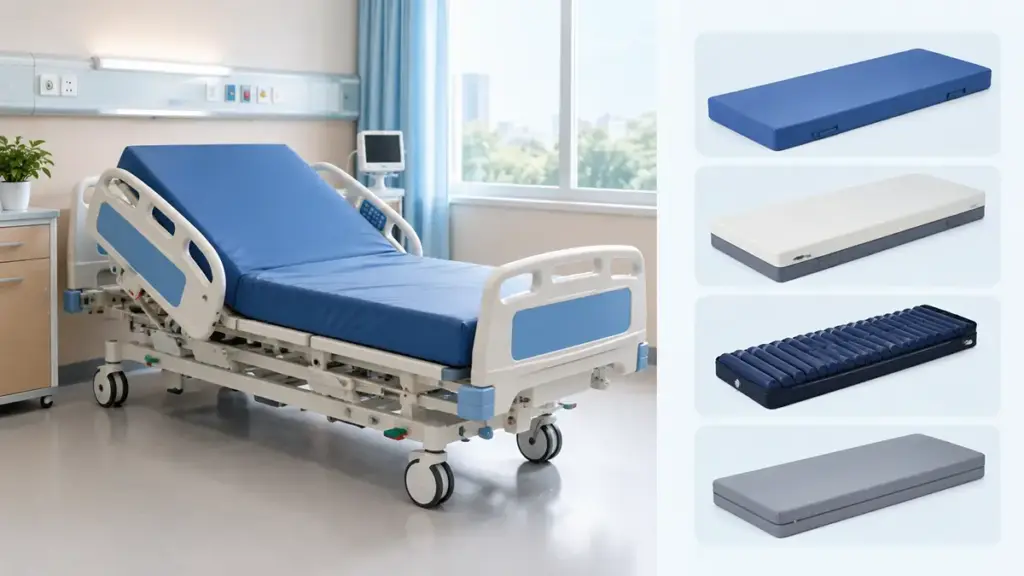
Choosing the wrong type of hospital bed can increase procurement costs and create unnecessary challenges for both caregivers and patients. The ideal bed should match the clinical environment, patient needs, and daily workflow to improve safety, efficiency, and long-term value. The choice is a direct trade-off between initial budget, caregiver ergonomics, and clinical efficacy.
Hospital bed types can be classified in two ways: by adjustment mechanism, such as manual and electric systems, and by clinical application, such as ICU, general ward, and long-term care settings.
This guide compares hospital bed types based on their adjustment mechanisms and intended care settings. We evaluate the core differences between manual, semi-electric, and full-electric systems against the functional demands of ICU, general ward, and long-term care environments. It helps buyers match bed functions, from height adjustment to advanced positioning features, with specific clinical workflows and patient care requirements.
How Hospital Bed Types Are Classified by Design and Application

Hospital beds are sorted into categories based on two main factors: their mechanical design and their specific job in a clinical setting. A hospital bed may belong to different categories depending on its functions, design, and intended application.
By Technical Design and Mechanism
The most straightforward way to classify a bed is by how it adjusts. Manual and electric hospital beds differ significantly in terms of adjustment methods, caregiver effort, and long-term operating costs. The method directly impacts cost, caregiver effort, and patient independence.
- Adjustment Mechanism: Beds are categorized by their power source. This ranges from simple manual beds operated by hand cranks, to semi-electric systems with powered head and foot sections but a manual height crank, up to fully electric models where all adjustments are motorized.
- Structural Form: The physical frame also defines the bed’s category. Low-bed designs sit closer to the floor to reduce injury risk from falls. Multi-section frames have several articulated segments to allow for more advanced patient positioning beyond just raising the head and feet.
By Clinical Application and Care Setting
Beds are also grouped by the type of care they support. The features and complexity are matched to the patient’s needs and the intensity of the care environment.
- Functional Complexity: You can group beds by the level of care they provide. A standard model for a general ward has basic positioning. A multi-functional bed for an ICU is far more complex, with features like Trendelenburg positioning, lateral tilting, and built-in scales for tracking patient weight.
- Specialized Use: Many beds are built for specific patient groups. These include bariatric beds with reinforced frames for heavier patients, smaller pediatric beds with enhanced safety rails, orthopedic beds with traction frames, and maternity beds that convert for labor and delivery.
नियमावली, Semi-Electric, and Full-Electric Hospital Beds: Key Differences
The core difference is the adjustment method—manual cranks, a mix of power and manual, or full electric control. This choice directly impacts cost, caregiver effort, and patient independence.
Adjustment Method: Manual vs. Electric Control
The primary technical distinction between hospital beds is how they are adjusted. This single factor drives everything from cost and usability to power requirements.
A manual bed is the most straightforward configuration. All adjustments for the head, foot, and sometimes overall height are operated by physical hand cranks, usually located at the foot of the bed. Because manual beds do not rely on motors, they can be a practical option for facilities that prioritize simplicity, easy maintenance, or lower acquisition costs. It also means every position change requires physical effort from a caregiver.
A semi-electric bed offers a practical middle ground. Compared with fully powered models, semi-electric and full-electric beds provide different balances between cost, convenience, and caregiver workload. The most frequently used adjustments—the head and foot sections—are motorized and controlled with a simple handset. This reduces caregiver strain for patient repositioning. The overall bed height, which is adjusted less often, still uses a manual crank. This setup balances automation with cost control.
A full-electric bed provides the highest level of convenience. Electric motors control the head, foot, and overall bed height. All functions are managed through a patient handset or a nurse control panel. This allows faster and easier positioning with less physical effort, making full-electric beds widely used in acute care, rehabilitation, and long-term care environments where frequent adjustments are required.
Choosing the Right Bed: Cost, Effort, and Application
Selecting the right bed type comes down to a trade-off between budget, expected workload, and the specific care environment. There’s no single right answer, just the right fit for the application.
You should choose manual beds when:
- The budget is the primary driver and you need the lowest acquisition cost.
- Electrical access is unreliable or unavailable.
- The patient population requires infrequent repositioning.
- Simplicity and durability with minimal maintenance are the top priorities.
Semi-electric beds are the practical choice for:
- General wards, sub-acute care, and home care where patient comfort is important.
- Facilities looking to reduce the manual labor of frequent head and foot adjustments without the full cost of an electric bed.
- Settings that need a cost-effective compromise between a purely manual system and full automation.
Go with full-electric beds in these scenarios:
- Acute care, ICU, and post-operative recovery units where rapid and frequent repositioning is expected.
- Reducing staff workload and preventing caregiver injuries is a major operational goal.
- Patient comfort, independence, and ease of adjustment are high priorities.
- The facility has a reliable power supply and can support powered medical equipment.
Reliable, Customizable Hospital Beds for Global Buyers
General Ward Hospital Beds: Features and Selection Considerations
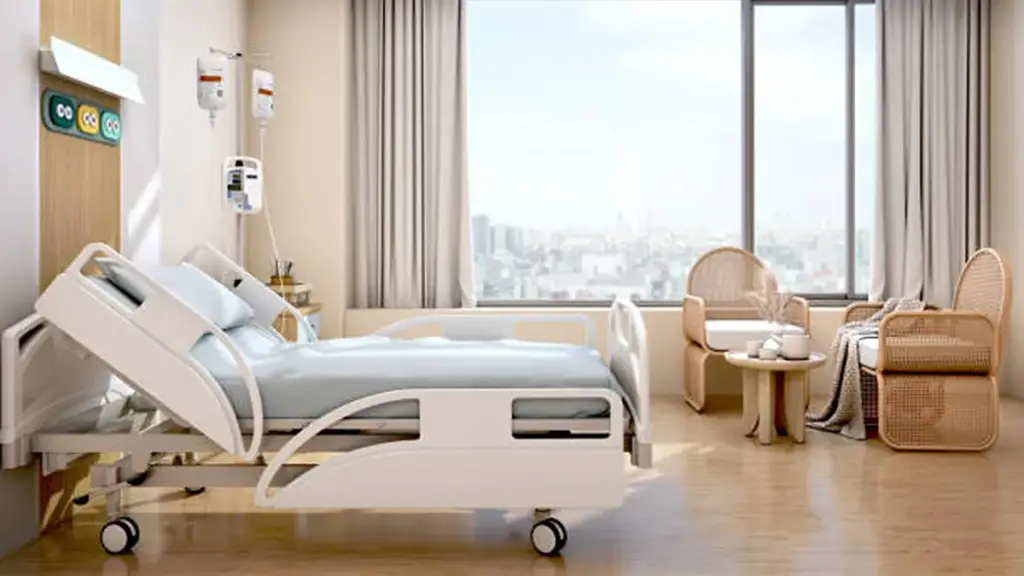
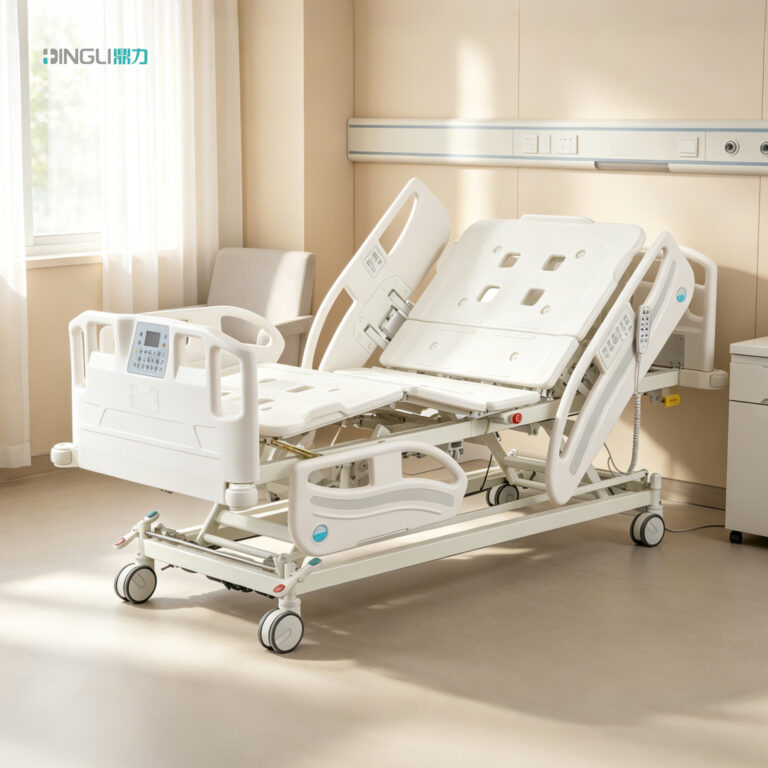
General ward beds are among the most commonly used hospital beds, supporting daily care in medical, surgical, and rehabilitation departments. They balance essential functions for non-critical patients with durability and cost-effectiveness for medical and surgical departments.
General Ward Hospital Bed Designs and Adjustment Features
In a hospital’s inpatient system, these beds support the daily care needs of medical, surgical, and rehabilitation departments by providing a practical balance of essential functions and operational efficiency. These are the beds that accommodate the vast majority of patients who are not critically ill but require hospital care.
Designs range from basic manual beds, which rely on hand cranks for all adjustments, to semi-electric models that provide powered controls for head and foot adjustments. The essential functions are backrest and leg elevation, known as Fowler positions. These adjustments are critical for patient comfort, feeding, and supporting post-operative recovery. Most models use durable steel frames and are designed to accommodate standard adult patient requirements. Dimensions may vary depending on regional standards, hospital requirements, and product configurations. Buyers should also confirm hospital bed dimensions to ensure compatibility with rooms, corridors, elevators, and existing equipment.
Safety Features and Buying Factors for General Ward Beds
Standard safety components are non-negotiable. Side rails are included to reduce the risk of patient falls, and locking casters ensure the bed remains stable during transfers, protecting both the patient and staff. The surfaces are designed for easy cleaning to support infection control protocols, using smooth materials like ABS plastic and powder-coated steel that can withstand frequent disinfection.
Procurement decisions for general ward beds are a constant balance of cost against utility. Manual beds provide a highly affordable solution for facilities with tight budgets. Semi-electric beds cost more upfront but offer significantly better ergonomics for the nursing staff, which can reduce workplace injuries and improve efficiency. These beds fill a specific role between simple long-term care models and highly complex ICU beds, focusing on the essential functions required for the broad population of non-critical patients.
ICU Hospital Beds for Critical Care Environments

ICU beds are not just stronger ward beds. They are specialized platforms built for critically ill patients, integrating advanced positioning, safety systems, and life-support compatibility.
What Makes an ICU Hospital Bed Different?
Beds for ICU and high-acuity care are designed for critically ill patients (Level 2-3 acuity) and the intense workflows of critical care teams. These beds sit at the top of the hospital bed market in both complexity and cost. They are fundamentally different from general ward beds in their structure, function, and integration with life-support equipment.
जबकि “ICU bed” often refers to a bed for Level 3 care (invasive ventilation, multi-organ support), “high-acuity” या “high-dependency” beds for Level 2 care often use the same high-spec platform. Many hospitals standardize on one advanced model for both areas to simplify training, maintenance, and patient transfers.
Most ICU beds are fully electric because critical care environments require frequent and precise positioning. However, some facilities may still use simpler configurations depending on budget and clinical requirements. The main types you’ll see are electric ICU beds, advanced “smart” beds with integrated sensors and connectivity, and specialized bariatric ICU models with higher load capacities.
Key Features of ICU Hospital Beds
An ICU bed’s features are built around three core needs: advanced clinical positioning, रोगी सुरक्षा, and seamless integration with other critical care equipment.
ICU beds are typically built with reinforced frames and higher load capacities to support critically ill patients and additional medical equipment. It must enable key positions beyond simple head and leg elevation.
- Core Movements: Trendelenburg (head down), reverse Trendelenburg (head up), full height adjustment, and backrest/knee adjustments are standard. Many also include lateral (side-to-side) tilting to help turn immobile patients.
- Controls: Adjustments are fully motorized and managed through nurse control panels, side-rail controls, and sometimes patient handsets. Battery backup is essential to maintain function during power outages or transport.
- Safety Systems: Divided side rails allow access while protecting the patient, and are designed to prevent entrapment. A wide height range is critical—low positions reduce fall injuries, and high positions prevent back strain for nurses.
- Clinical Integration: ICU beds are designed to support complex critical care workflows with features such as accessory rails, equipment compatibility, and cable management solutions for medical devices. Advanced models may include integrated weighing systems to monitor patient weight changes without repositioning the patient.
Functionality directly supports critical care protocols. The ability to maintain recommended head-of-bed elevation angles, commonly around 30–45°, supports ICU care protocols and may help reduce ventilator-associated pneumonia risk. Pre-programmed positions like “cardiac chair” and one-button CPR functions streamline emergency response and daily care. The entire design, from the smooth, easy-to-clean surfaces to the recessed base that accommodates patient lifts, is focused on the high-stakes ICU environment.
Long-Term Care Hospital Beds for Nursing Homes and Assisted Living
Long-term care beds prioritize safety with Hi-Lo, बेरिएट्रिक, and specialty models. Core features focus on resident dignity, fall prevention, and caregiver ergonomics for extended use.
Common Types of Long-Term Care Beds
Beds in a long-term care setting aren’t just for sleeping; they are a central component of a resident’s daily life and care plan. The choice of bed directly impacts safety, comfort, and staff efficiency. The main types you’ll find are built for specific resident needs.
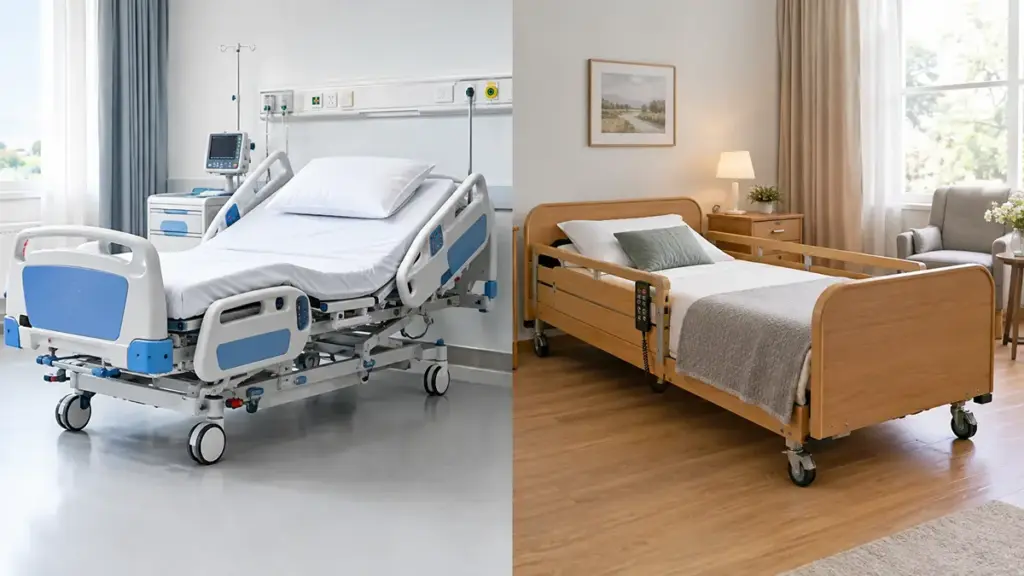
- Standard Electric Beds: These are commonly used models in long-term care facilities. They provide electric adjustment for the head and leg sections, which helps with positioning for feeding, breathing, and comfort. Many models use wood finishes on the head and foot boards to create a more residential, less institutional feel.
- Hi-Lo (Low-Height) Beds: Designed to support fall prevention and caregiver ergonomics, these beds provide a wide height adjustment range. The low position helps reduce the risk of fall-related injuries, while the raised position allows caregivers to provide care at a more comfortable working height, reducing physical strain.
- बेरिएट्रिक बिस्तर: Designed for heavier patients, bariatric beds feature wider sleeping surfaces, reinforced frames, and higher weight capacities than standard models. Depending on the design and application, some bariatric beds can support a safe working load of 600 pounds or more, providing greater stability, comfort, and space for patient repositioning.
- Specialty Beds: For residents at high risk of pressure injuries, specialty beds are essential. These beds integrate pressure-redistribution surfaces, such as low-air-loss or alternating pressure technology, directly into the frame to help manage skin integrity.
Safety and Comfort Features of Long-Term Care Beds
Beyond the basic bed type, certain features are non-negotiable for ensuring both resident well-being and a safe working environment for care staff. These functions are what separate a true long-term care bed from a standard hospital model.
- Electric Profiling: This allows residents and staff to easily adjust the backrest and knee sections of the bed. Coordinated movements, sometimes called dual-action profiling, help minimize skin shear and friction when a resident is repositioned, which is critical for preventing pressure injuries.
- Integrated Safety Components: Safety isn’t an add-on. Long-term care beds must have side rails designed specifically to prevent entrapment, complying with established safety guidelines. Centralized locking systems that secure all casters with a single pedal provide a stable base for transfers and bedside care.
- Adjustable Height Functionality: The ability to change the bed’s height serves two masters. A low height allows residents to get in and out of bed safely, reducing fall risk. A high position provides an ergonomic working height for caregivers, reducing the risk of musculoskeletal injuries during daily tasks.
- Resident-Centered Design: A clinical environment can negatively impact a resident’s sense of well-being. Modern long-term care beds focus on creating a home-like look, using less institutional materials like wood-finish headboards and decorative panels. This promotes a sense of dignity and personal space.
Home Care Hospital Beds: Types and Essential Features

Home care beds bring hospital-grade adjustability and safety into a residential setting, with options ranging from simple manual models to fully automated beds for complex care needs.
Home Care Bed Functions and Safety Considerations
Most home care beds provide either electric or manual adjustment for the head, foot, and overall bed height. These functions are critical for patient comfort, making care tasks easier, and ensuring safe transfers in and out of the bed.
Safety is built directly into the design. Key features include side rails to minimize fall risk and locking wheels to keep the bed stable during transfers. Some electric models also come with a backup power source, so adjustments can still be made during a power outage.
These beds are adapted for residential use. They often feature less institutional aesthetics and are built with dimensions that can fit through standard doorways, making setup and installation much more practical.
Common Types of Home Care Hospital Beds
- Manual beds rely on hand cranks for all adjustments. They’re a cost-effective option that works without electricity, making them reliable in any situation.
- Semi-electric beds offer a practical middle ground. The head and foot sections are adjusted with a motor, but height changes still require a manual crank. This balances convenience with cost.
- Fully electric beds provide the most independence. A remote control manages all adjustments for head, foot, and height, minimizing physical effort for both the user and caregiver.
- Specialty and multifunction models are built for complex care. These can include advanced functions like automated patient turning, a one-touch chair position, or even integrated toileting systems to simplify hygiene for bed-bound individuals.
Hospital Bed Selection Guide for Healthcare Buyers
Selecting the right hospital bed isn’t about a single feature. It’s a calculated decision matching the bed’s capabilities to the specific care environment and patient needs.
Key Factors When Choosing Hospital Beds
When you’re specifying beds for a facility, the decision comes down to a handful of critical factors. This isn’t a simple checklist; it’s about balancing clinical demands, रोगी सुरक्षा, and staff workflow. Getting this right means better patient outcomes and a more efficient, safer environment for your team.
- Bed type and primary clinical use case: Is it for ICU, a general ward, or long-term care? The environment dictates the necessary features.
- Safe working load and patient population profile: You must account for the expected weight range of your patients, especially with rising bariatric populations.
- Height range and positioning capabilities: A wide height range is crucial for both fall prevention (low position) and staff ergonomics (high position).
- Safety systems: Side rails, reliable brakes, and bed-exit alarms are non-negotiable for protecting vulnerable patients.
- Infection control features and ease of cleaning: Smooth, accessible surfaces are critical for rapid turnover and preventing hospital-acquired infections.
- Maneuverability for staff and transport needs: Beds need to be moved easily and safely through corridors and elevators, reducing staff injury risk.
- Compatibility with accessories and existing equipment: The bed must work with your current IV poles, patient lifts, and mattresses.
Matching Hospital Bed Types to Different Care Settings
Different hospital units operate differently. An ICU bed has requirements a general med-surg bed doesn’t, and vice versa. Aligning the bed type with its intended environment prevents overspending on unnecessary features and ensures clinical needs are met. Here’s a direct breakdown of which bed types fit best where.
| Care Setting | Recommended Bed Type & Rationale |
|---|---|
| General Medical-Surgical | Fully electric beds are the standard for improving staff efficiency and ensuring consistent patient safety and comfort. |
| ICU and Step-Down | Specialized ICU beds with advanced positioning (like Trendelenburg) and seamless monitor integration are required for critical care. |
| Bariatric Units | Bariatric models with wider, reinforced frames and a higher safe working load are essential for patient safety and dignity. |
| Pediatric Wards | Size-appropriate beds with enhanced side rail designs to prevent entrapment are a fundamental safety requirement. |
| Long-Term Care | Semi-electric or fully electric beds give residents more independence to reposition themselves, which is key for comfort and pressure management. |
| Budget-Limited Low-Acuity | Manual or semi-electric beds can cover basic needs effectively where budgets are tight and frequent powered adjustments aren’t critical. |
Partner with a Reliable Hospital Bed Manufacturer
Selecting the right hospital bed is only one part of successful procurement. Working with a reliable manufacturer helps ensure consistent quality, flexible customization, and stable supply for long-term projects.
As a professional medical equipment manufacturer, Dingli Medical integrates R&डी, production, and service capabilities to provide hospital beds, nursing beds, and related accessories for global customers. With a 15,000㎡ manufacturing base, advanced production equipment, and a monthly capacity of 200,000 units, Dingli supports both standard orders and OEM/ODM customization requirements. Our quality management systems, including ISO9001, ISO13485, सीई, and FDA certifications, help customers meet different market requirements while maintaining reliable product performance.
Questions to Ask Before Buying Hospital Beds
Getting an accurate hospital bed quote means asking the right questions first. Nail down your clinical needs and commercial terms to avoid surprise costs and get the right equipment.
Define Technical and Clinical Requirements
Before you talk price, you need to know exactly what you’re asking for. A quote is useless if it’s for the wrong bed. Get specific on the clinical and technical details to ensure suppliers are quoting for the equipment you actually need.
- What is the care setting? Specify if the bed is for an ICU, a general medical-surgical ward, long-term care, or a specialty unit like pediatrics or bariatrics. Each setting has different functional demands.
- Who is the patient population? Define the typical patient’s size, weight, mobility level, and fall risk. This determines the required weight capacity, dimensions, and safety features like low-height capability.
- What specific functions are non-negotiable? List the required adjustments. Do you need a fully electric bed with Trendelenburg and reverse Trendelenburg, or will a semi-electric model work? Don’t just say “3-function”; spell out which functions.
- What are the dimensional constraints? Provide the required bed length and width, and confirm the bed will fit through doorways, corridors, and elevators. Check the height adjustment range to ensure it works for both caregiver ergonomics and patient safety.
- Is it compatible with existing equipment? Confirm the bed frame works with your current mattresses, especially any specialty pressure-relief surfaces. Check for integration with your nurse call system, patient lifts, and IV poles.
- What are the side rail and safety requirements? Specify the type of side rails needed (जैसे, split-rails, full-length) and confirm they comply with current entrapment standards.
Verify Commercial, Service, and Logistics Terms
The unit price is just one part of the total cost. You need to pin down all the commercial, service, and delivery terms to understand the total cost of ownership and avoid unexpected bills after the purchase order is signed.
- What exactly is included in the unit price? Ask for an itemized list. Does the quote include the frame, MATTRESS, side rails, and controls, or are those extra?
- What are the costs for accessories? Get a price list for optional items like IV poles, oxygen tank holders, battery backups, and overbed tables.
- Are freight, delivery, and installation included? These costs can be significant. Demand a line-item breakdown for shipping, inside delivery, setup, and removal of packaging.
- What does the warranty cover? Clarify the warranty duration for the frame, electronics, and motors. Ask what is covered (parts, labor) and what is excluded.
- What is the plan for spare parts and service? Confirm that spare parts will be available for the expected lifespan of the bed (usually 10+ years). Ask about the cost and availability of a service contract for preventive maintenance and repairs.
- Is staff training part of the deal? Confirm if on-site or virtual training for clinical and maintenance staff is included in the price.
Frequently Asked Questions About Hospital Bed Types
What are the main types of hospital beds?
Hospital beds are broadly classified by their adjustment mechanism and clinical use. The main types based on adjustment are manual, semi-electric, and fully electric beds. Based on clinical use, common types include general medical-surgical beds, advanced ICU beds, long-term care beds, bariatric beds for heavier patients, and specialized pediatric or maternity beds.
What is the difference between manual and electric hospital beds?
The main difference is the adjustment method. Manual beds use hand cranks for all adjustments, requiring physical effort from a caregiver. Electric beds use motors controlled by a remote, allowing both patients and staff to change the bed’s height, सिर, and leg positions easily. This makes electric beds better for patient independence and reducing caregiver strain, but they cost more and require electricity.
Which hospital bed is used in an ICU?
ICU environments typically use specialized electric intensive care beds designed for critically ill patients who require frequent repositioning, close monitoring, and compatibility with other medical equipment. These beds usually provide advanced positioning functions, such as Trendelenburg, reverse Trendelenburg, and cardiac chair positions, along with features that support critical care workflows, including adjustable height, safety side rails, and equipment mounting options. Advanced ICU bed models may also include functions such as integrated weighing systems and CPR positioning features, depending on the configuration.
What type of bed is suitable for long-term care?
A long-term care bed is the most suitable type. Long-term care facilities commonly use semi-electric or fully electric beds depending on resident needs, caregiver workflow, and budget requirements. Key features include a durable frame, a wide height adjustment range with a very low minimum height to prevent fall injuries, and compatibility with pressure-relief mattresses to protect skin during long periods of bed rest.
How do buyers choose a hospital bed for a facility?
Facility buyers choose hospital beds by matching the bed’s features to the specific needs of a care environment. They evaluate the patient population, the clinical setting, and required functions like electric positioning or bed-exit alarms. Buyers also consider safety compliance, infection control design, staff ergonomics, and the total cost of ownership, not just the initial purchase price.
Are pediatric hospital beds different from adult beds?
Yes, they are significantly different. Pediatric beds are smaller in length and width to fit a child’s body. They also have unique safety features, such as higher and more enclosed side rails or crib-like designs, to prevent falls and entrapment. While adult beds focus on adult weight capacity and mobility, pediatric beds prioritize safety and containment for younger patients.
What information should buyers provide when selecting hospital beds?
To get the right hospital bed, buyers should provide details on their clinical environment, patient population characteristics, and facility constraints like room size. They need to specify required functions like electric adjustments, safety features such as bed-exit alarms, and any standards for infection control. Communicating the budget, maintenance capabilities, and workflow needs ensures suppliers can recommend the most appropriate models.
अंतिम विचार
Choosing a hospital bed requires careful evaluation of clinical needs, operational requirements, and long-term ownership costs. While under-specified beds offer lower upfront costs, they create unacceptable risks in patient safety and staff injury. Aligning your bed’s features with its specific clinical environment is the only way to safeguard your operational budget and reputation.
You now have the criteria to make a sound technical choice. The next step is to match these requirements to specific models and configurations. Contact our team with your procurement checklist to get a detailed quote and discuss your project’s needs.