Hospital bed safety depends on more than the quality of the frame or motor. The bed, 侧轨, 床垫, and accessories must work safely as one system. If the components do not match or the test report covers a different configuration, the risk of entrapment or equipment failure can increase.
This guide explains the main hospital bed safety standards buyers need to understand, including mechanical stability, electrical safety, entrapment prevention, Safe Working Load, and compliance documents. It also shows what to check when comparing products and reviewing a supplier’s test evidence.
Why Hospital Bed Standards Depend on Intended Use and Market

Hospital bed requirements vary by care setting and destination market. Buyers should confirm that the bed has been tested for its intended use.
How Care Settings Affect Bed Design
Hospital and Acute Care
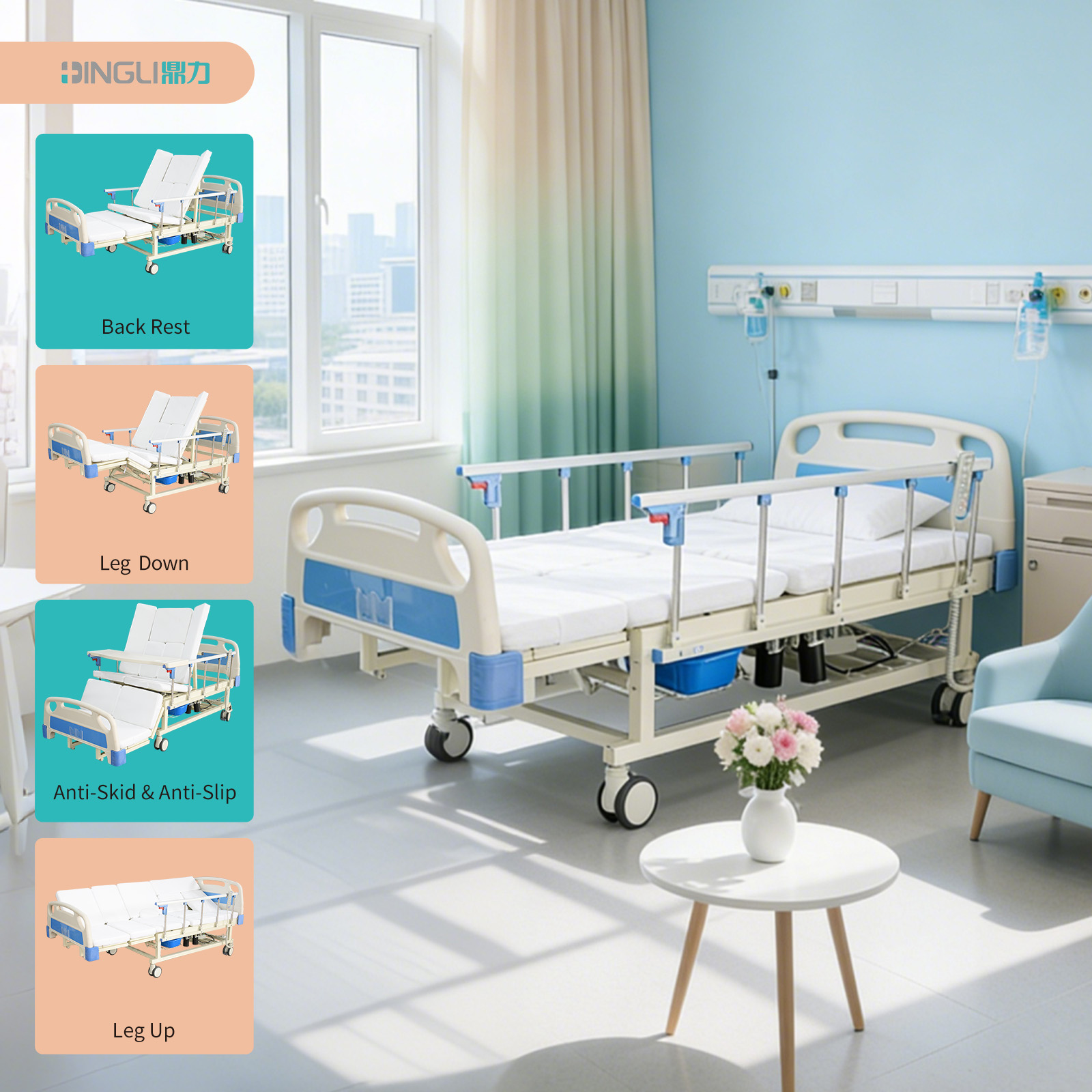
Beds used in hospitals may need CPR release, Trendelenburg positioning, control lockouts, and frequent powered adjustment. Buyers should choose functions based on the department and intended use. View DINGLI’s electric and manual hospital beds to compare available configurations.
Long-Term and Home Care
Long-term and home care beds often place more emphasis on fall prevention, simple controls, and daily comfort. A lower bed height may be useful, while the mattress and side rails must fit the frame correctly to reduce entrapment risks.
How Market Requirements Differ
Hospital bed requirements also vary by destination market. Countries may adopt different editions of the same standard or add local regulatory requirements.
Before purchasing, confirm which standard applies in the destination country. The test report should identify the standard edition, bed model, and tested configuration.
IEC 80601-2-52:2026 and Earlier Editions
IEC 80601-2-52:2026 is the latest international standard for adult medical beds, but earlier editions may still be accepted during the transition period.
What the 2026 Edition Covers
Published in May 2026, IEC 80601-2-52:2026 replaces IEC 60601-2-52:2009 and its 2015 amendment. It covers the basic safety and essential performance of adult medical beds, including both powered and manual models.
Adoption timelines vary by market. Buyers should confirm which edition is accepted in the destination country and check that the supplier’s test report clearly identifies the edition used.
Structural Stability and Mechanical Hazards
A hospital bed must remain stable during adjustment, patient transfers, and normal use with approved accessories.
Structural Stability Testing
Hospital bed testing covers more than the maximum load. The frame must remain stable at different heights and platform positions, including when force is applied to the sides or ends of the bed.
Static and durability tests are also used to check whether the frame, lifting system, and other load-bearing parts can withstand repeated use. Side rails, 输液架, and other approved accessories should be assessed as part of the tested bed configuration.
Common Mechanical Hazards
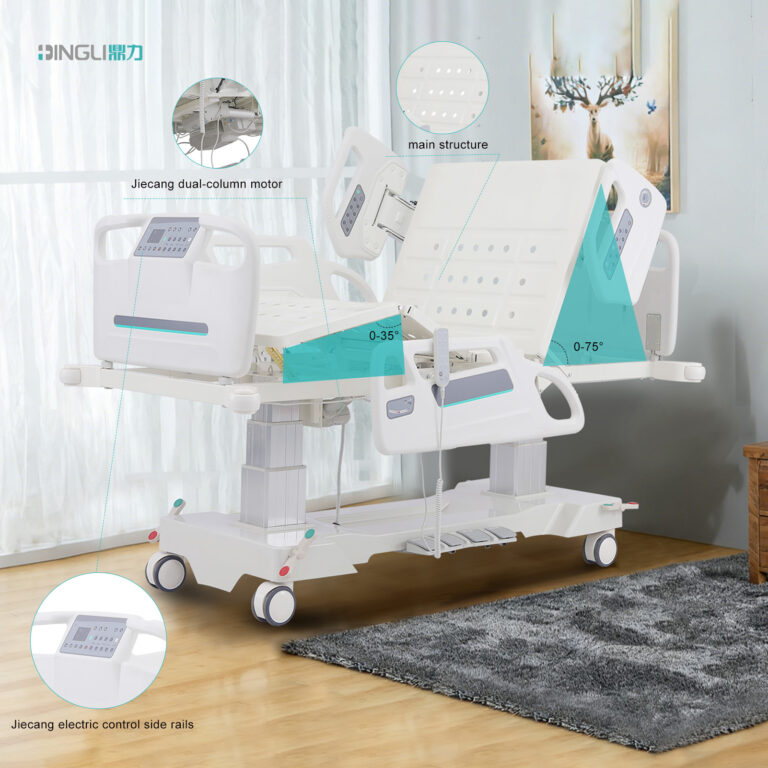
Moving sections of a hospital bed can create crushing, shearing, or pinch points. These risks may occur around the lifting mechanism, mattress platform, 侧轨, and other adjustable parts. Manufacturers use suitable clearances, guards, and movement controls to reduce them.
Buyers should also check for sharp edges, exposed moving parts, and protrusions that could catch clothing or medical tubing. The supplier’s test documents should cover the complete bed configuration rather than the frame alone.
Electrical Safety and Essential Performance

Powered hospital beds must protect users from electrical hazards and continue to perform safety-related functions as intended.
Electrical Protection
Powered hospital beds are assessed under IEC 60601-1 together with the applicable medical bed standard. Testing covers components such as motors, 执行器, control boxes, handsets, cables, and power supplies. See how an electric hospital bed works for a closer look at these components and control systems.
The assessment checks insulation, leakage current, grounding where applicable, and protection against electrical faults. Electromagnetic compatibility should also be evaluated under the relevant EMC requirements.
Essential Performance
Some bed functions are directly related to patient safety. For example, unintended platform movement or failure of a safety-related control could create a risk during positioning or transfer.
The manufacturer should identify these functions through risk management and show how they are maintained under the required test and fault conditions. Buyers should confirm that the test report covers the same control system and actuators used in the ordered bed.
Entrapment, Side Rails and Mattress Compatibility
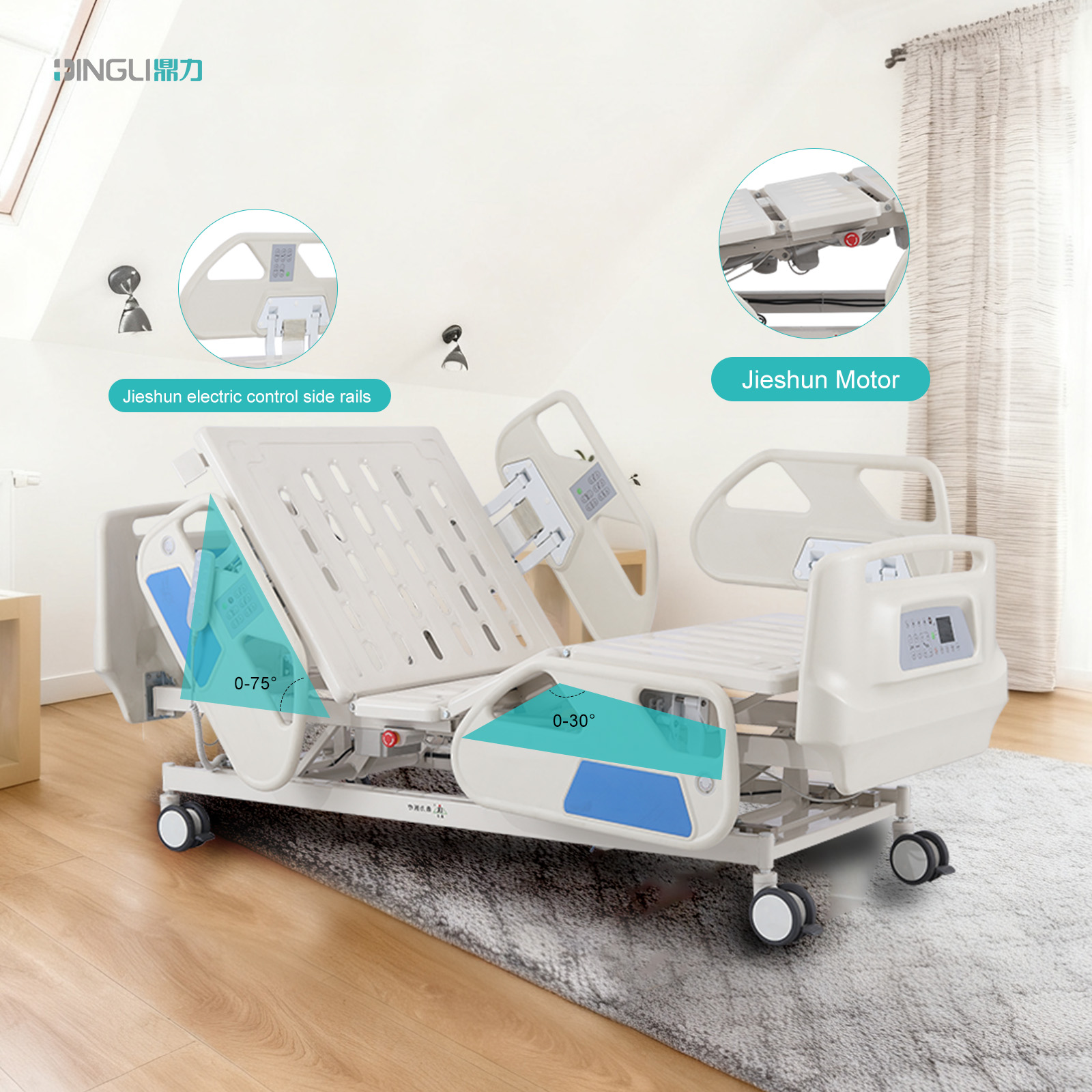
Entrapment safety depends on the complete bed system, including the frame, 侧轨, 床垫, headboard, 和脚踏板.
Entrapment Zones and Gap Dimensions
Entrapment can occur when a patient becomes caught in an opening within or between bed components. The size and shape of these openings may change when the mattress shifts or compresses.
FDA hospital bed entrapment guidance identifies seven potential entrapment zones. For several of the most common zones, it recommends the following dimensional limits: For several of the most common zones, it recommends the following dimensional limits:
| Dimensional Limit | Where It Applies | Main Risk Addressed |
|---|---|---|
|
Less than 120 毫米 4 3/4 inches |
Specified openings within the side rail and between the rail and mattress. | Reduces the risk of head entrapment in the applicable zones. |
|
Less than 60 毫米 2 3/8 inches |
Specified gaps at the end of the side rail. The angle of the opening must also be considered. | Reduces the risk of neck entrapment in the applicable zones. |
These dimensions apply to specific entrapment zones and measurement procedures. They should not be used alone to determine whether a bed system meets the applicable safety requirements. Side rail height by itself is also not enough to assess entrapment risk.
Mattress and Side Rail Compatibility
The mattress must match the bed frame and side rail configuration. A mattress that is too small, too soft, or able to move excessively can create gaps that were not present in the tested setup.
Buyers and healthcare facilities should:
- Confirm the mattress dimensions and type specified by the bed manufacturer.
- Reassess the setup when changing the mattress, 侧轨, or overlays.
- Consider mattress movement and compression when checking potential gaps.
Specialty mattresses and overlays can change both the gap dimensions and the effective height of the side rails. Where possible, purchase the bed, rails, and mattress as a documented compatible system.
Safe Working Load and Marking
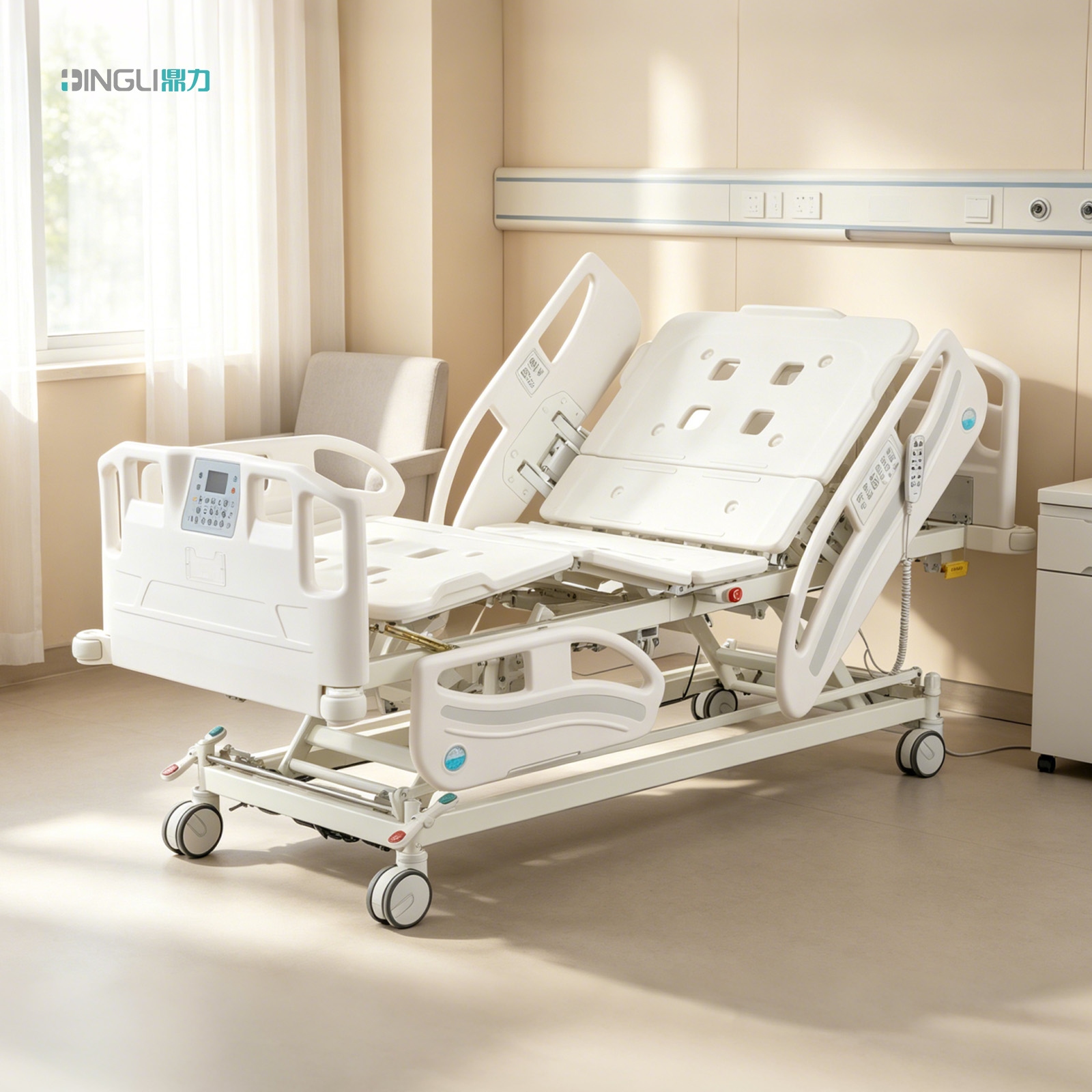
Safe Working Load and Maximum Patient Weight describe different limits. Buyers should check both values before selecting a hospital bed.
SWL and Maximum Patient Weight
Safe Working Load (SWL) is the maximum total load the bed is designed to support during normal use. It may include the patient, 床垫, bedding, and loads supported by approved accessories.
Maximum Patient Weight (MPW) refers only to the patient. Buyers should confirm that both values meet the intended use and match the figures stated in the product specification and test report.
Load Markings
The SWL and Maximum Patient Weight should be clearly and durably marked on the bed. The values shown on the label, product specification, Instructions for Use, and test documents should be consistent.
If accessories have their own load limits, these should also be identified and followed.
Test Reports, Labels and Technical Files

Compliance documents should identify the product tested, the standard used, and the configuration covered by the assessment.
Documents Buyers Should Review
A test report should state the bed model, manufacturer, standard edition, test date, and evaluated configuration. Buyers should check whether the listed motors, controls, 侧轨, 床垫, and accessories match the products being ordered.
A report does not become invalid simply because it is old. 然而, changes to the product or applicable standard may require further assessment. The supplier should be able to explain whether the existing report still covers the current model. A report does not become invalid simply because it is old. 然而, changes to the product or applicable standard may require further assessment. The supplier should be able to explain whether the existing report still covers the current model. Buyers can also review our guide to choosing a reliable hospital bed manufacturer for additional supplier and quality-control checks.
The manufacturer normally maintains the complete technical file. Buyers may instead receive relevant documents such as the Declaration of Conformity, test reports or summaries, product specification, Instructions for Use, and applicable certificates.
Product Labels and Instructions
The bed label should provide clear identification and traceability information, including:
- Manufacturer and model identification.
- Serial or batch information.
- Maximum Patient Weight and Safe Working Load.
- Relevant warnings and safety symbols.
The information on the bed label should match the product specification, test documents, and Instructions for Use. Compatible mattresses, 侧轨, and accessories should also be identified in the product documentation.
Buyer’s Compliance Document Checklist
Document requirements vary by market, but the following checks can help buyers confirm that the supplied bed matches the tested and approved configuration.
| Document | What Buyers Should Check |
|---|---|
| Test Report | Check the manufacturer, bed model, standard edition, test date, and tested configuration. For powered beds, confirm that the report covers the motors, controls, and power system used in the order. |
| Declaration and Market Documents | Review the Declaration of Conformity and any registration, certification, or authorization required in the destination market. |
| Product Specification | Confirm the bed dimensions, adjustment ranges, Maximum Patient Weight, Safe Working Load, and main components. The specification should match the model being purchased. |
| Bed System Compatibility | Check which mattresses, 侧轨, headboards, footboards, and accessories are covered by the tested configuration. Ask for supporting entrapment and stability information where relevant. |
| Instructions for Use | Review the installation, operation, cleaning, maintenance, warning, and accessory instructions. Confirm that the required language version is available. |
| Quality and Inspection Records | Check the scope and validity of the manufacturer’s ISO 13485 certificate. For the production order, agree on the inspection records or pre-shipment checks that will be provided. |
常见问题解答
Are hospital bed safety standards the same in every country?
不. Countries may adopt different editions of IEC standards and add local regulatory requirements. Buyers should confirm which standards and approvals apply in the destination market.
Does a new standard make existing hospital beds non-compliant?
Not automatically. The status of existing beds depends on local regulations, transition dates, and any safety notices or recalls. Healthcare facilities should check the requirements that apply in their market.
How can I verify that a hospital bed has been tested?
Ask for a test report that identifies the manufacturer, bed model, standard edition, and tested configuration. Check that these details match the product being ordered and verify the report with the issuing laboratory or certification body when necessary.
最后的想法
Hospital bed safety depends on the complete product configuration, not on a single certificate or component. Before placing an order, check that the test report covers the correct model, standard edition, 侧轨, 床垫, controls, and accessories. The required documents should also match the regulations of the destination market.
Use the checklist above when comparing suppliers and reviewing product documents. If you need help selecting a hospital bed configuration for your market, contact our team to discuss your specifications and OEM/ODM requirements.