Sourcing wholesale hospital beds is a high-stakes decision where a miscalculation in product mix or supplier reliability directly impacts margins and operational capacity. Committing to a full container without validating market-specific needs or after-sales support exposes you to significant financial risk and unpredictable lead times.
This analysis benchmarks manual, electric, and anti-bedsore models to define a low-risk procurement strategy. We evaluate key decision points like container loading capacities, tiered MOQ structures for trial orders, and the true cost of after-sales support to help you secure a reliable supply chain.
Navigating the Global Wholesale Hospital Bed Marketplace
The wholesale bed market is moving from hardware sales to integrated care platforms. Smart buyers now focus on total lifecycle cost and supply chain strategy, not just unit price
Smart procurement goes beyond the spec sheet. Real-world decisions should be based on a bed’s lifecycle cost, its compliance with regional regulations, and the supplier’s commitment to after-sales support and parts availability. A cheap bed with no service plan is a long-term liability.
On the ground, facilities have clear operational priorities that guide their purchasing choices.
- Долговечность: Hospital beds are high-cycle assets and must be built to withstand constant use and movement.
- Инфекционный контроль: Surfaces and components must be designed for easy and effective cleaning to meet strict hygiene protocols.
- Fleet Standardization: Using the same or similar bed models across a facility simplifies maintenance, parts inventory, and staff training.
The business model itself is changing. The industry is shifting from selling hardware to offering integrated platforms that combine the physical bed with software, patient monitoring sensors, and long-term service contracts.
Choosing the Right Product: Balancing Manual, Электрический, and Anti-Bedsore Lines
Choosing the right bed isn’t about one “best” model. It’s about matching the frame and mattress to the specific patient, staff, and budget realities of each care environment.
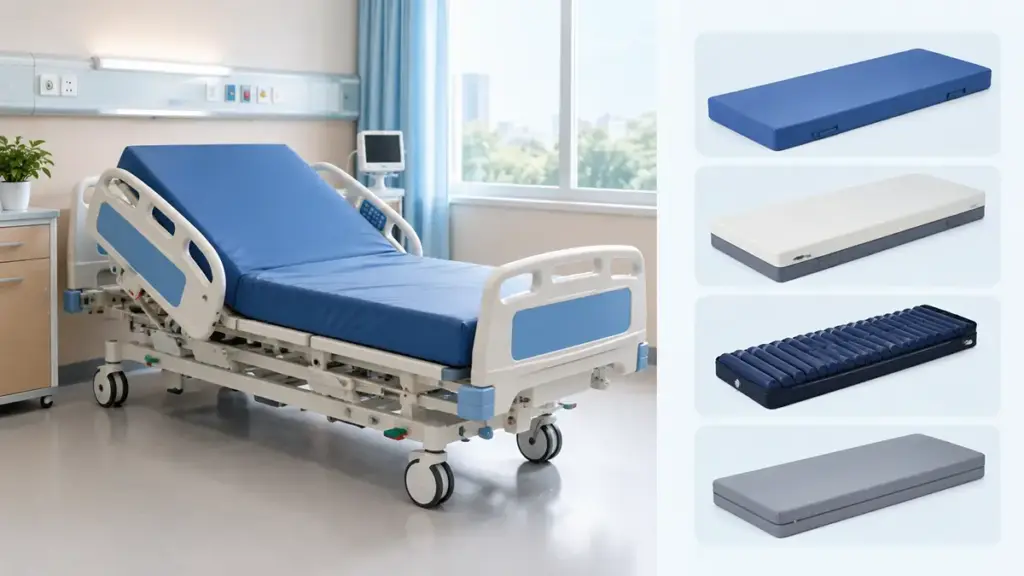
The right purchasing decision comes down to a few practical realities on the ground. The most critical factor is the patient’s condition, or acuity. A mostly mobile patient recovering for a few days can manage with a manual bed. But an immobile, high-acuity patient in the ICU absolutely needs a fully electric bed paired with an advanced anti-bedsore mattress to enable frequent repositioning and prevent skin breakdown.
Staffing models and workflow are just as important. Manual beds place a significant physical burden on nursing staff, increasing the risk of musculoskeletal injuries and slowing down care. In a high-turnover surgical ward or an understaffed long-term care facility, electric beds aren’t a luxury; they are a tool for operational efficiency and staff retention. The ability to reposition a patient with the push of a button saves time and protects caregivers from injury.
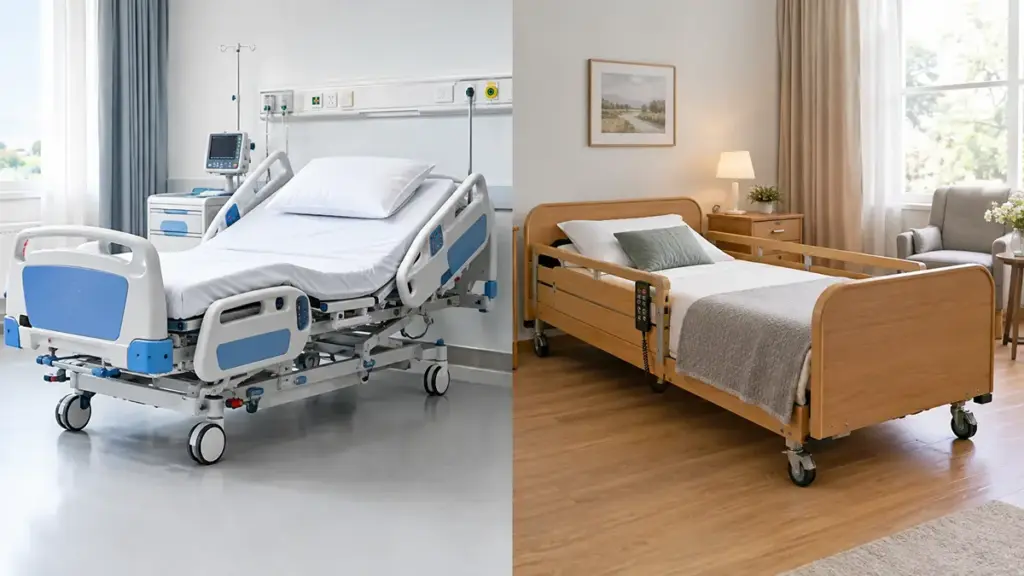
This is why most facilities use a blended strategy. They invest in fully electric beds and advanced support surfaces for their highest-risk areas like the ICU. They might use semi-electric beds as the standard in long-term care wings to balance ergonomics and budget. And they keep a stock of durable manual beds for general use, overflow, or disaster preparedness. The goal is to build a fleet that provides the right level of care where it’s needed, without overspending where it’s not.
Get Certified Medical Equipment, Direct from Factory
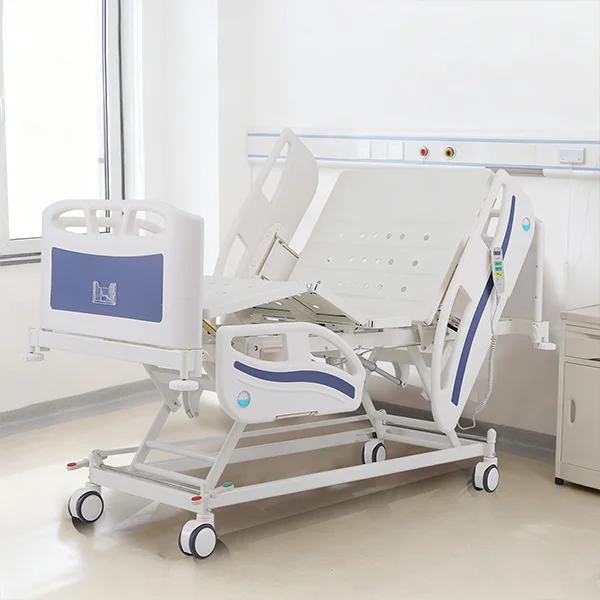
Understanding International Container Loading Capacities and Packing Optimization
How many hospital beds fit in a container depends on packing strategy and floor space, not just volume. Weight limits are the real issue for heavy ICU beds.
When exporting wholesale hospital beds, you aren’t just shipping furniture; you’re moving critical medical infrastructure. The logistics are not about filling every cubic meter. It’s about optimizing floor space, managing weight limits, and ensuring the beds arrive undamaged and ready for deployment. Getting this wrong means delays, damaged goods, and compromised hospital capacity.
Container Specifications and Capacity Benchmarks
Most hospital bed shipments use standard dry containers. The choice between a 20′, 40′, or 40′ High Cube (HC) depends on the weight and stackability of the beds. The 40′ HC offers more vertical space, but that’s only valuable if your beds can be safely stacked two-high.
| Container Type | Internal Dimensions (L x W x H) | Usable Volume | Typical Max Payload |
|---|---|---|---|
| 20′ Standard | 5.90 m x 2.35 m x 2.39 m | ~33 m³ | ~27,000 kg |
| 40′ Standard | 12.03 m x 2.35 m x 2.39 m | ~67 m³ | ~27,000 kg |
| 40′ High Cube (HC) | 12.03 m x 2.35 m x 2.69 m | ~76 m³ | ~27,000 kg |
Load Optimization and Packing Strategies for Hospital Beds
Maximizing the number of beds per container is a trade-off between packing density and on-site assembly effort. The most efficient shippers have this down to a science, creating standardized load plans for each bed model.
- Assembled vs. Knocked Down (KD): Shipping beds fully assembled is faster for installation but eats up space. Knocked-down (or semi-knocked-down) packing dramatically increases container capacity. This requires the client to have technical staff for assembly, but it’s the standard for high-volume exports.
- Stacking and Nesting: Many bed frames are designed to be stacked or nested once mattresses and rails are removed. Stacking two or even three frames high is common, but you must use protective materials at contact points and ensure the stack’s weight doesn’t exceed the floor’s running-meter load limit.
- Floor Loading vs. Pallets: Pallets simplify handling but waste space. Most bed shipments are floor-loaded to maximize capacity. This demands meticulous blocking and bracing to prevent any movement. Heavy point loads on the container floor must be avoided by using dunnage to spread the weight.
- Securing the Load: High-value beds need robust protection. Use timber bracing, ratchet straps, and dunnage bags to lock the cargo in place. Sensitive electronics, control panels, and actuators need extra padding with foam and corner protectors. Damage in transit creates immediate problems for hospitals waiting on capacity.
Matching Mandates to Specific Target Markets
Different markets have different rules. Matching your bed’s features to specific payer, clinical, and safety mandates isn’t optional—it’s how you make the sale in this industry.
Meeting Clinical, Безопасность, and Operational Needs in Institutional Settings
Acute-care hospitals and other large institutions play by a different set of rules. While cost matters, their primary mandates are driven by clinical performance, patient safety, accreditation standards, and workflow efficiency. Here, the bed is a core piece of medical infrastructure, and procurement decisions reflect that.
For clinical performance, these facilities demand fully electric beds with advanced positioning like Trendelenburg and Reverse Trendelenburg. In high-acuity areas like the ICU, beds must have integrated features for pressure injury prevention, such as alternating pressure or lateral rotation surfaces. Specialty beds for bariatric patients or rehabilitation are also selected based on specific clinical protocols, not just basic function.
Safety is non-negotiable. Beds must comply with standards from accrediting bodies like The Joint Commission, which focus heavily on preventing falls and patient entrapment. This translates into mandates for reliable braking systems, low-height capabilities, and intelligently designed side rails. In specialized environments like psychiatric or behavioral health units, the mandate shifts to beds with tamper-resistant, anti-ligature designs to ensure patient safety.
Locking in Predictable Lead Times
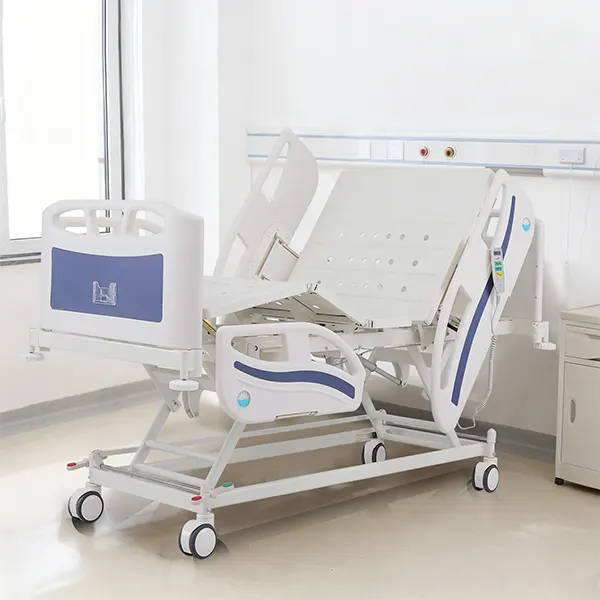
Predictable hospital bed lead times come from managing specs, documentation, and supplier reliability—not just production speed. This is how facilities can actually plan for new projects and patient intake.
For hospitals and distributors, a hospital bed arriving late isn’t a furniture delay; it’s a direct hit to operational capacity. Beds are specialized medical devices, and their delivery is tied to everything from patient admissions to capital project deadlines. Getting control over lead times means getting control over the variables that introduce uncertainty in the first place.
Sources of Lead Time Variability
Lead times get messy when the procurement process is complicated. The biggest sources of delay aren’t always on the factory floor; they’re often hidden in the paperwork and configuration choices made long before an order is placed.
- Product Configuration: The specific bed type—manual, semi-electric, bariatric, or a fully-featured ICU model—changes the entire bill of materials and component sourcing, which adds time. Customization is a primary driver of unpredictable timelines.
- Safety and Compliance Reviews: A facility’s risk management team often needs to review bed configurations, especially side rails, to ensure they meet internal safety protocols and FDA entrapment guidance. This adds another sign-off loop.
- Market and Trade Volatility: The supply chain for hospital beds is global. Component shortages, freight delays, and international tariffs can introduce unexpected disruptions that are outside of your direct control.
Strategies for Creating Predictable Timelines
You can’t eliminate all sources of variability, but you can build a procurement process that absorbs the shocks. Smart wholesalers and facilities focus on creating repeatable, standardized workflows.
- Standardize and Pre-Approve SKUs: Limit your catalog to a small set of bed models and accessory bundles that cover 80% of your clinical needs. By pre-approving these configurations with clinical and safety teams, you remove the decision-making friction from individual orders.
- Hold Strategic Inventory: Keep a baseline stock of your highest-turnover bed models and most-requested replacement parts (mattresses, рельсы). This gives you a buffer and reduces your dependence on factory-direct lead times for every order.
- Get Supplier Commitments: Negotiate written service-level agreements (SLAs) with your suppliers that define availability windows, order allocation, and backup sourcing options for your critical bed models.
- Plan for Freight and Installation: Hospital beds are bulky. A predictable lead time must account for the entire logistics chain, including transit, final-mile delivery, on-site assembly, and room readiness.
Minimum Order Quantities for Low-risk Market
For new buyers, hospital bed MOQs are flexible. Trial orders are 1-5 units, but container-scale orders of 30-60 beds are needed to get the best wholesale pricing.
Factors Driving MOQ Flexibility and Negotiation
Published MOQs are rarely set in stone. They are a starting point for a conversation, and your ability to negotiate depends on a few key factors. If you understand the supplier’s costs and risks, you can find room to maneuver.
- Model Type and Complexity: Simpler products mean lower risk for the factory. A standard manual bed has fewer components and a more straightforward production process, so suppliers are more willing to accept a low MOQ. A fully electric ICU bed with specialized motors and electronics requires a more involved production run, so the MOQ will naturally be higher.
- Customization: This is a major driver of higher MOQs. If you want standard, off-the-shelf beds, the supplier has more flexibility. But if you start asking for custom branding (OEM), non-standard colors, or unique side rails, the MOQ will jump. The supplier has to cover the costs of tooling, setup, and managing a non-standard product, and they do that by requiring a larger order, часто 50 units or more.
- The Buyer-Supplier Relationship: A first-time buyer poses a higher risk. But if you can sign a long-term agreement with a forecast for future orders, a supplier is much more likely to lower the initial MOQ. They are investing in a future revenue stream. Repeat customers with a good payment history always have more negotiating power.
- Pricing and Landed Cost: MOQ and price are directly linked. You can almost always get a lower MOQ if you are willing to pay a higher price per unit. The supplier is simply trading margin for volume. Low-risk buyers often accept a higher landed cost on their first small order to keep the initial capital outlay low and avoid inventory risk.
Building a Resilient After-sales Support System
In the hospital bed market, after-sales support is not an add-on. It’s a core part of the product’s value because downtime directly disrupts patient care.
Establishing Proactive Service Foundations
This starts with professional delivery and installation. Beds aren’t just dropped at the curb; they need to be assembled, commissioned, and tested in the room. A clean handover is critical. Your team should leave the facility’s staff with clear operating guidance, service contacts, and confirmation that the bed is ready for patient use. Good suppliers bundle this installation and basic user training into the initial purchase, because incorrect use is a major cause of preventable damage.
Finally, support has to be easy to reach. Facilities managers and nurses don’t have time to navigate complex phone trees. Providing multiple contact channels—phone, email, even messaging apps—ensures that when a problem does arise, it gets reported and logged without friction.
Structuring a Responsive Repair and Parts Network
When a bed fails, the clock is ticking. A resilient network is built on speed and availability. This requires having a regional footprint of service technicians. Centralizing your techs in one location is a recipe for long travel delays and extended downtime for your customers. Local or regional coverage is a must for handling diagnostics and repairs efficiently.
The best suppliers also offer structured preventive maintenance programs. These scheduled inspections catch issues with frames, electronics, and mechanical parts before they cause a critical failure. Tracking the service history for each bed by its serial number also helps you spot recurring faults, which informs warranty decisions and future product improvements. It all comes back to keeping the beds operational, because an out-of-service bed is a liability, not an asset.
Часто задаваемые вопросы
What is the standard MOQ for wholesale hospital bed orders?
The standard minimum order quantity (минимальный заказ) for wholesale hospital beds typically ranges from 10 к 20 units. This number often changes based on the specifics of the order. For custom designs or private labeling, expect a higher MOQ, usually 50 beds or more. Some suppliers accommodate smaller facilities by offering lower MOQs of 2 к 10 units, and a few may provide select in-stock models with no MOQ for trial purposes.
Can I bundle hospital beds with anti-bedsore mattresses in one shipment?
Да, bundling hospital beds with anti-bedsore mattresses in a single shipment is a common and standard practice. Suppliers frequently package them together as a complete care solution. Before ordering, just confirm that the mattress size fits the bed frame and ask how the items will be packed, as they might be in separate cartons within the same shipment.
How does private labeling work for wholesale hospital beds?
Private labeling allows a company to sell a hospital bed made by a manufacturer under its own brand. The original manufacturer (OEM) handles the production and regulatory requirements, while the private labeler manages the marketing and sales. The bed is generally identical to the OEM’s product; only the logos, labels, and packaging are changed to feature the distributor’s brand.
What payment terms are standard for international wholesale hospital beds?
The most common payment method for international wholesale orders is a Telegraphic Transfer (T/T). This usually means paying a 30% deposit to begin production and the 70% balance once you receive a copy of the shipping documents. For very large orders, particularly for government or institutional projects, an Irrevocable Letter of Credit (L/C) is also a standard option.
How do manufacturers protect wholesale hospital beds from damage during sea freight?
Manufacturers use a multi-step process to protect hospital beds during sea freight. They typically disassemble bulky components, wrap them in foam or blankets to prevent scratches, and seal parts in plastic to guard against moisture. Everything is then packed and braced securely inside the shipping container to keep it from moving or tipping during the journey.
Заключительные мысли
Choosing a hospital bed supplier based on the lowest unit price is a short-term gamble that risks your reputation and operational capacity. A strategic partner who delivers on total lifecycle cost, regulatory compliance, and after-sales support is the only way to secure long-term market share. This decision separates transactional buyers from established brands.
Don’t base a container-sized decision on a spec sheet. Verify the build quality and user experience yourself by starting with a small trial order. Contact our team to arrange a sample shipment or to review our OEM partnership framework.